
7 Best Fleshing Knife for Deer Field Dressing
The 8-Inch Fleshing Knife Hide Scraper is the best fleshing knife for deer for most buyers because its 8-inch blade offers a practical balance of working width and control. This straightforward hand scraper can cover more hide than a small blade, while remaining manageable during careful work. Its simple design also avoids batteries, motors, and charging concerns.
This guide is for hunters, taxidermists, and anyone preparing deer hides at home. The key factors are blade size, edge design, handle comfort, and the material used for the scraper. A wider blade can speed up large sections, while a controlled edge helps reduce accidental cuts in the hide. The seven picks below are ranked by their practical strengths, with clear reasons and honest drawbacks for each. That makes it easier to match a hide scraper to your workload, experience, and budget.
Quick Comparison
| # | Product | Best For | Price | |
|---|---|---|---|---|
| 1 | 8-Inch Fleshing Knife Hide Scraper | Small Hide Preparation Jobs | ~$20 | View → |
| 2 | Wiebe 12-Inch Dual-Handle Fleshing and Skinning Knife | Heavy-Duty Two-Handed Fleshing | ~$40 | View → |
| 3 | ElaraBerry Fleshing Knife | Compact Home Tanning Projects | ~$20 | View → |
| 4 | Redneck Convent 12-Inch Fleshing Knife | Hunters Processing Large Hides | ~$49 | View → |
| 5 | Hide Scraper Fleshing Knife | Basic Hide Scraping Tasks | ~$16 | View → |
| 6 | Wiebe Dual Handle Fleshing and Skinning Knife | Flexible Fleshing And Skinning | ~$35 | View → |
| 7 | Wiebe Beaver Knife | Beaver Pelt Preparation | ~$18 | View → |
7 Top Fleshing Knives for Deer
The picks below are ranked by blade control, handle comfort, and value, counting down to the top choice for deer.
7. Wiebe Beaver Knife
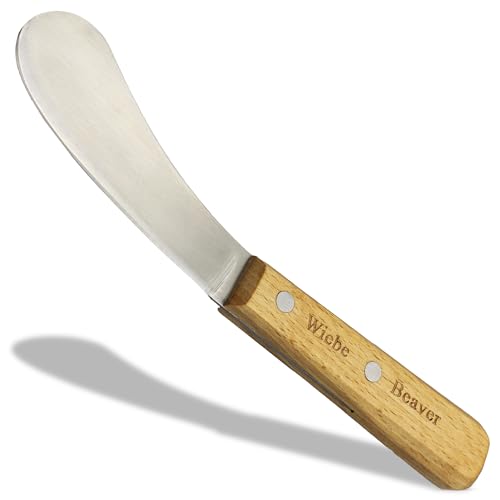
Best for: Beaver and muskrat pelt preparation
The Wiebe Beaver Knife is a dedicated skinning and fleshing tool for beaver, muskrat, raccoon, and similar furbearers. Its curved blade uses high-carbon stainless steel, a material chosen for edge retention and resistance to corrosion. The shape should help with controlled cuts around legs, heads, and other tighter areas, where a straight utility knife can feel awkward. It can also handle fleshing and processing for small to medium game.
The polymer Sure-Grip handle adds a non-slip surface for wet, messy work. Its ergonomic shape is intended to reduce hand strain during longer sessions, though comfort will still depend on hand size and technique. Around $18, it costs less than many specialized hide-preparation tools. Wiebe also includes a limited lifetime warranty, which adds useful support for a tool expected to see repeated seasonal use. Buyers should still plan to clean and dry the blade after each session. High-carbon steel resists rust, but it is not maintenance-free.
Pros
- Curved blade offers better control around legs, heads, and narrow hide sections.
- High-carbon stainless steel supports edge retention and corrosion resistance.
- Non-slip polymer handle provides a steadier grip during wet fleshing work.
Cons
- The curved profile is specialized, so it may feel less natural for general kitchen or camp tasks.
- A sharp working edge requires careful handling, routine cleaning, and occasional sharpening.
6. Wiebe Dual Handle Fleshing and Skinning Knife
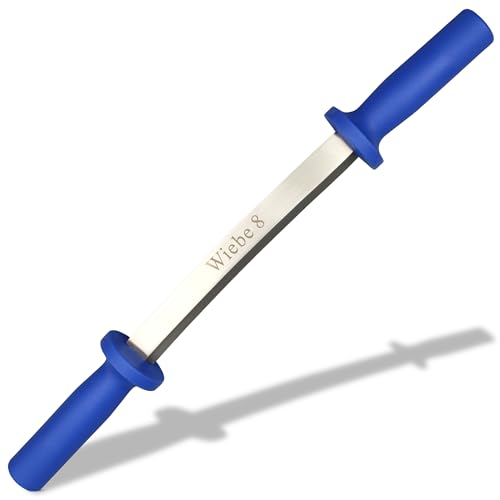
Best for: Small-game pelt preparation
The Wiebe 8-inch Dual Handle Fleshing and Skinning Knife is made for preparing raccoon, fox, muskrat, and coyote pelts. Its stainless steel blade has a bevel suited to skinning, slicing, and removing fat or membrane from the hide. The two composite handles give you a firm grip at both ends, which can help maintain control during longer, steady strokes. At around $35, it targets hunters, fur handlers, and taxidermists who need a dedicated pelt knife without paying much more for specialty equipment.
Its main advantage is control. The non-slip handles provide leverage when pushing through fat, while the 8-inch blade offers enough reach for small and medium game without feeling oversized for detailed work. Stainless steel also resists corrosion better than untreated carbon steel, though it still needs cleaning and drying after use. The blade is described as sharp and durable, but actual edge life depends on the hide, cutting technique, and maintenance. This is a focused tool, not a general-purpose hunting knife.
Pros
- Dual non-slip composite handles provide leverage and steadier two-handed control.
- The 8-inch beveled stainless steel blade supports both skinning and fleshing work.
- Designed for raccoon, fox, muskrat, and coyote pelts.
Cons
- The 8-inch format may feel limiting on larger hides or heavy game.
- Stainless steel resists corrosion, but the blade still requires cleaning and drying after each use.
5. Hide Scraper Fleshing Knife

Best for: Small hide tanning and taxidermy jobs
This two-piece hide fleshing kit combines a stainless steel scraper with a manganese steel skinning knife. The scraper measures about 11.5 by 3 inches, or 28.5 by 8.6 cm. Its two-sided design handles different cleanup tasks, from removing fat and meat to trimming membrane, muscle, and connective tissue. The included knife measures about 3.34 by 5.7 inches, or 8.5 by 14.5 cm.
The set also includes one pair of thickened gloves, but the glove color is selected at random. The stainless steel scraper is described as rust-resistant and burr-free, while the manganese steel knife is intended for clearing dirt, grease, and debris from hides. Both tools can suit tanning, fur handling, leather projects, farm work, or workshop use. At around $16, this is a low-cost way to add basic hide-processing tools without buying each piece separately. Still, check the listed measurements before ordering, since both tools are fairly compact.
Pros
- Includes two different tools for fleshing, trimming, and hide cleanup.
- Stainless steel scraper resists rust and has separate working sides.
- Thickened gloves add basic hand protection during messy tasks.
Cons
- The gloves’ color is random, so buyers cannot choose a preferred shade.
- Compact dimensions may feel limiting for large hides or heavy-duty processing.
4. Redneck Convent 12-Inch Fleshing Knife

Best for: Small-game hide and pelt work
The Redneck Convent Fleshing Knife is a 12-inch tool for removing meat, fat, membrane, and gristle from animal hides. Its stainless steel blade measures 1.5 by 12 inches, while the two textile-wrapped handles each measure 4.9 inches. That layout gives you a two-handed grip while pushing the knife along a fleshing beam. It is intended for pelts from mink, muskrat, rabbit, squirrel, weasel, and similar small game.
The double-edged blade offers two working surfaces. One edge is moderately sharp for pushing away fat and meat, while the sharper edge cuts through tougher gristle. The beveled shape should help the blade travel across the hide with controlled pressure, but careful handling remains necessary because too much force can damage the pelt. The steel resists corrosion and oxidation, though it still needs cleaning and drying after use. At around $49, this flesher costs more than basic single-handle tools, but the dual-grip design may suit buyers who want steadier control during longer hide-preparation sessions.
Pros
- Two 4.9-inch handles provide a stable, non-slip two-handed grip.
- The 12-inch stainless steel blade covers a broad section of the hide.
- Separate edges handle routine fat removal and tougher gristle.
Cons
- Its sharp cutting edge requires careful pressure to avoid cutting through the hide.
- The 1.5-inch blade is better suited to small pelts than very large hides.
3. ElaraBerry Fleshing Knife

Best for: Small-batch hide and pelt work
The ElaraBerry Fleshing Knife is a two-hand tool for removing fat, membrane, and tissue from prepared hides. It has an 8-inch SK5 steel blade, measuring 0.8 inches wide and 0.13 inches thick. The full tool measures 16 inches, giving you space to keep both hands behind the cutting edge. Around $20, it costs less than many specialized hide-processing tools, though prices can change.
Two wooden handles provide a firm grip and help distribute pressure across the blade. That layout can make controlled scraping easier on deer, beaver, fox, coyote, mink, and raccoon pelts. A protective cover comes with the knife for storage and transport to a workshop, camp, or trapping site. The blade has a moisture-resistant coating, but it still needs to be dried after cleaning. Applying wax oil before storage can add protection against rust. The 8-inch edge offers useful coverage without making the tool excessively large, but users handling very broad hides may prefer a wider scraper.
Pros
- Two wooden handles provide better control than a single-grip scraper.
- The 8-inch SK5 steel blade covers a practical section of hide with each pass.
- The included blade cover makes storage and transport safer.
Cons
- The coated blade still requires drying and wax oil to limit rust.
- The fixed 8-inch width may require extra passes on large, broad hides.
2. Wiebe 12-Inch Dual-Handle Fleshing and Skinning Knife
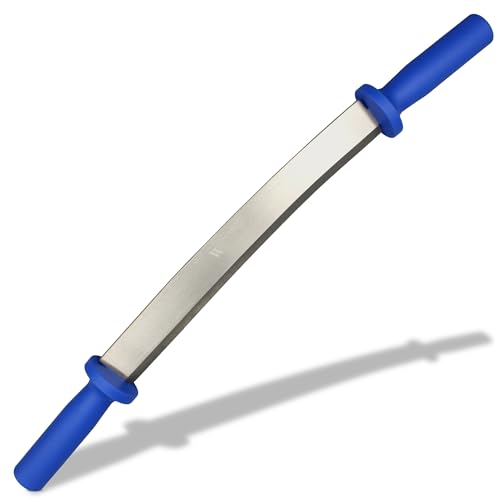
Best for: Small to medium fur pelts
The Wiebe 12-inch Dual Handle Fleshing and Skinning Knife is made for preparing raccoon, fox, muskrat, and coyote pelts. Its stainless steel blade has a beveled edge suited to skinning, slicing, and pushing away fat or membrane. Two non-slip composite handles give you more leverage than a single-handle knife, which can help with controlled strokes during fleshing. At around $40, it targets hunters, fur handlers, and taxidermists who need one tool for two related jobs.
The main advantage is control. Holding both handles lets you guide the blade across a hide while applying pressure with both hands. The 12-inch length also provides useful reach on small and medium pelts. Stainless steel should resist rust better than untreated carbon steel, but it still needs prompt cleaning and drying after use. The sharp edge may stay useful through repeated processing, though actual edge life depends on technique, hide condition, and contact with grit or bone.
Pros
- Dual composite handles provide leverage and a steadier grip during fleshing.
- A 12-inch beveled stainless steel blade handles both skinning and fat removal.
- One knife can cover several small to medium fur-bearing animals.
Cons
- The 12-inch blade may feel bulky around tight curves or delicate areas.
- A sharp, double-purpose tool requires careful handling and regular cleaning to prevent corrosion.
1. 8-Inch Fleshing Knife Hide Scraper

Best for: Small to medium pelt preparation
This 8-inch fleshing knife is built for removing fat, tissue, and membrane from raw hides before tanning. Its single stainless steel blade measures 8 by 1 inches and is 0.16 inches thick. A moderately sharpened edge is meant to scrape rather than slice aggressively, which can help protect the hide when pressure is controlled. The curved profile supports steady passes across fox, raccoon, muskrat, coyote, mink, and similar pelts. At 17.5 inches overall, it offers room for two-handed work while staying practical to carry.
Two wooden handles give each hand a separate grip. Their non-slip design should help with control during longer sessions. Stainless steel resists rust better than untreated carbon steel, though it still needs cleaning and drying after use. The tool suits hunters, trappers, and home tanners who want a dedicated scraper for small to medium hides. It costs around $20, but the 8-inch working area may feel slow on very large pelts. Buyers should also expect to develop proper technique, since the moderate edge still requires controlled pressure.
Pros
- Curved stainless steel blade resists corrosion and supports even scraping.
- Dual wooden handles provide two-handed control during longer work.
- 17.5-inch length offers useful reach without becoming difficult to carry.
Cons
- The 8-inch blade can take longer on large hides.
- Wooden handles may require more care than synthetic grips.
Buying Guide
Most important is blade control, because a knife that cuts too deeply can leave holes in a deer hide. Look for a rounded edge and a handle that lets you keep steady pressure across the hide.
- Blade shape: Choose a curved blade with an 8- to 12-inch working edge. A rounded nose reduces accidental cuts near legs and the neck.
- Edge design: A two-sided tool with one sharper edge and one dull scraping edge gives more control. For beginners, avoid a razor edge on both sides.
- Handle comfort: Pick a handle at least 4 inches long with a textured grip. A guard or finger stop helps during 30- to 60-minute fleshing sessions.
- Steel and care: Stainless steel resists rust from moisture and salt, while carbon steel needs drying and oil after each use. A sheath protects the edge in storage.
- Price and extras: Expect to pay $20 to $60 for a usable hand tool. A kit with a sharpening stone, sheath, or replacement blade can save separate purchases.
If you must compromise, prioritize blade control over included accessories or premium steel.
Frequently Asked Questions
How do I choose a fleshing knife for deer hides?
Choose a knife with a comfortable handle, a controlled edge, and a blade suited to the hide’s thickness. A 4- to 6-inch stainless steel blade works for many deer hides, while a guarded or dull-backed design can reduce accidental cuts. Avoid handles that become slippery when wet.
What blade length is best for fleshing deer hides?
A 4- to 6-inch blade is a practical choice for most deer hides because it offers control without feeling unwieldy. Shorter blades suit tight areas around legs and necks, while longer models cover more hide per pass. Pick a width and grip you can hold securely for repeated, steady strokes.
Can I use a deer fleshing knife on other animal hides?
Yes, a deer fleshing knife can handle smaller hides and some medium-sized hides if its edge and blade length match the material. Use lighter pressure on rabbit or fox skins, and choose a broader, stronger tool for thick hog or elk hide. Clean and dry the blade after each hide to limit rust and odor.
Are curved or straight fleshing knives better for deer?
Curved knives usually provide better control when removing fat from a deer hide, while straight blades make longer, flatter passes. A curved edge can follow shoulders and legs, but it may remove material unevenly if pressed too hard. For one all-purpose tool, choose a moderate curve and a guarded edge.
Conclusion
The 8-Inch Fleshing Knife Hide Scraper is the top pick for hunters who want a compact tool for removing fat and tissue from deer hides. Its shorter blade should feel easier to control around edges, tight curves, and smaller work areas than a longer scraper. If your priority is covering a larger hide with fewer passes, choose a longer fleshing knife instead, provided its handle and blade design match your grip and workload. Before buying, double-check the blade size, compatibility with your hide-preparation setup, package quantity, and current price, since listings can change. Also confirm the handle shape, edge style, and cleaning needs, especially if you process hides more than once each season. The right choice should fit your routine, storage space, and budget.