
5 Best Dog Food for Backpacking for Long Hikes
ZIWI Peak Air-Dried Dog Food is the best dog food for backpacking for most buyers because its air-dried format offers shelf-stable nutrition without adding much pack weight. It needs no refrigeration after opening, which helps on multi-day trips with limited cooler space. The recipes center on animal-based ingredients, but the price is high, and some dogs may need a gradual food transition.
This guide is for hikers who bring their dogs on overnight or extended trail trips. The key factors are calorie density and total package weight, since your dog’s daily portion can add up quickly. Resealable packaging, ingredient tolerance, and storage needs also matter on the trail. The 5 picks below are ranked with clear reasons and honest drawbacks for each, so you can match the food to your dog and trip length.
Quick Comparison
| # | Product | Best For | Price | |
|---|---|---|---|---|
| 1 | ZIWI Peak Air-Dried Dog Food | For ingredient-conscious dog owners | ~$24 | View → |
| 2 | Collapsible Pet Bowls, 2-Pack | For travel and hiking | ~$7 | View → |
| 3 | Taste of the Wild Pacific Stream Dry Dog Food | For salmon-loving adult dogs | ~$59 | View → |
| 4 | Portland Pet Food Company Dog Food Topper & Meal | For picky eaters needing toppers | ~$35 | View → |
| 5 | Kurgo Kibble Carrier | For measured kibble on walks | ~$20 | View → |
5 Top Dog Foods for Backpacking
These options are ranked by packability, nutrition, and convenience, counting down from a practical choice to our top pick.
5. Kurgo Kibble Carrier

Best for: road trips and camping weekends
The Kurgo Kibble Carrier is a portable dry-food bag for dog owners who need meals organized outside the house. Its roll-top closure folds down as the amount of kibble changes, so it can stay compact on short outings or hold more food for longer trips. An internal food-safe liner helps keep the kibble contained, while the ripstop exterior is made to handle regular outdoor use. The Coastal Blue color adds a simple, easy-to-spot finish.
The layout is more useful than a basic food sack. A bottom stash pocket gives you a place for a collapsible bowl, and the side zip pocket can hold treats, waste bags, or small feeding accessories. That keeps several dog-travel essentials together instead of scattered through a backpack or car. Around $20, it offers a practical setup for hikes, camping, and road travel. Kurgo also covers the product with a lifetime warranty, though buyers should check the warranty terms before relying on it for replacement coverage.
Pros
- Roll-top closure adjusts to the amount of kibble inside.
- Ripstop material helps resist wear during outdoor trips.
- Separate bottom and side pockets store a bowl, treats, or accessories.
Cons
- The listed details do not provide a storage capacity or exact dimensions.
- It is intended for dry food, so it cannot replace a container for wet meals.
4. Portland Pet Food Company Dog Food Topper & Meal

Best for: Picky eaters needing meal variety
Portland Pet Food Company’s five-pack offers shelf-stable dog food in individual pouches. It needs no freezer, refrigerator, or thawing, so it works well for travel, storage, or quick meal prep. Each pouch can be served as a complete meal, mixed with kibble, or spooned over dry food. The microwave-safe packaging also lets owners warm the food before serving, which may appeal to selective dogs.
The variety pack includes five recipes: salmon and rice, beef and rice, chicken and yams, turkey and yams, and pork and potato. Each recipe uses 11 or fewer ingredients, with the full ingredient list printed on the packaging. The company says the ingredients are sourced and prepared in the United States. Around $35, this pack costs more than many standard canned or dry food options, but it gives buyers five flavors without committing to one large case. The soft texture may also suit puppies, seniors, and dogs that struggle with crunchy food.
Pros
- Five different recipes provide variety for selective dogs.
- Shelf-stable pouches require no refrigeration or thawing.
- Up to 11 ingredients per recipe make labels easier to review.
Cons
- Around $35, it costs more than many everyday kibble toppers.
- Five pouches may not last long for medium or large dogs when used as full meals.
3. Taste of the Wild Pacific Stream Dry Dog Food

Best for: Adult dogs that enjoy fish-based food
Taste of the Wild Pacific Stream is a dry food for adult dogs, sold in a 28-pound bag. Salmon is the first ingredient, and the recipe provides 32% protein. It also has a smoke flavor, which may appeal to dogs that prefer stronger-tasting kibble. The protein content supports muscle maintenance, bones, and joints as part of a balanced adult diet.
The formula includes omega fatty acids for skin and coat care, plus vitamins and minerals from superfood ingredients. Each serving contains K9 Strain proprietary probiotics, along with prebiotics and antioxidants, to support digestion and immune function. The food is made in the USA with ingredients sourced from domestic and global suppliers. At around $59, the bag costs more than many basic dry foods, but its protein level and fish-first recipe may justify the price for some households.
Pros
- Salmon is the first ingredient, giving fish-focused diets a clear starting point.
- 32% protein supports adult dogs that need a protein-rich meal.
- Probiotics, prebiotics, and antioxidants support digestive and immune health.
Cons
- Fish-based recipes may not suit dogs with fish allergies or strong food preferences.
- Around $59 for 28 pounds can strain a larger dog’s food budget.
2. Collapsible Pet Bowls, 2-Pack
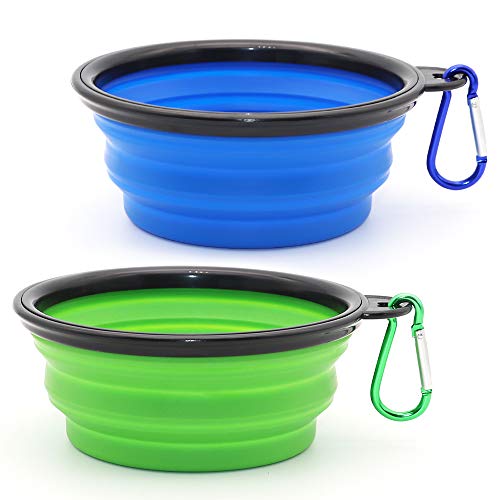
Best for: Small pets needing bowls on the go
This two-pack gives cats and small to medium dogs a food bowl and water dish for travel. Each soft-plastic bowl measures 5.1 by 3.5 by 2.1 inches when expanded and folds to about 0.5 inches high. The listed capacity is 12 fluid ounces of water or 1.5 cups of pet food. Blue and green colors make it easy to assign one bowl to food and the other to water. At around $7, it is a low-cost option for walks, car trips, camping, and daily outings.
The standout feature is the compact fold-flat shape. Each bowl includes a carabiner, so you can clip them to a leash, backpack, carrier, or luggage. They are light enough to keep in a vehicle or walking bag without taking much room. The bowls can also fold to two heights, which helps with storage and portion size. Soft plastic should be comfortable for quick meals, and the bowls are listed as dishwasher safe. Still, the small size limits their use for larger dogs or long outdoor trips where frequent refills are inconvenient.
Pros
- Two bowls and two carabiners support separate food and water use.
- Folded height of about 0.5 inches saves space in bags and cars.
- Dishwasher-safe soft plastic allows quick cleanup after meals.
Cons
- A 12-fluid-ounce capacity may be too small for large dogs.
- Soft, collapsible sides may be less stable than rigid bowls on uneven ground.
1. ZIWI Peak Air-Dried Dog Food

Best for: owners seeking grain-free beef food
ZIWI Peak Air-Dried Dog Food uses free-range, grass-fed, grass-finished beef, including organ meat and bone. The recipe also contains New Zealand green mussels, green tripe, and organic kelp. Air-drying gives the pieces a jerky-like texture without refrigeration. The 16-ounce bag can work as a complete meal, treat, or topper for dogs of different ages.
The formula includes added vitamins and minerals, with no grains or common kibble fillers. Its small, slightly soft pieces may suit puppies and older dogs that struggle with harder biscuits. New Zealand sourcing is another clear point of difference, since the company says its meat and seafood come from farms and waters without added hormones, antibiotics, or growth promotants. At around $24, though, this food costs more than many standard dry diets.
Pros
- Combines beef, organs, bone, green mussels, tripe, and kelp in one recipe.
- Air-dried pieces store at room temperature and can serve as meals or toppers.
- Small, softer pieces may work for puppies, adults, and senior dogs.
Cons
- A 16-ounce bag is a small supply for medium or large dogs.
- The price is high compared with conventional kibble, especially when used as a full-time food.
Buying Guide
Calorie density is the most important factor when choosing trail food for a dog. More calories per ounce reduce pack weight while still covering the extra energy burned on long hikes.
- Calories per ounce: Look for about 120–150 kcal per ounce, or 400–500 kcal per cup. Calculate the daily portion from your dog’s weight, activity, and the label.
- Nutritional completeness: Choose dry food with an AAFCO complete-and-balanced statement for your dog’s life stage. Avoid relying on treats, toppers, or homemade mixes for more than 10% of daily calories.
- Digestive tolerance: Feed the selected recipe at home for 7–10 days before leaving. Stop if vomiting, diarrhea, itching, or unusual fatigue appears.
- Moisture and pack weight: Kibble usually weighs less than canned food. Portion meals into waterproof bags, and carry at least 1 extra day of food for delays.
- Feeding practicality: Select pieces your dog can chew easily, then split the ration into 2–3 meals. Carry enough water for eating, especially with dry recipes and warm-weather hikes.
If you cannot optimize everything, prioritize a calorie-dense, complete food your dog already digests well.
Frequently Asked Questions
How do I choose food for my dog while backpacking?
Choose backpacking dog food that is calorie-dense, lightweight, easy to portion, and familiar to your dog. Look for a complete diet with animal protein, enough fat, and digestible carbohydrates. Dry kibble usually packs well, while freeze-dried food saves weight after adding water. Start switching meals at least seven days before departure.
What should I feed my dog on a backpacking trip?
Feed your dog its usual complete diet, with extra calories only when distance, elevation, or cold weather raises energy needs. Increase portions gradually and split food into two or three meals. A dog eating 2 cups daily at home may need roughly 2.5 to 3 cups on demanding days, based on veterinary guidance.
Can freeze-dried dog food work for backpacking?
Yes, freeze-dried dog food can work well for backpacking if you carry enough water and follow the package directions. Choose a complete and balanced recipe, not a topper or treat. Test the food before leaving, then pack each meal in a separate bag to simplify feeding at camp.
Are high-protein dog foods good for backpacking?
High-protein dog foods can suit active dogs, but protein alone does not determine a good backpacking ration. Check calories, fat content, ingredients, and your dog’s tolerance. Compare the energy listed per cup or ounce, then adjust portions gradually. Dogs with kidney or other health problems need veterinary advice first.
Conclusion
ZIWI Peak Air-Dried Dog Food is the top pick for backpackers who want a compact, nutrient-dense option that needs no refrigeration and suits dogs accustomed to richer air-dried meals. If your priority is the lowest trail weight or a simpler feeding routine, choose a lightweight freeze-dried formula instead, then add water when your dog prefers a softer texture or needs extra hydration. Before buying, double-check the bag size, ingredient compatibility with your dog’s allergies and diet, the total quantity needed for every trail day, and the current price, since smaller packages can cost more per ounce. Pack a little extra for delays, cold weather, or increased activity.