
5 Best Bushcraft Knife Under $100 for Camping
The Gerber Ultimate Fixed Blade Knife is the top pick for most buyers because it combines a useful fixed blade with practical survival tools. For shoppers seeking the best bushcraft knife under $100, its included fire starter, sharpener, and emergency whistle add value without pushing the price into specialty territory. Its sheath also supports belt carry.
This guide is for campers, hikers, new outdoor skills learners, and anyone building a simple field kit. The key factors are blade length, steel type, handle grip, sheath quality, and overall weight. A sturdy blade around 4 inches suits most camp tasks without feeling bulky. The five picks below are ranked with clear reasons and honest drawbacks for each, so you can choose a capable outdoor knife that fits your budget and planned use.
Quick Comparison
| # | Product | Best For | Price | |
|---|---|---|---|---|
| 1 | Gerber Ultimate Fixed Blade Knife | Survival Kit Gear Seekers | ~$43 | View → |
| 2 | BPSKNIVES Adventurer Bushcraft Fixed-Blade Knife | Bushcraft Campcraft Practitioners | ~$40 | View → |
| 3 | Morakniv Companion Fixed Blade Outdoor Knife | Lightweight Trail Hikers | ~$20 | View → |
| 4 | CVLIFE 5.2 D2 Fixed Blade Bushcraft Knife | D2 Steel Enthusiasts | ~$24 | View → |
| 5 | Morakniv Companion Fixed-Blade Knife | Affordable Outdoor Utility Buyers | ~$14 | View → |
5 Top Bushcraft Knife Picks
These five bushcraft knives are ranked by overall value, counting down to the top pick.
5. Morakniv Companion Fixed-Blade Knife

Best for: Budget-minded campers and hikers
The Morakniv Companion is a compact fixed-blade knife for camp chores, fishing, hiking, and general outdoor carry. Its 4.1-inch blade uses 0.08-inch, or 2.0 mm, 1095 carbon steel. The full knife measures 8.5 inches, and the listed weight with its sheath is 3.9 ounces, or 110 grams. At around $14, it offers a low-cost way to add a fixed blade to a daypack or belt.
The design keeps things practical. An ergonomic polymer handle has a soft, high-friction surface and a finger guard, which can give you better control when your hands are wet or cold. The matching polymer sheath is easy to clean and includes a belt clip for attachment to a belt or rucksack. The carbon-steel blade should handle ordinary camp cutting and woodwork, but it needs more care than stainless steel. Dry it after contact with moisture and apply a light protective oil to help limit rust. This is a simple, lightweight tool, not a heavy chopping knife or precision kitchen blade.
Pros
- 4.1-inch 1095 carbon-steel blade suits common camp and outdoor cutting tasks.
- 3.9-ounce weight with sheath adds little bulk to a pack or belt.
- Finger guard, grippy polymer handle, and belt-clip sheath support controlled carry and use.
Cons
- 1095 carbon steel can rust if left damp, so regular drying and maintenance are necessary.
- The 2.0 mm blade is better for light to moderate work than batoning or heavy chopping.
4. CVLIFE 5.2 D2 Fixed Blade Bushcraft Knife
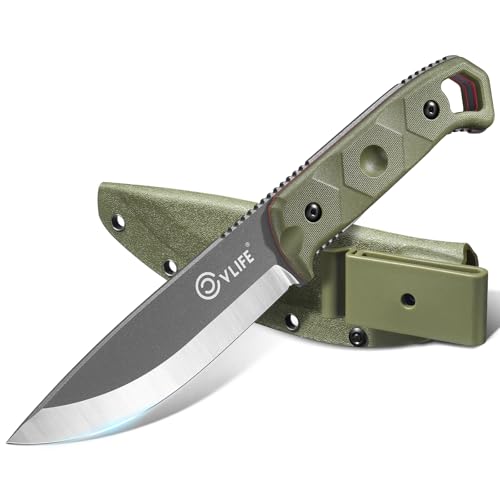
Best for: Bushcraft users needing a sturdy camp knife
The CVLIFE 5.2-inch fixed-blade knife uses thick D2 tool steel with a 4.7mm spine and a stated 59–61 HRC hardness. Its 10.1-inch overall length gives it useful reach for camp chores, while the modified Scandi grind supports wood carving and feather sticks. The drop-point tip also suits drilling small bow-drill divots. At around $24, it offers a lot of steel for the money.
The handle uses five layers, with a solid core, two red liners, and textured nylon-fiberglass scales. That design should provide a firm grip during wet or muddy work, while jimping along the spine gives your thumb extra control. The polymer sheath includes an adjustable retention screw and a rotating belt clip for vertical, horizontal, or angled carry. D2 holds an edge well, but it is semi-stainless. Wipe the blade dry and apply oil occasionally to limit corrosion.
Pros
- Thick 4.7mm D2 blade supports demanding camp tasks.
- Scandi grind and tapered tip suit carving and drilling.
- Rotating sheath clip allows three carry positions.
Cons
- Semi-stainless D2 needs drying and periodic oiling.
- The thick, 5.2-inch blade may feel excessive for light camp chores.
3. Morakniv Companion Fixed Blade Outdoor Knife

Best for: Campers needing a light, general-purpose knife
The Morakniv Companion is a fixed-blade outdoor knife for camping, hiking, fishing, backpacking, and basic survival tasks. Its Sandvik 12C27 stainless steel blade measures 4.1 inches long and 0.08 inch, or 2.0 mm, thick. That size gives it enough reach for carving, trimming cord, preparing food, and cutting tinder without making the knife cumbersome. The complete knife and sheath weigh 3.9 ounces, or 110 grams.
Its strongest feature is the practical balance of price, weight, and everyday cutting ability. The stainless blade resists rust better than carbon steel, which helps after damp trips or food preparation, though it still needs cleaning and drying. A polymer handle provides a soft, high-friction grip, and the finger guard adds control during ordinary cuts. The included plastic sheath is easy to clean and has a belt clip for attachment to a belt or rucksack. At around $20, it offers a useful setup without requiring a separate sheath purchase. The 8.5-inch total length remains manageable in a pack.
Pros
- 4.1-inch stainless blade handles carving, food prep, and tinder.
- 3.9-ounce weight adds little load to a pack.
- Friction-grip handle and finger guard improve handling in wet conditions.
Cons
- The 2.0 mm blade is not suited to heavy chopping or splitting.
- A fixed blade needs sheath storage and takes more room than a folding knife.
2. BPSKNIVES Adventurer Bushcraft Fixed-Blade Knife

Best for: Campers wanting a compact bushcraft knife
The BPSKNIVES Adventurer is a fixed-blade bushcraft knife for camping, fishing, hunting, and general outdoor tasks. Its full-tang 1066 carbon steel blade measures 5⅓ inches long, 1.2 inches wide, and 0.1 inches thick. The knife measures 10 inches overall and weighs 5.7 ounces without the sheath. A true Scandinavian grind gives the edge a practical profile for carving and wood preparation.
The walnut handle has a Danish oil coating to help resist dirt and moisture. Its fasteners can be removed for cleaning, which is useful after wet trips or messy camp chores. The included leather sheath has a belt-carry setup and holds a ferro rod for starting fires. The knife arrives coated in gun oil, so wipe the blade before first use. At around $40, this Ukrainian-made knife offers a useful set of outdoor essentials without a high price.
Pros
- Full-tang 1066 carbon steel provides a solid base for camp and carving work.
- Compact 10-inch size and 5.7-ounce knife weight make it manageable to carry.
- Leather sheath includes a ferro rod for fire-starting away from home.
Cons
- Carbon steel can rust quickly if it stays damp, so the blade needs drying and regular care.
- The 2.5 mm blade is suited to light and moderate tasks, not heavy chopping or batoning.
1. Gerber Ultimate Fixed Blade Knife
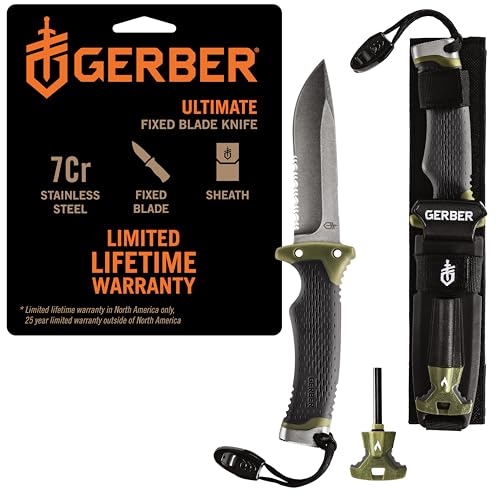
Best for: Campers wanting built-in fire tools
The Gerber Ultimate is a fixed-blade outdoor knife with a 4.8-inch, half-serrated stainless steel drop-point blade. It measures 10 inches overall and weighs 11.02 ounces, so it offers useful reach without being especially large. A textured rubber handle gives you a more secure hold in wet or cold conditions. The rear pommel can handle light striking tasks, while an emergency whistle adds a basic signaling option.
Its sheath packs more gear than most basic knife carriers. It includes a sharpening stone and a ferrocerium rod, so you can maintain the edge and start fires without carrying separate tools. That setup suits camping, hunting, fishing, hiking, and bushcraft kits. The combination is practical for buyers who want several functions in one package. Still, the knife is not a substitute for a full tool kit. At around $43, it offers solid utility for the price, and Gerber backs it with a limited lifetime warranty.
Pros
- The stainless steel drop-point blade combines a 4.8-inch cutting edge with serrations for rope and fibrous material.
- The sheath includes both a sharpener and ferro rod, reducing the number of separate camp tools you need.
- The textured rubber grip, whistle, and hammer pommel add useful handling and emergency features.
Cons
- A half-serrated edge is less convenient for clean slicing and takes more effort to sharpen evenly.
- At 11.02 ounces, it may feel bulky for lightweight hiking or everyday pocket carry.
Buying Guide
The most important factor is blade steel paired with proper heat treatment. A tough, well-treated blade stays sharp longer and resists chipping during carving, batoning, and food preparation.
- Blade steel: Look for 1095 carbon steel, D2, or stainless options such as 14C28N. Carbon steel cuts well but needs drying and a light coat of oil after wet use.
- Blade size and shape: A 3.5- to 5-inch blade suits most camp tasks. Choose a 3- to 4-millimeter spine, a strong drop point, and a usable section of straight edge.
- Tang and construction: Select a full-tang design, where steel runs through the handle. Avoid decorative partial tangs if you plan to split wood or apply controlled impact.
- Handle and grip: Micarta or textured rubber offers secure handling in rain. Check for a handle around 4 to 5 inches long, with no sharp edges or loose scales.
- Sheath and price: Set aside $50 to $100 for the knife, and look for a fitted leather or molded polymer sheath with belt carry and secure retention. A lanyard hole adds backup security.
If you must compromise, prioritize steel quality and full-tang construction over premium handle materials or decorative extras.
Frequently Asked Questions
How do I choose a bushcraft knife under $100?
Choose a bushcraft knife under $100 with a full-tang blade, grippy handle, and outdoor-ready steel. Look for a blade between 3.5 and 5 inches long, with a spine around 3 millimeters thick. A secure sheath, strong grip, and balanced weight matter more than decorative handles or oversized blades.
What blade steel is best for an affordable bushcraft knife?
The best steel depends on your priority, with carbon steel favoring easy sharpening and stainless steel resisting rust. Common carbon options include 1095, while 12C27 and 14C28N offer better moisture resistance. Carbon blades need regular drying and a light coat of oil after wet use, especially in humid camps.
Can a knife under $100 handle common bushcraft tasks?
Yes, a well-made knife under $100 can handle carving, feather sticks, food preparation, and small wood tasks. Choose a fixed blade with a full tang and a 4-inch blade for general use. Avoid heavy batoning through large logs, which can damage the edge, handle, or sheath.
Are budget bushcraft knives good for camping and wood carving?
Yes, budget bushcraft knives can work well for camping and wood carving when they have a comfortable handle, sturdy tang, and clean factory edge. A blade around 4 inches gives useful control for notching and carving. Check the sheath before buying, since poor retention creates a safety risk.
Conclusion
The Gerber Ultimate Fixed Blade Knife remains the top pick for campers and new bushcrafters who want one ready-to-carry tool with practical features at a budget-friendly price. If your priority is a lighter, simpler knife for carving and general camp tasks, choose the Morakniv Companion instead, since its straightforward design may be easier to pack and maintain. Before ordering, double-check the blade and handle size, sheath compatibility with your belt or kit, the number of pieces included, and the current price, since listings and bundles can change. Check the return policy too, especially when buying from a marketplace seller, and confirm that the sheath and other accessories match the specific listing.