
6 Best Turkey Hunting Boots for All-Day Comfort
Hunthor Rubber Hunting Boots for Men are the best turkey hunting boots for most buyers because their tall rubber design offers dependable waterproof coverage in wet fields and woods. This top pick has a simple build that suits hunters who want one pair for muddy spring conditions. It focuses on protection rather than extra features.
This guide is for turkey hunters choosing footwear for marshes, forests, and rainy trails. The key factors are boot height, rubber thickness, sizing, and outsole traction, since water and uneven ground can end a hunt quickly. The six picks below are ranked with clear reasons and honest drawbacks for each, so you can match a pair to your terrain, weather, and budget.
Quick Comparison
| # | Product | Best For | Price | |
|---|---|---|---|---|
| 1 | Hunthor Rubber Hunting Boots for Men | Hunters Needing Rubber Protection | ~$120 | View → |
| 2 | LaCrosse Country DNA Waterproof Hunting Boots | Waterproof Boots for Wet Terrain | ~$200 | View → |
| 3 | Hunthor Men's Hunting Boots | Men Seeking General Hunting Boots | ~$62 | View → |
| 4 | TIDEWE Rubber Rain Boots for Men | Rainy-Weather Outdoor Work | ~$70 | View → |
| 5 | Hunthor Hunting Boots for Men | Hunters Wanting Basic Field Boots | ~$99 | View → |
| 6 | Hunthor Rubber Hunting Boots for Men with 800g Insulation | Cold-Weather Hunters Needing 800g Insulation | ~$116 | View → |
6 Top Turkey Hunting Boot Picks
This ranked list moves from dependable options to the strongest overall choice, counting down to our top turkey hunting boot pick.
6. Hunthor Rubber Hunting Boots for Men with 800g Insulation

Best for: Cold-weather hunters in wet terrain
The Hunthor hunting boots combine a full rubber shell with 6mm neoprene and 800g Thinsulate Ultra insulation. That setup targets cold marshes, muddy trails, and shallow streams, with warmth rated for sub-zero conditions. Sealed seams help block water, while the neoprene lining allows some breathability during longer walks. The price is around $116, which places them in the midrange for heavily insulated rubber hunting boots.
Several details make this pair more practical in the field. A lightweight EVA midsole adds cushioning without the weight of a thick traditional sole, and the rubber outsole is designed for grip on wet ground. A steel hook core supports the boot’s structure. Reinforced rubber covers the heel, Achilles area, and toe, while the rear gusset adjusts around different calf sizes. The kick-off feature also makes removal easier after a muddy hunt.
Pros
- 800g Thinsulate and 6mm neoprene provide substantial warmth for freezing conditions.
- Full rubber construction and sealed seams help keep water out.
- Adjustable gusset, reinforced impact areas, and a kick-off design improve field practicality.
Cons
- The heavy insulation can reduce internal width, so buyers should check the size chart carefully.
- Thick cold-weather construction may feel warmer and less flexible than lighter rain boots.
5. Hunthor Hunting Boots for Men

Best for: Cold-weather hunters crossing wet ground
Hunthor’s men’s hunting boots are built for freezing, wet conditions. They use 1,600 grams of insulation, with a 4mm neoprene layer and 2mm fleece lining. The listed rating reaches -20°F, making them suited to winter hunts, farm work, and other outdoor jobs. A waterproof rubber upper helps block snow, mud, and standing water.
The design also includes practical details for field use. Reinforced rubber covers the toe and heel, while a back gusset lets you adjust the fit around your calf. A kick-off heel plate makes removal easier after a long day. Underfoot, the EVA midsole adds cushioning, and the steel shank supports stability on uneven ground. The rugged outsole is intended for slippery surfaces. The Next Camo pattern fits wooded, brushy, and open-field settings. At around $99, these boots offer a focused cold-weather setup without reaching premium hunting-boot prices.
Pros
- 1,600g insulation, 4mm neoprene, and 2mm fleece support subzero use.
- Waterproof rubber construction helps protect feet in snow, mud, and wetlands.
- Steel shank, EVA midsole, and rugged tread provide support and grip.
Cons
- The heavy insulation may feel too warm during active hikes or mild weather.
- Rubber construction and thick insulation can feel bulkier than lighter field boots.
4. TIDEWE Rubber Rain Boots for Men
Best for: Cold-weather hunting and farm work
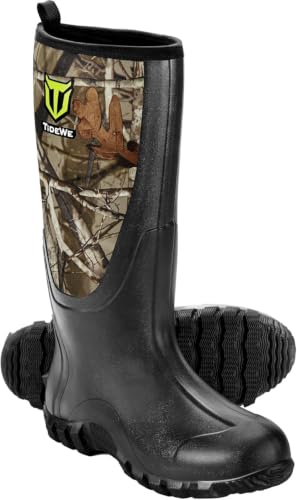
The TIDEWE rubber boots are tall, pull-on waterproof boots for muddy trails, wet fields, fishing, and snow removal. This size 10 pair uses a 6mm neoprene upper with a natural rubber shell. The camo finish suits hunting and other outdoor work. A rear kick tab helps with removal, while the tall shaft covers more of the lower leg than ankle rain shoes.
The design combines flexibility with support. Neoprene bends as you walk, and the cushioned footbed helps during long periods on your feet. A breathable mesh lining supports airflow, while the listed comfort range runs from -4°F to 68°F. Underfoot, a steel shank adds stability, and reinforced rubber protects the toe and heel. The deep tread targets mud, wet grass, snow, and uneven ground. At around $70, they offer more structure than basic rain boots, but fit matters. Check the size chart before ordering. Choose one size up for wide feet, high insteps, larger calves, thick socks, or extra room.
Pros
- 6mm neoprene and natural rubber provide waterproof coverage.
- Steel shank adds support on uneven outdoor ground.
- Rear kick tab makes the pull-on design easier to remove.
Cons
- The close fit may feel tight with thick socks or wide feet.
- Tall rubber boots can feel warmer and less flexible than short rain shoes.
3. Hunthor Men’s Hunting Boots

Best for: Early-season hunters on rough trails
Hunthor’s 8-inch hunting boots combine full-grain leather with abrasion-resistant 900D Oxford fabric. That mix helps shed morning dew, damp grass, light rain, and occasional splashes. Rubber panels reinforce the toe, heel, and Achilles area, protecting common impact zones from roots, rocks, and brush. At around $62, they target hunters who want more protection than a casual hiking shoe without moving into premium pricing.
The EVA midsole adds cushioning for long walks to stands, blinds, or scouting areas. Fabric sections can help release heat, while the aggressive rubber lugs grip dirt, wet leaves, rocks, and uneven ground. A built-in steel shank supports the arch and adds stability when carrying gear. These boots fit early-season deer, turkey, and upland bird hunts, plus general trail use. Their materials suit damp conditions, but the design does not promise full waterproofing or insulation for cold weather.
Pros
- Full-grain leather and 900D Oxford fabric help resist damp grass, dew, and light rain.
- Aggressive rubber lugs provide traction on wet leaves, dirt, rocks, and uneven trails.
- The EVA midsole and steel shank combine cushioning with arch support and load stability.
Cons
- They are not insulated, so they may feel cold during late-season hunts or winter use.
- Water protection appears suited to light moisture, not prolonged rain, deep puddles, or creek crossings.
2. LaCrosse Country DNA Waterproof Hunting Boots

Best for: Cold-weather hunters crossing wet, rough ground
These LaCrosse Alphaburly Pro boots are tall rubber hunting boots for cold, wet conditions. This size 11 version uses Mossy Oak Country DNA camouflage, an 18-inch shaft, and 1,600 grams of Thinsulate Ultra insulation. The waterproof rubber shell helps keep out rain, mud, and melting snow. At around $200, they cost more than basic rubber boots, but the insulation and coverage target serious winter use.
What stands out is the balance of warmth and protection. The rear gusset adjusts around the calf, leaving room for different leg sizes or thick clothing. A Burly Pro outsole adds tread for snow, mud, and slick ground. These boots suit winter hunts, wet fields, and slow walks through rough terrain. The 1,600-gram insulation may feel excessive during mild weather or active hikes. Tall rubber construction also gives up some flexibility compared with lighter outdoor footwear.
Pros
- 1,600g Thinsulate Ultra insulation provides substantial warmth in freezing conditions.
- The 18-inch waterproof rubber shaft protects against deep mud, rain, and snow.
- Adjustable rear gusset helps create a closer fit around different calf sizes.
Cons
- Heavy insulation can feel too warm during mild weather or strenuous movement.
- Tall rubber boots may feel stiff and bulky compared with lighter hiking shoes.
1. Hunthor Rubber Hunting Boots for Men
Best for: Cold-weather deer and turkey hunters
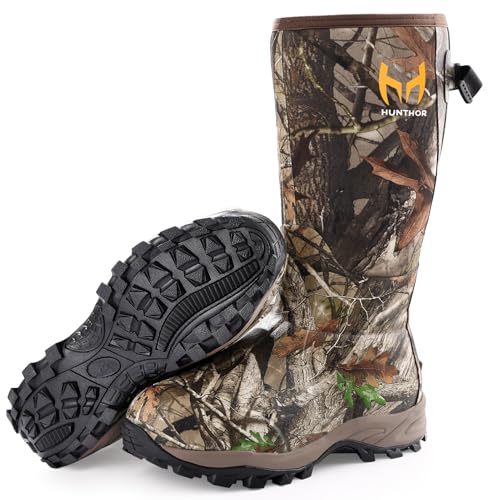
These are tall rubber hunting boots built for wet ground, with a sealed rubber shell and neoprene lining. The shell helps block water in marshes, streams, and muddy trails, while the lining is designed to reduce the clammy feel common with plain rubber boots. A 6mm neoprene layer adds insulation, with a listed comfort range from -4°F to 50°F. Actual warmth will vary with socks, activity, and exposure.
The EVA midsole adds cushioning without the bulk of a heavier construction. A steel hook core supports the boot, while the rubber outsole is made for grip on slick terrain. Reinforced rubber around the heel, Achilles, and toe helps shield high-wear areas. The Next Camo G2 pattern suits deer and turkey hunting, plus fishing and farm work. At around $120, these sit in the midrange for hunting footwear. Their strongest feature mix is waterproof coverage, cold-weather insulation, and rubber protection.
Pros
- Sealed rubber construction helps keep feet dry in wet terrain.
- 6mm neoprene insulation covers temperatures from -4°F to 50°F.
- Reinforced heel, Achilles, and toe areas add protection.
Cons
- The 6mm insulation may feel too warm during active hunts above 50°F.
- Full rubber construction can feel less flexible than lighter trail footwear.
Buying Guide
The most important factor is quiet, reliable waterproofing. Turkey hunts often involve sitting still for hours in wet grass, so damp feet can end a hunt before poor camouflage does.
- Waterproof protection: Choose rubber or fully sealed uppers with waterproof ratings when listed. A 16- to 18-inch shaft helps block dew, shallow mud, and creek water better than a low hiking shoe.
- Insulation level: Match warmth to local spring temperatures. Uninsulated boots suit regions above 50°F, while 400- to 800-gram insulation fits colder mornings from 20°F to 45°F.
- Traction: Look for aggressive rubber lugs about 4 to 6 millimeters deep. A lugged outsole gives better grip on wet leaves, slopes, and loose soil.
- Fit and support: Leave roughly ½ inch at the toes, then test with hunting socks. A supportive heel and ankle reduce fatigue during hikes of 2 miles or more.
- Noise and weight: Pick flexible materials that do not crackle when kneeling. For long walks, aim for about 4 to 6 pounds per pair, since heavy rubber can tire your legs.
If you cannot have everything, prioritize waterproof protection because cold, wet feet can end a hunt quickly.
Frequently Asked Questions
How tall should turkey hunting boots be?
Turkey hunting boots should reach mid-calf or higher to block wet grass, mud, and thorny brush. A 10- to 18-inch shaft works for most spring conditions, while knee-high rubber models offer better coverage in flooded fields. Choose a flexible fit that lets you crouch and walk quietly.
What features matter most in turkey hunting footwear?
The key features are waterproofing, quiet materials, traction, and a comfortable fit. Look for rubber or waterproof leather, deep lugs, and insulation matched to the season. A 400-gram insulated boot suits colder mornings, but uninsulated models feel cooler during late-spring hunts and long hikes.
Can turkey hunting boots be used for other hunting?
Turkey hunting boots can handle deer hunts, small-game trips, and general outdoor use when their height and insulation fit the terrain. Rubber knee boots work well in wet woods, while lightweight hikers suit dry hills. They may feel too warm for summer scouting or too stiff for long-distance walking.
Are insulated or uninsulated turkey boots better?
Insulated turkey boots are better for cold mornings, while uninsulated pairs are better for warm weather and active hikes. Insulation is often rated in grams, with 200 to 800 grams covering many seasonal options. Check the temperature range, since thick liners can cause sweaty feet during mild hunts.
Conclusion
Hunthor Rubber Hunting Boots for Men are the top recommendation for hunters who want a practical, waterproof option for muddy ground, wet grass, and changing spring conditions. If your priority is staying warm during long, cold sits, choose an insulated pair instead, since added lining can matter more than a lighter, simpler build. Before buying, double-check the size chart, boot compatibility with your socks and pants, the quantity included, and the current price, since listings can change. Also consider the terrain around your hunting area. Rubber footwear may suit wet fields and swamp edges, while a lighter boot can feel better on long hikes. The right choice should match your season, ground conditions, and typical distance on foot.