
7 Best Hiking Grill for Backpackers
Portable Tabletop Charcoal Grill is the top pick for most buyers, making it our best hiking grill because it offers a practical cooking surface in a compact, carry-friendly format. Its charcoal setup keeps outdoor cooking simple, with no outlet or battery required, though pack weight still matters on longer walks.
This guide is for campers, hikers with a vehicle or base camp, and anyone who wants hot food outdoors without carrying a full-size grill. For these compact cookers, the key factors are grate size, total weight, and the durability of the steel or aluminum body. Airflow control and cleanup also affect how useful each model feels after cooking. The 7 picks below are ranked with clear reasons and honest drawbacks for each, so you can match the grill to your trips, group size, and cooking plans.
Quick Comparison
| # | Product | Best For | Price | |
|---|---|---|---|---|
| 1 | Portable Tabletop Charcoal Grill | Apartment Balcony Grillers | ~$30 | View → |
| 2 | WINB Portable Folding Charcoal BBQ Grill | Tailgate Cooking Crews | ~$10 | View → |
| 3 | Portable Charcoal BBQ Grill Smoker | Campground Smoking Enthusiasts | ~$20 | View → |
| 4 | Portable Folding Charcoal Grill | Space-Saving Picnic Cooks | ~$25 | View → |
| 5 | Odoland Folding Campfire Grill | Open-Fire Camp Chefs | ~$37 | View → |
| 6 | Portable Stainless Steel Foldable Charcoal Grill | Rust-Resistant Outdoor Cooks | ~$37 | View → |
| 7 | TEAHOOR Portable Camping Grill | Lightweight Backpacking Campers | ~$20 | View → |
7 Hiking Grills Worth Packing
These picks are ranked by portability, cooking space, and fuel convenience, counting down to the top choice for trail meals.
7. TEAHOOR Portable Camping Grill
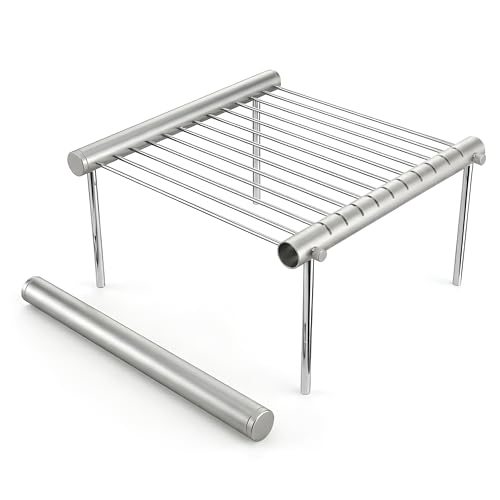
Best for: Ultralight solo camping meals
The TEAHOOR Portable Camping Grill is a compact stainless steel grate for charcoal, wood fires, and campfire cooking. Its parts collapse into an 11-inch tube, so it can fit in a backpack side pocket or bike bottle cage. The grill weighs 12 ounces and includes an aluminum alloy case for storage. That makes it a practical choice when every ounce matters.
The frame uses food-grade 304 stainless steel, with polished edges that are less likely to snag gear or scratch hands. Its detachable rods lock together without tools, and the design aims for assembly in under two minutes. Reinforced support rods hold up to 3.5 pounds, enough for several smaller food items or a compact camping pot. After the grill cools, the parts can slide back into the tube. The smooth surface should also wipe clean easily, while the listed dishwasher-safe construction simplifies cleanup at home. At around $20, it offers useful portability without a large gear investment.
Pros
- Weighs just 12 ounces and packs into an 11-inch tube.
- 304 stainless steel resists rust and handles repeated campfire heat.
- Supports up to 3.5 pounds for food or a small cooking pot.
Cons
- The 3.5-pound load limit rules out large pots or heavy cookware.
- No cooking-surface dimensions are provided, so meal capacity may be limited for groups.
6. Portable Stainless Steel Foldable Charcoal Grill

Best for: Car campers and picnic pairs
This portable charcoal grill is built for outdoor meals without the bulk of a full-size cooker. Its stainless steel body resists rust and should be easier to clean after use. At 5 pounds, it remains manageable for camping trips, beach outings, and short hikes, though serious ultralight backpackers may find that weight noticeable. The cooking grate has room for meat, vegetables, or skewers.
The grill folds to 14.2 by 9.6 by 0.8 inches, so it can slide into a car, gear bin, or larger backpack. Sturdy legs open in seconds, then fold flat for storage. Vent openings help charcoal heat the grate quickly and evenly. It is sized for two to four people, or up to six if meals are cooked in batches. Around $37, it offers a practical middle ground between a small disposable grill and a larger camp cooker.
Pros
- Folds nearly flat, making storage simple in tight spaces.
- Stainless steel construction offers rust resistance and easier cleanup.
- Handles meals for two to four people without taking much room.
Cons
- At 5 pounds, it may feel heavy for long backpacking trips.
- Charcoal requires fuel, lighting time, and ash cleanup, unlike some gas camp grills.
5. Odoland Folding Campfire Grill

Best for: Car campers needing compact grilling
The Odoland Folding Campfire Grill is a portable stainless steel cooker for charcoal or wood fires. Its five parts assemble or pack down in less than one minute, with no complex setup described. Unfolded, it measures 17.1 by 17.1 by 12.2 inches. Folded, it becomes 17 by 9.2 by 2 inches and fits inside the included carrying bag. At around $37, it costs more than a basic wire camping grate, but offers more structure for outdoor cooking.
The 304 stainless steel construction should handle repeated heat exposure and resist rust better than untreated steel. Its funnel-shaped frame helps direct heat toward the cooking area, while airflow holes support charcoal burning. A lower panel separates ash and carbon from the fuel, which may reduce mess during cooking. The grill surface is listed as non-stick and has rounded edges, so handling and cleanup should be easier after cooking saucy foods. Still, it is an open-fire appliance, not a controlled-temperature stove.
Pros
- Folds to just 2 inches thick for storage and transport.
- Five-piece setup takes less than one minute.
- Stainless steel frame resists rust and high heat.
Cons
- The listed dimensions do not show the usable cooking area, so large meals may require multiple batches.
- No product weight is provided, which makes it harder for backpackers to judge its load.
4. Portable Folding Charcoal Grill

Best for: Campers with limited trunk space
This medium charcoal grill folds into a box measuring 17.5 by 12.4 by 3 inches. That compact size makes it practical for car camping, picnics, tailgating, and small patios. A built-in handle also makes carrying it easier than moving a full-size backyard grill. At around $25, it offers a low-cost way to cook with charcoal instead of relying on a campsite fire grate.
The grill uses stainless steel, which resists rust, scratches, and warping better than some basic painted steel models. Its cooking grate comes out for cleaning, while the separate ash catcher helps collect used charcoal and debris. Assembly does not require screws, so setup should be fairly simple. Five vents on each side allow air to reach the coals, helping them burn more efficiently. Still, this is a compact cooker with limited room for larger meals. Open the packaging carefully, since the metal edges may be sharp during first setup.
Pros
- Folds into a 17.5-by-12.4-by-3-inch box for easier storage and transport.
- Stainless steel construction resists rust, scratches, and heat-related warping.
- Removable grate and ash catcher make post-cook cleanup less troublesome.
Cons
- Compact cooking space may not suit large groups or oversized food.
- Charcoal requires fuel, lighting time, and smoke management, unlike an electric or gas grill.
3. Portable Charcoal BBQ Grill Smoker

Best for: solo campers and picnic lunches
This foldable charcoal grill is a compact stainless steel cooker for camping, picnics, tailgating, patios, and small outdoor gatherings. Its folded footprint measures 13.7 by 9.4 by 2.3 inches, so it can fit in a car trunk or storage bin more easily than a full-size grill. The legs fold underneath, and the cooking rack and charcoal mesh come out for cleanup. At around $20, it targets buyers who want a basic charcoal setup without a large equipment investment.
Five vents on each side help adjust airflow and keep coals burning. The stainless steel body is listed as heat-resistant, rust-resistant, and non-toxic, while thicker tripod legs provide a steadier base than very light wire supports. Assembly follows four basic steps: unfold the legs, add the charcoal mesh, place the fuel, and install the cooking rack. Still, this is a small, open grill rather than a temperature-controlled smoker. It suits a few portions better than a family cookout. Since the cooking area is not specified, check the dimensions and rack size before buying.
Pros
- Folds to 13.7 by 9.4 by 2.3 inches for easier transport and storage.
- Stainless steel construction resists rust, scratches, and heat.
- Removable rack and charcoal mesh make ash cleanup simpler.
Cons
- The compact format may not fit enough food for larger groups.
- No lid or thermometer is listed, limiting smoke control and precise temperature management.
2. WINB Portable Folding Charcoal BBQ Grill

Best for: Solo campers and picnic pairs
The WINB Portable Folding BBQ Grill is a small charcoal or wood-burning cooker for one or two people. It folds to about 8.2 by 5.5 inches, roughly book-sized, and weighs 1.15 pounds, or 520 grams. A waterproof carry bag fits the grill for backpacking, beach trips, and car travel. Around $10, it costs less than many larger portable grills.
Its stainless steel construction handles direct heat from charcoal or wood and resists rust during outdoor storage. Setup uses five pieces that snap together without screws or tools. The listed setup time is about 20 seconds, with the legs, grill grate, and body locking into place. Removable parts can be rinsed under running water, and the product is described as dishwasher-safe. The small footprint makes it useful for burgers, vegetables, and skewers, but the cooking area suits modest portions rather than a full meal for a group.
Pros
- Folds to 8.2 by 5.5 inches and weighs only 1.15 pounds.
- Supports both charcoal and wood as fuel.
- Includes a carry bag and removable, rinse-ready parts.
Cons
- The compact cooking surface is limited to one or two servings.
- Ash and grease still require cleanup after cooking, even with detachable parts.
1. Portable Tabletop Charcoal Grill

Best for: Campers feeding four to six people
This portable charcoal grill measures 24 by 13 by 9 inches and folds for storage in a car trunk, RV, or larger backpack. It uses charcoal rather than gas, so food can pick up a traditional smoky taste. The listed size should handle burgers, steak, fish, and vegetables for roughly four to six servings, though larger meals may require multiple rounds. At around $30, it targets shoppers who want a low-cost outdoor cooker without carrying a full-size grill.
Setup does not require tools or screws. The detachable cooking grate comes off for washing, while the ash catcher helps collect spent charcoal and reduces cleanup around a campsite or picnic table. Its non-toxic construction is listed as durable and safe for outdoor cooking, but the product details do not name the specific metal or provide a weight. That missing information makes it harder to judge long-term rust resistance or backpack comfort. It fits tailgates, beach trips, patios, and camping, but charcoal still requires time, fuel, ventilation, and careful disposal.
Pros
- Folds into a more manageable shape for car, RV, and camping storage.
- Detachable grate and ash catcher simplify post-meal cleanup.
- Charcoal cooking provides smoky flavor for meat, fish, and vegetables.
Cons
- The compact 24-inch format may need several batches for larger groups.
- Charcoal produces smoke and ash, so it is less convenient than a gas or electric grill.
Buying Guide
Packed weight and size matter most for a hiking grill, because every extra pound feels harder after several miles. Aim for a packed unit under 5 pounds and no longer than 16 inches in its carry case.
- Packed weight: Choose a grill under 5 pounds for day hikes. Backpacking trips may justify a 1 to 3-pound model with a smaller cooking surface.
- Cooking area: Look for at least 100 square inches for two people, or 150 to 200 square inches for three or four servings. A grate near 12 by 10 inches suits most pairs.
- Fuel system: Confirm the fuel type before buying. A gas model should run at least 1 to 2 hours per canister, while a charcoal design needs room for roughly 1 pound of briquettes.
- Stability and setup: Select legs that lock firmly and a grate that sits at least 4 inches above the coals. Setup should take about 5 minutes without loose hardware.
- Materials and price: Stainless steel handles repeated heat better than thin coated steel. Expect to pay $30 to $80 for a basic portable grill and $80 to $150 for lighter premium models.
If you cannot have everything, prioritize packed weight, since a grill that stays home provides no value on the trail.
Frequently Asked Questions
How do I choose a grill for hiking trips?
Choose a hiking grill by matching its weight, fuel type, cooking area, and packed size to your trip. For solo meals, a 1- to 2-pound folding grate or compact gas grill usually packs more easily than a full-size charcoal model. Also check the grate material and support width before buying.
What should I look for in a portable hiking grill?
Look for a stable base, a heat-resistant grate, and controls that let you manage cooking temperature. Stainless steel handles frequent heat, while cast iron holds heat but adds weight. A cooking surface around 100 to 150 square inches can handle two burgers or a small pan without taking up much pack space.
Can I use a camping grill on any hiking trail?
You can use a portable grill on some hikes, but only where local rules and fire conditions allow it. Gas models are often simpler to manage than charcoal, though they still need a level, nonflammable setup away from tents and dry grass. Carry the fuel canister separately, and let the grate cool fully before packing.
Are gas or charcoal grills better for backpacking?
The best fuel depends on your route, cooking time, and access to canisters or charcoal. Gas starts quickly and suits short stops, while charcoal adds flavor but requires more time and cleanup. A 4-ounce gas canister may cover a short trip, but longer outings need extra fuel or a larger cartridge.
Conclusion
Portable Tabletop Charcoal Grill remains the top recommendation for hikers and campers who want a familiar charcoal cookout in a compact setup and do not mind carrying fuel, charcoal, and cleanup supplies. If your priority is faster cooking with less mess, pick a compact gas camping grill instead, since it usually avoids charcoal ash and can offer simpler heat control at camp. Before buying, double-check the grill’s packed and cooking size, confirm compatibility with your fuel, cookware, and planned cooking surface, verify what the package quantity includes, and compare the current price across reliable sellers, since listings can change and accessories may cost extra. A careful final check helps match the grill to your trips.