
5 Best Trail Camera Under $50 for Deer Scouting
CEYOMUR Trail Camera is the top pick for most buyers. It earns the best trail camera under $50 spot because its motion-triggered photo and video modes cover the core jobs without adding needless complexity. That makes it a practical choice for checking wildlife, monitoring property, or watching a feeder.
This guide is for shoppers who need an affordable camera for occasional outdoor monitoring. The most important factors are battery life, detection coverage, weather protection, and storage capacity. A compact body also helps when placement space is limited, while clear night images matter after sunset. The five picks below are ranked with specific reasons, plus honest drawbacks for each. Use the list to match your budget and setup instead of paying for features you may never use.
Quick Comparison
| # | Product | Best For | Price | |
|---|---|---|---|---|
| 1 | CEYOMUR Trail Camera | Backyard Wildlife Monitoring | ~$21 | View → |
| 2 | GardePro E5S Trail Camera | Hunters Needing Night Vision | ~$50 | View → |
| 3 | Cadrali Solar Trail Camera 4G LTE | Remote Property Cellular Monitoring | ~$50 | View → |
| 4 | KJK Mini Trail Camera | Discreet Compact Game Tracking | ~$30 | View → |
| 5 | WOSPORTS Mini Trail Camera | Portable Garden Security Checks | ~$24 | View → |
5 Top Budget Trail Camera Picks
These five affordable trail cameras are ranked by features, image quality, battery options, and value, counting down to the top pick.
5. WOSPORTS Mini Trail Camera

Best for: budget backyard wildlife monitoring
The WOSPORTS Mini Trail Camera is a small, low-cost option for watching deer, birds, gardens, or property edges. It records 30MP still photos and 1080P HD video, with a PIR motion sensor that activates when animals pass through its range. Daytime images should provide useful detail, while the 850nm infrared LEDs switch to black-and-white night footage after dark.
Its compact camouflage body measures 4.25 × 4.21 × 3.43 inches and weighs 0.73 pounds, or 332 grams. That makes it easier to hide on a tree or fence than a full-size game camera. The included adjustable strap supports quick mounting, and the manufacturer recommends placing it 3–4 feet from the target area. It runs on four AA batteries and accepts SD cards up to 32GB. Around $24, it offers a practical way to start monitoring outdoor activity without a large upfront cost.
Pros
- 30MP photos and 1080P video provide useful daytime detail.
- 850nm infrared night vision records movement after dark.
- Compact 0.73-pound body is easy to carry and conceal.
Cons
- Four AA batteries and a compatible SD card are not included.
- The 32GB storage limit may require frequent card changes for regular video recording.
4. KJK Mini Trail Camera

Best for: Budget wildlife and property monitoring
The KJK Trail Camera is a compact motion camera for yards, trails, farms, and wildlife areas. It records 36MP still photos and 2.7K video with sound, then lets you review files on its built-in 2.0-inch TFT color screen. The camera costs around $30, but you must add a compatible SD card because one is not included.
Its main strengths are broad coverage and simple operation. A 130-degree detection range can capture more of a trail, while the claimed under-0.1-second trigger reacts quickly to movement. At night, 22 low-glow 850nm infrared LEDs provide visibility up to 75 feet without the bright flash of standard LEDs. The IP66 body uses a sealed rubber ring and is rated for temperatures from -22°F to 158°F. A mounting strap and stand are included, and setup does not require Wi-Fi or an app. The advertised battery capacity reaches up to 17,000 images, though actual runtime depends on settings, weather, and activity.
Pros
- Built-in 2.0-inch screen supports quick setup and playback in the field.
- Low-glow infrared LEDs provide night coverage up to 75 feet.
- Under-0.1-second trigger and 130-degree detection range cover moving animals quickly.
Cons
- No SD card is included, so recording cannot start immediately.
- The camera lacks Wi-Fi or cellular access, requiring physical retrieval for file transfers.
3. Cadrali Solar Trail Camera 4G LTE

Best for: Remote wildlife monitoring on private land
The Cadrali Solar Trail Camera is a 4G LTE wildlife camera for locations without Wi-Fi. It connects through Verizon, T-Mobile, or AT&T and includes a prepaid SIM with a seven-day unlimited data trial. Through the phone app, you can view 4K video, change settings remotely, receive motion alerts, and share footage. At around $50, it offers more remote access than a basic SD-card trail camera.
A 4W solar panel supplies power in suitable sunlight, with the maker claiming up to 365 days of use under those conditions. Its IP66 rating helps protect against dust and water. The adjustable PIR sensor has a listed 0.2-second trigger speed for photos and videos. Files can go to a microSD card up to 128GB, but the card is not included. The app also provides AI species recognition and seven-day activity predictions. Those AI tools require cloud storage, and the cloud trial lasts 30 days before a subscription is needed.
Pros
- 4G access works without local Wi-Fi and supports three major networks.
- The 4W solar panel can reduce charging and camera removal.
- Remote 4K viewing, alerts, and setup add useful phone control.
Cons
- Cellular service and cloud features may create ongoing costs after the trials.
- A compatible memory card is not included, and performance depends on sunlight and network coverage.
2. GardePro E5S Trail Camera
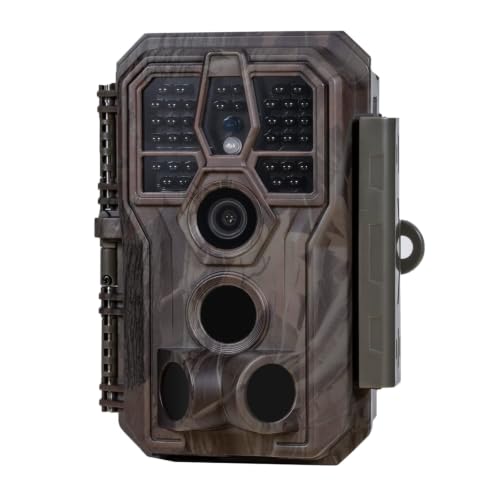
Best for: Budget-minded backyard wildlife monitoring
The GardePro E5S is a non-cellular trail camera for recording wildlife without Wi-Fi or a data plan. It captures 64MP still photos and 1296P HD video through an optical lens and image sensor. A 0.1-second trigger speed, paired with three PIR motion sensors, helps record animals moving across the camera’s detection area. It stores footage on an SD card, so you retrieve the card to review clips and photos.
Its IP66 weather-resistant housing suits outdoor placement on trees, posts, or fences. The built-in 1/4″-20 mounting thread supports compatible brackets and mounts. Power comes from eight AA batteries, which are not included. For longer-term placement, the camera also works with the GardePro SP350 solar panel, sold separately. Around $50, it offers useful image resolution for basic wildlife viewing, though the setup remains fairly hands-off and local.
Pros
- 64MP photos provide detailed still images for identifying animals.
- Three PIR sensors and a 0.1-second trigger help capture quick movement.
- IP66 protection and a 1/4″-20 thread suit exposed outdoor mounting.
Cons
- Non-cellular operation requires removing the SD card to view recordings.
- Eight AA batteries and the optional solar panel add ongoing setup costs.
1. CEYOMUR Trail Camera

Best for: First-time backyard wildlife watchers
The CEYOMUR trail camera is a low-cost option for watching wildlife, checking a farm, or monitoring a yard. It costs around $21, but you must add eight AA batteries and an SD card. Its brown housing blends into wooded areas, while the IP66-rated body is designed to resist rain and dust. A 2-inch LCD screen handles setup and playback without requiring a phone or app.
Its listed image resolution reaches 36MP, and it records 2K video during the day or night. For darkness, 24 built-in 850nm infrared LEDs work with an automatic IR filter to produce black-and-white footage. The lens, controls, and screen sit on one side, so positioning the camera should be simpler than with a flip-open design. Motion detection, time-lapse capture, audio recording, timestamps with temperature, and password protection add useful choices. The fast trigger and recovery claims may help capture moving animals, but the listing does not provide exact trigger or recovery times.
Pros
- The 2-inch LCD allows menu changes and playback in the field.
- IP66 protection suits outdoor placement in rain and dusty areas.
- Eighty-five-hundred-nanometer infrared and 24 LEDs support nighttime recording.
Cons
- Batteries and the required SD card are not included.
- The 850nm infrared system can produce a visible red glow, which may alert some animals.
Buying Guide
Detection reliability matters most when choosing a budget trail camera. A fast trigger and dependable sensor reduce missed animals, which matters more than inflated megapixel claims.
-
Trigger speed and range: Look for a trigger time of 0.3 seconds or less and a detection range near 60 to 65 feet. Slow wake-up times can miss passing wildlife.
-
Night vision: Choose infrared LEDs that do not produce a visible red glow. A useful target is 50 to 65 feet of night range, plus adjustable infrared intensity to reduce washed-out images.
-
Battery life: Models using eight AA batteries usually offer longer field time than four-battery units. Expect to replace batteries every few weeks to several months, depending on photo traffic and video use.
-
Weather protection: Prefer a sealed housing with an IP65 rating or better. A tight latch, rubber gasket, and included mounting strap also help during rain and snow.
-
Storage and controls: Confirm support for a full-size SD card, ideally 32GB or 64GB. Simple menus, date stamps, and adjustable photo delays from five seconds to one minute make setup easier.
If you cannot have everything, prioritize trigger speed and detection reliability over resolution or extra shooting modes.
Frequently Asked Questions
How much should you spend on a budget trail camera?
Most trail cameras priced below $50 offer basic motion detection, still photos, and short video clips, but they often compromise on night range or trigger speed. Expect roughly $30 to $50 for a usable model, while cheaper units may lack a viewing screen, reliable weather sealing, or included batteries.
What features matter in an affordable wildlife camera?
For a budget trail camera, prioritize trigger speed, infrared flash, weather resistance, and battery access over extra megapixels. A trigger time near 0.3 to 0.5 seconds can capture passing wildlife, while 12 to 20 megapixels is usually enough for daytime identification and basic property monitoring.
Can a trail camera under $50 capture wildlife at night?
Yes, a sub-$50 trail camera can record useful wildlife activity, but it works best for close- to medium-range monitoring. Many affordable models detect movement about 50 to 65 feet away, and their infrared night images may show less detail than footage from cameras costing $100 or more.
Are cheap trail cameras waterproof enough for outdoor use?
Some cheap trail cameras are weather-resistant, but you should not assume they are fully waterproof. Look for an IP65 or IP66 rating, and mount the unit beneath a branch or small overhang when possible. Check the product warranty before leaving the camera outdoors for extended periods.
Conclusion
CEYOMUR Trail Camera is the top pick for budget shoppers who want a straightforward camera for checking wildlife, property, or a hunting area. If your priority is sending photos to your phone from a distant location, choose a cellular model instead, but confirm that its network plan and coverage fit your area. Before buying, double-check the camera’s physical size, memory-card and battery compatibility, package quantity, and current price, since listings can change. A low-cost trail camera works best when expectations stay realistic. Image quality, trigger speed, night range, and weather protection can vary at this price. Match the camera to the job, then budget for batteries, a memory card, and a lock box if the location is public.