
6 Best Broadhead for Low Poundage Bows for Deer
KEAUP Fixed-Blade Hunting Broadheads are our top pick and the best broadhead for low poundage bows for most buyers because the fixed-blade design keeps deployment simple at lower draw weights. That setup removes the opening mechanism found on expandable heads, which can demand more arrow energy. It is a practical choice for hunters who want a straightforward broadhead without extra moving parts.
This guide is for archers using lighter-draw bows and shoppers comparing hunting heads for deer-sized game. The most important checks are broadhead weight and blade construction. Weight must match the arrow and bow setup, while durable blades can help maintain a clean cutting path after impact. The six picks below are ranked with clear reasons and honest drawbacks for each, so you can compare fixed heads with other designs before buying.
Quick Comparison
| # | Product | Best For | Price | |
|---|---|---|---|---|
| 1 | KEAUP Fixed-Blade Hunting Broadheads | Budget-minded bowhunters | ~$24 | View → |
| 2 | Swhacker #207 Mechanical Broadheads | Wide-cut wound channels | ~$34 | View → |
| 3 | Rage Crossbow X 2-Blade Broadhead | Crossbow hunters seeking accuracy | ~$46 | View → |
| 4 | AOULGKA 100/125 Grain Mechanical Broadheads | Adjustable draw-weight setups | ~$25 | View → |
| 5 | 6-Pack Mechanical Crossbow Broadheads | Bulk replacement broadheads | ~$25 | View → |
| 6 | Sinbadteck Hunting Broadheads | Traditional fixed-blade hunters | ~$15 | View → |
6 Broadheads for Low-Poundage Bows
These six broadheads are ranked for low-poundage bows, counting down from the sixth choice to the top pick.
6. Sinbadteck Hunting Broadheads
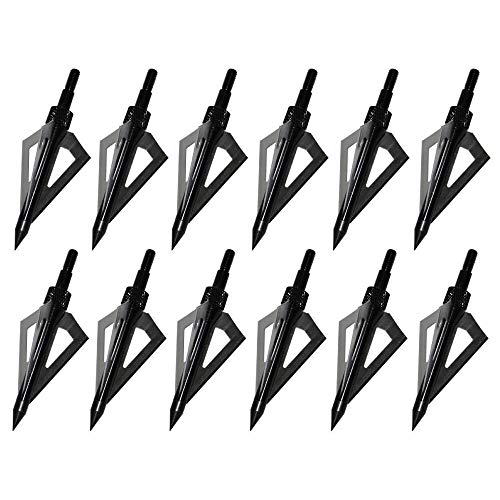
Best for: Budget-minded archers needing spares
Sinbadteck Hunting Broadheads come in a 12-piece pack for bowhunting setups. Each head weighs 100 grains and uses three blades. The black finish keeps the appearance understated. The listing states compatibility with traditional bows and compound bows. At around $15, this set suits archers who want replacement heads without paying much for a smaller pack.
The 12-head count is the strongest selling point. It provides spares for lost arrows, damaged heads, or group use. The 100-grain weight may suit an existing arrow setup, but buyers should confirm spine, tuning, and point-weight requirements first. The listing does not give a cutting diameter, blade material, ferrule construction, thread size, or sharpening details. Those gaps make fit and maintenance harder to judge before ordering. Check local hunting rules, too.
Pros
- Twelve broadheads provide a useful supply of replacements.
- Three-blade construction offers multiple cutting edges per head.
- 100-grain weight works with setups built for that point weight.
Cons
- The listing omits cutting diameter, materials, and thread specifications.
- Buyers must confirm arrow fit and tuning before use.
5. 6-Pack Mechanical Crossbow Broadheads

Best for: Crossbow hunters wanting wider cuts
This six-pack contains 100-grain mechanical broadheads made for crossbows. Each head uses two rear-deploying blades and an alloy ferrule. The main blades open to a 2-inch cutting diameter, while the 0.43-inch leading edge helps start the cut. A 0.035-inch stainless blade thickness adds a solid amount of material for repeated hunting use, though broadheads should still be inspected after each shot.
The blades use 420 stainless steel, and the ferrules use alloy construction. Instead of relying on O-rings or rubber bands, the retention system holds the blades closed during flight. A separate rear retention structure is designed to release them when the head reaches the target. That setup reduces loose parts and replacement-band costs. The broadheads cost around $25, which works out to roughly $4 per head before taxes or shipping. Buyers should confirm compatibility with their crossbow bolts and check local hunting rules before use.
Pros
- Six broadheads provide spare heads for practice, hunting, or replacement.
- The 2-inch cutting diameter creates a broad wound channel.
- Stainless steel blades and alloy ferrules offer sturdy construction.
Cons
- Mechanical heads have moving parts that can fail to deploy or open unevenly.
- A wide 2-inch cut can increase drag and may require careful bolt tuning.
4. AOULGKA 100/125 Grain Mechanical Broadheads

Best for: Compound and crossbow hunters
The AOULGKA set includes six mechanical broadheads in the 100-grain version. They use two pivoting blades that open to a 2.25-inch cutting diameter on impact. That is a wide cut for a two-blade design. Each blade measures .035 inch and uses stainless steel, while the tapered steel tip handles initial contact. The heads are made for compound bows and crossbows, provided the broadhead matches the bow’s weight and tuning requirements.
At around $25, six heads offer a low-cost way to keep spares available. The collar-free design keeps the blades inside the head during flight, then allows them to open at impact. That can reduce concerns about exposed hardware catching during launch, though each head still needs inspection before use. The 2.25-inch opening may create a larger wound channel than narrower mechanicals, but broad blades can place higher demands on arrow speed and impact energy. Check local hunting rules before choosing mechanical broadheads.
Pros
- Six broadheads provide multiple replacements or practice options.
- .035-inch stainless steel blades offer more material than thinner designs.
- The 2.25-inch cutting diameter creates a wide two-blade opening.
Cons
- The large blades may need strong arrow speed and impact energy.
- Mechanical heads require proper tuning and pre-shot inspection.
3. Rage Crossbow X 2-Blade Broadhead

Best for: Crossbow hunters wanting wide entry wounds
The Rage Crossbow X is a mechanical broadhead made for crossbow bolts. This three-pack uses a 100-grain head with rear-deploying SlipCam blades and a 2-inch cutting diameter. Its two stainless steel blades measure .035 inches thick and open on impact. The aluminum ferrule keeps the head light, while Ferrule Alignment Technology is designed to support a more aerodynamic bolt flight.
Shock Collar Technology holds the blades in place while the bolt is stored and during flight. The collar then releases the blades on impact. That combination gives this broadhead a practical balance between blade retention and a wide wound channel. The large cutting surface may appeal to hunters who value a broad entry point, but mechanical heads can require more careful inspection than fixed-blade designs. At around $46 for three, this is a mid-priced option. Replacement blades are sold separately, and the package does not include them. A 125-grain version is also available, and the broadheads are made in the United States.
Pros
- The 2-inch cutting diameter provides a wide entry surface.
- .035-inch stainless steel blades offer a sturdy cutting edge.
- Shock Collar Technology helps retain blades before impact.
Cons
- Replacement blades are not included and must be purchased separately.
- Mechanical blades add moving parts that need inspection before use.
2. Swhacker #207 Mechanical Broadheads

Best for: Compound bow and crossbow hunters
The Swhacker #207 is a 100-grain mechanical broadhead for compound bows and crossbows. Its two-blade design expands to a 2.0-inch cutting diameter, creating a wide wound channel after impact. Each pack includes three green broadheads. The hardened steel tip handles the initial contact, while the stainless steel blades and aircraft-grade aluminum ferrule provide a durable build for high-velocity setups.
Its two-stage blade layout is the main point of difference. Smaller wing blades deploy first, then help shield the larger primary blades until impact. The closed profile is shaped to fly similarly to a field point, which can simplify the transition from target practice to hunting. At around $34, the three-pack costs more than basic fixed broadheads, but the replaceable #208 blade set can help reduce waste after use. Buyers should still confirm broadhead flight and tuning with their specific bow, arrow, or bolt setup before hunting.
Pros
- A 2.0-inch cutting diameter creates a wide wound channel.
- The 100-grain weight suits many compound bow and crossbow setups.
- Stainless steel blades and an aluminum ferrule offer a durable construction.
Cons
- The three-pack provides fewer broadheads than larger hunting packs.
- Replacement blades are sold separately, adding cost after blade damage or loss.
1. KEAUP Fixed-Blade Hunting Broadheads

Best for: Budget-minded bow hunters needing spares
The KEAUP six-pack includes fixed-blade broadheads for crossbows, compound bows, and recurve bows. Each tip weighs 100 grains and has a 1-1/8-inch cutting diameter. The standard 8-32 screw-in thread fits many compatible arrow shafts, but buyers should confirm thread and shaft compatibility before ordering. At around $24, this pack offers six replacement heads for less than many small multi-packs.
Each broadhead uses 420 stainless steel and a one-piece metal-injection-molded body. Three fixed blades form the cutting surface, and the tapered design can be resharpened after use. Small vents are intended to reduce windage, while the manufacturer says every head receives a spin test for balance. Fixed blades have fewer moving parts than mechanical designs, though they still require proper arrow tuning and secure installation. The included six-head quantity suits hunters who want backups or need to replace damaged tips without buying individually.
Pros
- Six broadheads provide useful spare coverage for practice or hunting setups.
- 100-grain weight and 1-1/8-inch cut suit common bowhunting configurations.
- 420 stainless steel blades can be resharpened after use.
Cons
- Fixed blades can catch more air than compact mechanical heads, especially with poor tuning.
- The product does not include arrows, inserts, or a sharpening tool.
Buying Guide
The most important factor is broadhead efficiency, especially a compact cutting diameter paired with the correct total arrow weight. Lower draw weights produce less kinetic energy, so excessive blade area can reduce penetration and accuracy.
- Cutting diameter: Choose a 7/8- to 1-inch fixed head for better penetration. Two-blade designs usually create less resistance than 1 1/8-inch models.
- Head weight: Match the broadhead to your arrow’s front-of-center balance. Start with 75 or 85 grains for lighter arrows, or 100 grains if your bow and arrow manufacturer allow it.
- Blade style: Pick a two- or three-blade fixed head with blades around 0.030 inches thick. Avoid large mechanical heads unless the bow produces enough energy for that model.
- Arrow compatibility: Confirm that the insert and broadhead use the same thread, usually 8-32. Spin-test each assembled arrow and keep total arrow weight above the bow’s stated minimum.
- Practice and replacement: Buy a three- or six-pack, plus replacement blades if available. Practice with identical-weight field points before hunting, and inspect blades after every impact.
If you cannot have everything, prioritize a narrow, properly weighted fixed head that matches your arrows and bow.
Frequently Asked Questions
How do I choose a broadhead for a low-poundage bow?
Choose a lightweight, compact fixed-blade broadhead matched to your arrow spine and bow’s draw weight. For many low-poundage setups, 75 to 100 grains offers a practical starting range, but confirm the arrow maker’s recommendation. A two- or three-blade design usually creates less steering resistance than a wide-cutting head.
What broadhead weight works best with a low-poundage bow?
A 75- to 100-grain broadhead often works well with a low-poundage bow when total arrow weight and spine stay within the bow and shaft maker’s guidelines. For example, switching from 125 to 100 grains can improve speed, but it may change tuning. Check arrow flight and local hunting rules before choosing.
Can expandable broadheads work with low draw weight?
Yes, expandable broadheads can work with low draw weight, but they need enough arrow energy to open and penetrate reliably. Many archers choose fixed heads first because they remove deployment resistance. Compare the manufacturer’s minimum energy guidance, then practice with a matching 75- or 100-grain head before hunting.
Are three-blade broadheads better than two-blade models for weaker bows?
No, three-blade broadheads are not automatically better than two-blade models for weaker bows. A compact three-blade head with a 1-inch to 1 1/8-inch cutting diameter can offer predictable flight. Accuracy, arrow tuning, and legal blade rules matter more than blade count alone when choosing hunting points.
Conclusion
KEAUP Fixed-Blade Hunting Broadheads are the top recommendation for bowhunters using lower draw weights who want a simple, durable fixed-blade setup without paying for extra features. If your priority is easier tuning or a smaller cutting profile, choose a compact, lighter fixed-blade broadhead instead, since it can place less demand on a modest bow and may produce cleaner arrow flight. Before ordering, double-check the broadhead’s size, grain weight, ferrule and insert compatibility, included quantity, and current price, since listings can change and a package that looks affordable may contain only two or three heads. Also confirm that your arrows and bow setup can handle the selected head safely and consistently.