
7 Best Backpacking Kettles for Ultralight Trips
Among the best backpacking kettles, the ALOCS Camping Kettle is the top pick for most buyers because its lightweight aluminum build balances packability with useful cooking capacity. It is a simple outdoor kettle for boiling water at camp, making coffee, preparing freeze-dried meals, or sharing a hot drink.
This guide is for hikers, campers, and travelers who need hot water without bulky cookware. The key factors are packed size, weight, capacity, and material. A smaller pot saves space, while aluminum keeps the load down but may feel less rugged than stainless steel. The seven picks below are ranked with clear reasons and honest drawbacks for each. That makes it easier to match a kettle to solo trips, group meals, or quick overnight stops.
Quick Comparison
| # | Product | Best For | Price | |
|---|---|---|---|---|
| 1 | ALOCS Camping Kettle | Solo Backpacking Coffee Brewers | ~$18 | View → |
| 2 | THTYBROS Camping Cookware Mess Kit | Budget Family Camp Cooks | ~$40 | View → |
| 3 | MalloMe Camping Cookware Mess Kit | Organized Car Campers | ~$35 | View → |
| 4 | Fire-Maple Feast T3 Camping Kettle | Fast-Boil Backpacking Travelers | ~$28 | View → |
| 5 | GSI Outdoors Halulite Tea Kettle | Lightweight Tea Drinkers | ~$34 | View → |
| 6 | REDCAMP Camping Kettle | Large-Group Campsite Kitchens | ~$19 | View → |
| 7 | CAMPWOLF HEX Collapsible Camping Kettle | Space-Saving Van Dwellers | ~$30 | View → |
7 Top Backpacking Kettle Picks
This ranked list counts down from practical trail kettles to the top pick, with pack size, heating needs, and usability guiding the order.
7. CAMPWOLF HEX Collapsible Camping Kettle

Best for: Solo backpackers making hot drinks
The CAMPWOLF HEX is a 1-liter camping kettle designed for compact packing. Its body uses food-grade, BPA-free silicone, while the bottom has a stainless steel base for heating on camping stoves, portable gas burners, or suitable open-flame setups. When packed, the kettle folds down flat instead of taking the space of a standard hard-sided pot. That makes it useful for hiking trips, travel kits, and small camp kitchens.
Its 1,000-milliliter capacity is enough for coffee, tea, instant meals, or several cups of hot water. The stainless steel base adds stability and creates a firm heating surface, while the silicone sides keep the overall design flexible for storage. Around $30, it costs more than a basic metal pot but offers a space-saving shape that conventional kettles cannot match. The BPA-free construction also supports both hot and cold use, though buyers should handle the soft body with more care than rigid cookware.
Pros
- Folds flat, saving room in a backpack or storage bin.
- Holds up to 1 liter for drinks, soup, or dehydrated meals.
- Stainless steel base works with camping stoves and suitable open flames.
Cons
- The silicone body is less rigid than a traditional metal kettle and may be harder to pour when full.
- One liter may not provide enough hot water for groups or multiple large meals.
6. REDCAMP Camping Kettle
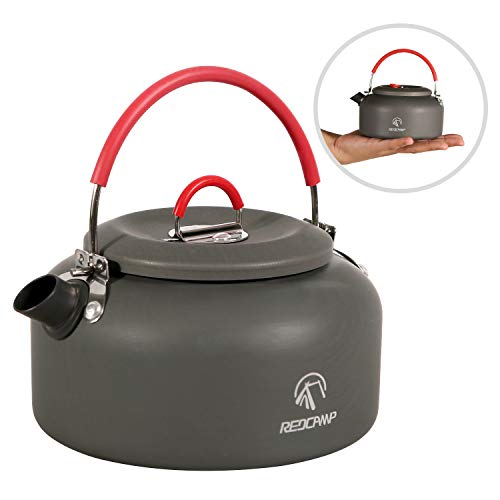
Best for: Solo backpackers making one hot drink
The REDCAMP camping kettle is a compact 0.8-liter pot for boiling water, preparing tea, making coffee, or warming soup. It measures about 5.1 inches wide by 3 inches tall and weighs just 5.3 ounces. That low weight suits hiking, fishing, travel, and campsite cooking where every ounce matters. A mesh storage bag is included, so the pot is easier to pack with other gear.
The hard-anodized aluminum body should resist scratches better than standard aluminum. Its silicone-coated handle helps reduce heat transfer, then folds down for storage and locks into position while pouring. The short spout is designed for a smooth, controlled pour with less dripping. A threaded bottom helps distribute heat across the base. The usable fill is closer to 0.64 liters, so this is mainly a personal-size pot. At around $19, it offers a practical option for solo outdoor drinks. REDCAMP also includes a 365-day limited manufacturer warranty.
Pros
- Weighs only 5.3 ounces for lighter packs.
- Folding, locking handle saves space during transport.
- Hard-anodized aluminum adds scratch resistance.
Cons
- The 0.64-liter recommended fill suits one person, not groups.
- Water must be added before heating, so it should not be heated empty.
5. GSI Outdoors Halulite Tea Kettle

Best for: Backpackers who boil water often
The GSI Outdoors Halulite Tea Kettle is a 1.8-liter aluminum boiler for camping, backpacking, and hiking. Its capacity equals about 7.6 cups, enough for several hot drinks or a larger serving of soup. The kettle shape should also make pouring more controlled than using a basic pot. At 15.2 ounces, it adds less weight than many standard camp cook pots, while still giving groups a useful amount of boiling water.
The hard-anodized aluminum shell resists scratches and abrasion from packed outdoor gear. GSI says its Halulite alloy spreads heat more evenly than titanium and can boil water 30% faster while using 30% less fuel. Those savings may matter on longer trips, though actual results depend on the stove, wind, water temperature, and load size. Around $34, this kettle fits campers who want a dedicated water boiler without paying premium titanium prices. It is most useful for drinks and liquid meals, not general-purpose camp cooking.
Pros
- 1.8-liter capacity provides about 7.6 cups for drinks, soup, or group use.
- 15.2-ounce aluminum construction keeps pack weight manageable.
- Hard-anodized coating helps resist scratches from regular outdoor handling.
Cons
- The kettle shape is less versatile than a wider pot for frying or cooking solid foods.
- A 1.8-liter vessel may feel oversized for solo hikers who only boil one cup at a time.
4. Fire-Maple Feast T3 Camping Kettle
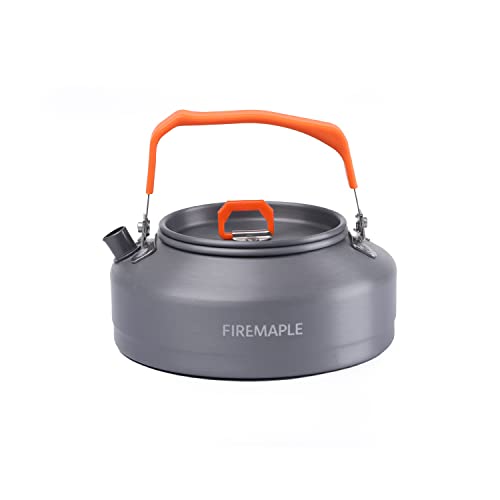
Best for: Solo backpackers needing hot water
The Fire-Maple Feast T3 is a compact 0.7-liter kettle for hiking, camping, and emergency kits. Its hard-anodized aluminum body measures 152 mm wide and 126 mm tall, while the kettle weighs just 187 grams. A mesh storage pocket helps keep it contained in a pack. That low weight suits trips where every item must earn its space, though the small volume works best for one person or two modest cups.
The narrow spout produces a controlled stream for coffee, tea, and water-based meals. It can sit on a gas stove or over a wood fire, giving it more cooking options than a stove-only kettle. The ABS-coated handle resists heat and provides a steadier grip than bare metal. Around $28, it costs more than some basic aluminum pots, but its compact shape and included storage pouch add practical value. The main caution is simple: keep the handle away from direct flames, or the coating may melt.
Pros
- Light pack weight: The 187-gram body adds little bulk to hiking or backpacking gear.
- Controlled pouring: The shaped spout helps direct water into mugs, coffee makers, and small pots.
- Flexible fuel use: It works with gas stoves and wood fires.
Cons
- Limited capacity: The 0.7-liter size may not provide enough water for groups or larger meals.
- Handle needs care: Direct flame exposure can melt the ABS coating, so fire placement requires attention.
3. MalloMe Camping Cookware Mess Kit

Best for: Two-person car camping and backpacking
The MalloMe 17-piece cookware kit covers most camp kitchen basics in one nestable package. It includes a 1.7-liter hard-anodized aluminum pot, a 1.15-liter kettle, and a 7-inch frying pan. Two stainless steel cups, two stainless steel plates, and two cutlery sets support shared meals. A bamboo spoon, cleaning cloth, sponge, storage pouches, and drawstring bag round out the set.
Its strongest feature is the mix of cooking and eating gear. The pot and kettle handle boiling water, while the frying pan adds room for eggs, vegetables, or smaller portions. Heat-resistant handles and fitted lids make cooking safer around a campfire or portable stove. The nonstick surface should also make food release and cleanup easier. The nesting design saves backpack space, but the 17-piece count gives this kit more range than a basic solo cook set. At around $35, it offers useful coverage for campers who want one organized package instead of separate cookware and tableware.
Pros
- Includes cookware, dishes, cups, cutlery, and cleaning tools in one kit.
- Hard-anodized aluminum supports even heating and lower pack bulk than many heavier materials.
- Nesting parts and the drawstring bag help keep camp gear organized.
Cons
- The 1.7-liter pot and two place settings may feel small for groups of three or more.
- Seventeen pieces can be more gear than solo backpackers need, especially when pack space is tight.
2. THTYBROS Camping Cookware Mess Kit

Best for: Two-person car camping and picnics
The THTYBROS camping cookware set combines a 1.70-liter pot, 1.15-liter kettle, and 7-inch frying pan in one compact kit. It also includes two 200 ml stainless steel cups, two plates, two sets of forks, knives, and spoons, plus a bamboo spoon, cleaning tools, and storage bags. Around $40, it offers a broad set of cooking and dining pieces for outdoor meals.
The cookware uses hard-anodized aluminum, which keeps the pieces light and transfers heat quickly. Silicone-covered handles add grip and help keep hands away from hot metal. The pieces nest inside one another and fit into the included nylon mesh bag. The packed kit weighs 2.75 pounds and measures 7.5 by 7.5 by 5 inches, so it suits car camping, short backpacking trips, and picnic use. The included kettle gives you a separate option for heating water while food cooks in the pot or pan. Still, the compact design favors portability over large meal capacity.
Pros
- Includes a pot, kettle, frying pan, tableware, utensils, and cleaning accessories.
- Hard-anodized aluminum heats quickly and weighs less than many steel sets.
- Nested storage keeps the packed size to 7.5 by 7.5 by 5 inches.
Cons
- The 1.70-liter pot and 7-inch pan may feel small for groups larger than two people.
- At 2.75 pounds, it is fairly heavy for minimalist backpacking cookware.
1. ALOCS Camping Kettle
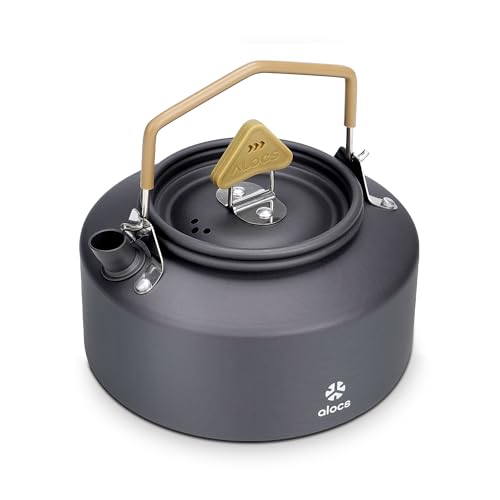
Best for: Solo campers and backpacking pairs
The ALOCS Camping Kettle is a compact aluminum water boiler for camping, hiking, fishing, and picnics. Its hard-anodized, food-grade aluminum body weighs 6.7 ounces, or 0.42 pounds, which keeps pack weight low. The listed capacity is about 1 to 1.1 liters, enough for hot drinks for one or two people. At around $18, it costs less than many larger camp cookware options.
A threaded base should spread heat across the bottom, while the silicone-coated handle adds protection when the kettle is hot. The handle folds for storage, and the included mesh bag keeps the kettle contained in a pack. The manufacturer claims a 3 to 5 minute boiling time, though stove type, wind, and water volume will affect that result. This kettle suits coffee, tea, and basic hot-water meals, but its small size limits larger group use.
Pros
- At 6.7 ounces, it adds little weight to a backpack.
- Hard-anodized aluminum resists rust and transfers heat quickly.
- Foldable handle and mesh bag make storage easier.
Cons
- The capacity is limited for groups, despite the 1.1-liter product name.
- Aluminum provides no insulation, so the exterior and contents can become hot during use.
Buying Guide
Weight is the most important factor for a backpacking kettle because every extra ounce stays in your pack all day. For solo trips, aim for a vessel weighing 4 to 8 ounces before adding fuel or a cup.
- Capacity: Choose 20 to 32 ounces for one person, or pot between 0.75 and 1 liter for two hikers. Leave at least 4 ounces of empty space to prevent boilovers.
- Material: Aluminum costs less and heats quickly, while titanium weighs less but often costs more. Stainless steel suits rugged use, though it usually weighs over 10 ounces.
- Heat-source compatibility: Confirm that the base works with your stove type, such as canister, alcohol, or wood-burning models. A flat base around 4 inches wide improves stability on compact burners.
- Packability: Look for folding handles, a secure lid, and a height under 6 inches. A kettle that fits inside your mug or cook pot saves valuable pack space.
- Price: Basic aluminum options often cost $20 to $40. Titanium models commonly run from $50 to $100, so compare weight savings against your trip frequency.
If you cannot have everything, prioritize low weight while keeping enough capacity for your usual hot drink or meal.
Frequently Asked Questions
How do I choose a backpacking kettle?
Choose a backpacking kettle by comparing packed size, weight, capacity, material, and stove compatibility. A 0.75-liter pot suits one person, while a 1.5-liter model works better for two campers. Look for folding handles, a secure lid, and measurement marks if you prepare coffee, soup, or dehydrated meals.
What size kettle is best for backpacking?
A 0.75- to 1-liter kettle is usually the right size for one backpacker. It can boil enough water for a hot drink and a dehydrated meal without adding much bulk. Groups should consider 1.5 liters or more, but larger pots take longer to heat and occupy more pack space.
Can I use any camping kettle on a backpacking stove?
You can use most camping kettles on a backpacking stove if the base sits securely and the material handles direct heat. Check the stove maker’s size guidance before buying. A narrow 1-liter pot often works well with compact canister burners, while oversized kettles may feel unstable or heat unevenly.
Are titanium kettles worth the price for backpacking?
Titanium kettles are worth the higher price when low weight and corrosion resistance matter most. A titanium pot may weigh under 150 grams, depending on its capacity and design. These cookwares often cost more than aluminum, and their thin walls can create hot spots or scorch food during direct cooking.
Conclusion
ALOCS Camping Kettle is the top recommendation for backpackers who want a practical balance of cooking capacity, packability, and everyday trail use. If your main priority is carrying the lightest possible load, choose the smallest titanium option in the guide instead, since lower weight can matter more than extra capacity on long climbs. Before buying, double-check the kettle’s size against your stove and mug setup, confirm how many people one batch can serve, compare the current price, and consider fuel use, storage space, package contents, and cleanup. A good trail kettle should fit your cooking style, not just your gear list.