
5 Best Meat Grinder for Hunters on a Budget
The AAOBOSI #12 Electric Meat Grinder is the best meat grinder for hunters and the top pick for most buyers because it offers a practical electric setup at a reasonable price. This countertop grinder suits home processing, from trimmed venison to sausage and burger portions.
This guide is for hunters who process game at home and want less manual work. The key factors are grinder size, hopper capacity, plate and blade materials, and motor duty cycle. Larger #12 models can handle bigger batches, while stainless steel parts usually offer better durability and easier cleanup. A grinder also needs enough cooling time between loads, especially when processing several pounds at once. The five picks below are ranked with clear reasons and honest drawbacks for each.
Quick Comparison
| # | Product | Best For | Price | |
|---|---|---|---|---|
| 1 | AAOBOSI #12 Electric Meat Grinder | Budget-Conscious Home Cooks | ~$180 | View → |
| 2 | STX International Turboforce II 4000 Electric Meat Grinder | High-Volume Sausage Makers | ~$205 | View → |
| 3 | Electric Meat Grinder Sausage Stuffer, Stainless Steel | Stainless Steel Kitchen Users | ~$63 | View → |
| 4 | LEM Products BigBite #12 Meat Grinder | Small-Batch Wild Game Processors | ~$580 | View → |
| 5 | LEM Products BigBite #22 Meat Grinder | Large-Scale Home Butchers | ~$730 | View → |
5 Top Meat Grinders for Hunters
These five grinders are ranked, counting down to the top pick for hunting camps and home processing.
5. LEM Products BigBite #22 Meat Grinder

Best for: Hunters processing bulk game
The LEM Products BigBite #22 is a large electric meat grinder for home kitchens that handle serious volume. Its 1.0-horsepower motor and stainless steel build can process up to 13 pounds of meat per minute. It works with beef, pork, poultry, lamb, venison, and raw chicken bones. That makes it useful for burgers, sausage, game processing, and some pet-food prep.
The package includes three grinding plates, a knife, stomper, and sausage-stuffing tubes. Stainless steel parts come apart for cleaning, while the permanently lubricated motor reduces routine maintenance. A noise-dampening design should help keep operation more manageable, though this remains a large, powerful appliance. The five-year factory warranty, lifetime support, and replacement-parts availability add useful long-term coverage. At around $730, it makes the most sense for frequent bulk processing, not occasional burger batches.
Pros
- Processes up to 13 pounds per minute for large meat batches.
- Includes three plates and stuffing tubes for grinding and sausage making.
- Stainless steel components disassemble for simpler cleanup.
Cons
- Around $730, it costs much more than small home grinders.
- Its large commercial-style build requires substantial counter and storage space.
4. LEM Products BigBite #12 Meat Grinder

Best for: Frequent bulk meat grinding at home
The LEM Products BigBite #12 is a stainless steel electric grinder for home cooks who process large batches. Its 0.75 HP motor is rated to handle up to 11 pounds of meat per minute, including beef, pork, poultry, lamb, and venison. It can also process raw chicken bones, which may appeal to people preparing pet food.
This machine includes three grinding plates, a knife, stomper, and sausage stuffing tubes. That setup covers burgers, sausage, game processing, and meat scraps without requiring many extra purchases. Stainless steel components resist food buildup and come apart for cleaning, while the permanently lubricated motor reduces routine maintenance. A noise-dampening design should make operation less harsh than some heavy-duty grinders, though this is still a powerful appliance. At around $580, it costs much more than entry-level home models. The five-year factory warranty and lifetime customer support add useful long-term protection.
Pros
- The 0.75 HP motor handles medium and large batches, with a claimed output of up to 11 pounds per minute.
- Three plates and sausage stuffing tubes support ground meat, links, burgers, and pet-food preparation.
- Stainless steel parts, a permanently lubricated motor, and a five-year warranty support repeated use.
Cons
- Around $580, it requires a substantial upfront budget compared with smaller household grinders.
- Cleaning still involves removing several food-contact parts after each session, especially after processing fatty meat or bones.
3. Electric Meat Grinder Sausage Stuffer, Stainless Steel

Best for: Bulk home sausage batches
This electric meat grinder is designed for home cooks who process beef, pork, chicken, fish, or venison. Its motor is rated at 300 watts, with a claimed 3,200-watt maximum locked power rating. The stainless steel body and food-grade materials suit regular kitchen use, while the included pusher helps move prepared meat through the feed opening.
The package includes three stainless steel grinding plates, sized 2mm, 5mm, and 7mm, plus two cutting blades. That range covers fine mince for sauces and coarser grinds for burgers or meatballs. Three sausage tubes support different sausage sizes, and the unit can also prepare kibbeh. A reverse button helps clear jams. Overload protection can shut the grinder off if it overheats or carries too much load. At around $63, it offers a broad accessory set for the price, though buyers should keep expectations realistic about home-use capacity.
Pros
- Three plate sizes support fine, medium, and coarse meat textures.
- Includes two blades and three sausage tubes for varied recipes.
- Overload protection and a reverse function add practical safety and jam control.
Cons
- Removable parts cannot go in the dishwasher and must be dried by hand.
- The 300-watt motor rating suggests it is better suited to home batches than continuous commercial processing.
2. STX International Turboforce II 4000 Electric Meat Grinder
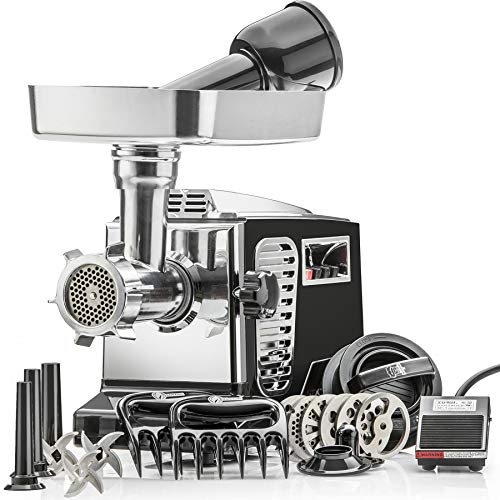
Best for: frequent home sausage and burger making
The STX International Turboforce II 4000 is a large home grinder for hunters, bulk meal prep, and sausage making. Its No. 12 grinding head uses a 2-inch feed tube and produces a 2.5-inch ground-meat output. The high-capacity tray holds over 3 pounds of meat, while the motor is rated at 2,000 maximum watts. STX claims a throughput of 220 to 260 pounds per hour, depending on the plate and meat. It can also process soft bones from chicken, rabbit, squirrel, and quail. Actual output will vary with preparation and batch size.
This package includes five grinding plate sizes, three stainless steel cutting blades, three sausage tubes from 1/2 to 3/4 inch, and a stuffing plate. The foot pedal can leave both hands free during grinding. A kubbe attachment, meat claws, burger-slider press, and palm pusher are also included. The air-cooling system and circuit breaker support longer grinding sessions. Around $205, this is pricier than basic countertop models. A three-year warranty provides added coverage, subject to its terms.
Pros
- Large No. 12 head handles bulk batches better than smaller grinders.
- Six plate options support different grinding and stuffing tasks.
- Foot pedal allows hands-free motor control while feeding meat.
Cons
- Its large size requires more storage space and counter room.
- Soft-bone use does not make it suitable for hard bones or careless feeding.
1. AAOBOSI #12 Electric Meat Grinder

Best for: Frequent wild-game processing at home
The AAOBOSI #12 is a heavy-duty electric grinder for venison, elk, wild boar, and other batches of meat. Its motor reaches 3,000 watts at peak and is rated to process up to 7 pounds per minute. That output suits sausage making, burger prep, and post-hunt processing better than small countertop grinders. Around $180, it sits in the midrange for a large home meat grinder.
Its 3mm stainless steel housing, copper motor, and all-metal gearbox give it a sturdier build than models with plastic drive parts. The reverse button can help clear sinew or oversized pieces without taking the grinder apart. A storage box keeps the plates and other accessories together, while the carry handle helps with moving the machine between a kitchen, garage, and processing area. The grinding head uses an anti-slip design and needs no tools for assembly.
Pros
- 3,000-watt peak motor and claimed 7-pound-per-minute capacity suit large game batches.
- All-metal gearbox and 3mm stainless housing provide a durable, vibration-resistant build.
- Built-in storage, a carry handle, and dishwasher-safe blades and plates simplify handling.
Cons
- The 3,000-watt figure is a peak rating, and actual speed can change with meat temperature, cut size, and sinew.
- Cleaning still involves several parts, and the full grinder is likely less convenient to store than a compact kitchen model.
Buying Guide
Sustained grinding capacity matters most when processing deer, elk, or wild hog. A motor that overheats after 10 pounds can turn a large batch into a long, frustrating job.
- Motor and duty cycle: Choose at least 500 watts for occasional use, or 1,000 watts and a metal gearbox for batches above 20 pounds. Favor models rated for 15 to 30 minutes of continuous work.
- Grinder size: A #8 grinder suits home kitchens and smaller batches. Choose #12 or #22 for frequent deer processing, faster feeding, and larger cuts of meat.
- Plate and blade options: Look for stainless steel plates in 4.5 mm, 6 mm, and 8 mm sizes. A 3 mm plate helps with sausage, while a coarse plate works better for burgers.
- Construction and cleanup: Stainless steel trays, an aluminum or stainless head, and removable parts improve durability. Confirm that plates and blades can dry fully after washing.
- Included accessories and price: A useful package includes at least two plates, a sausage funnel, and a stuffing tube. Expect to spend about $150 to $400 for a capable home unit.
If you cannot get everything, prioritize sustained motor capacity, since a weak grinder slows every other part of wild-game processing.
Frequently Asked Questions
How powerful should a meat grinder be for processing wild game?
A grinder rated at least 1 horsepower is a practical choice for regular wild-game processing, especially when handling venison mixed with pork fat. Smaller 0.5-horsepower models can work for occasional batches, but they may slow down with sinew, silver skin, or partially frozen meat. Check the manufacturer’s approved use and duty cycle.
What grinder size works best for home hunters?
A #8 or #12 grinder is usually enough for home hunters, while a #22 model suits large annual batches or shared processing. The number refers to the plate diameter, not motor power. For example, #12 plates measure about 2 1/2 inches across and offer a useful balance of speed, capacity, and storage needs.
Can a home meat grinder handle deer and elk?
A home meat grinder can process deer, elk, and other game if the meat is trimmed, chilled, and cut into small pieces first. Cut cubes around 1 inch and chill them until firm, not frozen solid. Remove bones and tough connective tissue, since these can clog the auger or dull the cutting knife.
Are stainless steel parts better for game-meat grinders?
Stainless steel parts are preferable for hunters because they resist rust, clean more easily, and tolerate repeated contact with cold, damp meat. Look for a stainless hopper, auger, knife, and plates, then wash and dry each part promptly. Keep carbon-steel blades lightly oiled if the manufacturer permits it, since moisture can cause rust.
Conclusion
AAOBOSI #12 Electric Meat Grinder is the top pick for hunters who process regular batches at home and want powered grinding without moving up to a commercial machine. If your priority is packing light at camp or working where electricity is unavailable, choose a manual grinder instead, since it needs no outlet and stores more easily. Before buying, double-check the grinder’s size, plate and attachment compatibility, the quantity of venison or other meat you expect to process, the space available for the unit and containers, and the current price, since listings and bundles can change. The right choice should match your processing volume, workspace, and hunting setup.