
6 Best Times for Deer Feeder to Go Off for Hunters
For the best times for deer feeder to go off, the Highwild Universal Game Feeder Digital Timer is the top pick for most buyers because its digital controls make recurring feed schedules easier to set. It suits hunters who want to automate feeding without checking a feeder at the same hour every day. The timer focuses on scheduling, so it can support consistent morning, afternoon, or evening routines when paired with a compatible feeder.
This guide is for landowners, hunters, and wildlife managers comparing feeder timers for private property. The key factors are schedule flexibility, battery life, weather resistance, and compatibility with the feeder’s motor and power setup. A good timer should offer clear controls and dependable operation, but no model removes the need to follow local rules. The six picks below are ranked with specific reasons and honest drawbacks for each.
Quick Comparison
| # | Product | Best For | Price | |
|---|---|---|---|---|
| 1 | Highwild Universal Game Feeder Digital Timer | Budget-Conscious Feeder Owners | ~$24 | View → |
| 2 | Deer Out Deer Repellent | Garden Browsing Deer Control | ~$18 | View → |
| 3 | Hanging Deer Feeder with Digital Timer | Elevated Hanging Feeder Setup | ~$50 | View → |
| 4 | Deer Feeder Motor and Timer Kit | Replacement Motor Kit Shoppers | ~$36 | View → |
| 5 | Wildgame Innovations Trophy Hunter 6V Feeder Kit | Compact 6V Feeder Users | ~$35 | View → |
| 6 | Moultrie Pro Hunter III Feeder Kit | High-Capacity Game Management | ~$60 | View → |
6 Top Deer Feeder Timer Picks
This list is ranked, counting down to the top pick based on timing, reliability, and practical hunting use.
6. Moultrie Pro Hunter III Feeder Kit

Best for: Custom deer feeders in remote locations
The Moultrie Pro Hunter III is a control unit for building a smart deer feeder. Its Quick-Lock adapters fit flat-bottom containers, including 35- or 55-gallon drums, buckets, and custom hoppers. The kit runs on a 6V tab-top rechargeable battery, sold separately. A built-in port also accepts Moultrie’s 6V solar panel, which can reduce battery changes at remote sites.
Control reaches up to 300 feet through Moultrie Connect Bluetooth and the free Moultrie app. With an Edge 3 Series camera, the system can use cellular service for remote adjustments from anywhere, without a subscription. You can schedule 10 feed events each day, set each one from one to 60 seconds, and choose low, medium, or high spin-plate speed. The app also estimates feed use. On-site setup is easier with the hinged door and backlit screen, especially before sunrise or after dark. Around $60, it costs less than replacing a complete feeder, but the container and power source add to the total.
Pros
- Supports 10 daily feeding events, with one- to 60-second durations.
- Offers Bluetooth control within 300 feet and cellular control with an Edge 3 camera.
- Adapts to 35- and 55-gallon drums, buckets, or other flat-bottom containers.
Cons
- The rechargeable 6V battery is sold separately, and the solar panel is not included.
- Cellular remote control requires an Edge 3 Series camera, limiting full off-site control for other setups.
5. Wildgame Innovations Trophy Hunter 6V Feeder Kit

Best for: Dawn-and-dusk deer feeding setups
The Wildgame Innovations Trophy Hunter 6V Photocell Feeder Kit adds timed feed control to a compatible game feeder. It includes a 6V motor, photocell timer, 2-inch drop funnel, and mounting hardware. The power control unit uses powder-coated, galvanized steel, which should handle outdoor exposure better than untreated metal. A sliding door protects the control area, while the high-torque motor manages the feeder’s spinning mechanism.
The timer is the main draw. Its photocell detects daylight, allowing feed times at dawn, dusk, or both. You can set each feeding duration from 1 to 30 seconds, and the spinner spreads feed in a 360-degree pattern up to 30 feet. Large buttons make the controls easier to read in the field. The weather-resistant housing and in-line fuse add useful protection against moisture and power overloads. At around $35, this is a relatively low-cost way to add automation, but the setup still depends on a compatible feeder and a separate 6V battery.
Pros
- Dawn and dusk scheduling reduces the need for manual activation.
- Adjustable 1-to-30-second run times help control feed use.
- 360-degree broadcast reaches up to 30 feet.
Cons
- The required 6V battery is not included.
- The kit does not list a feed hopper or storage capacity, so buyers may need a compatible feeder body.
4. Deer Feeder Motor and Timer Kit
Best for: Hunters adding timing to feed containers
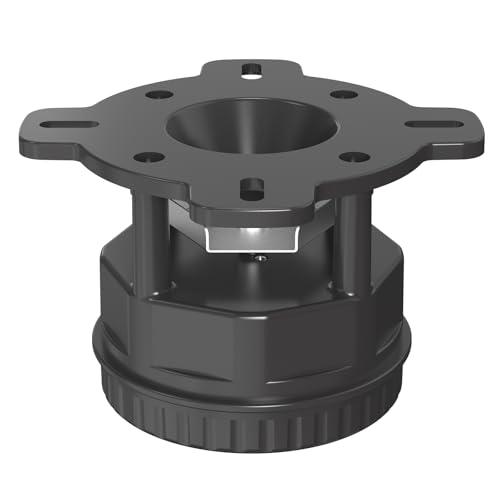
This deer feeder kit combines a motor, galvanized steel spin plate, and programmable digital timer. It supports up to four feed times each day, with run durations from 1 to 20 seconds. That gives you control over how often the feeder runs and how much feed it releases. The system uses four AA batteries, which are not included, and its timer has a tilt-down screen for easier setup.
The metal spinner should handle repeated contact with hard feed such as corn better than a basic plastic plate. Its ABS housing protects the motor and circuitry from everyday impacts. Scheduled dispensing can help limit excess feed, which may reduce waste and discourage unwanted animals. At around $36, this is a lower-cost way to add automatic feeding to an existing container. It also works with feed setups for fish, chickens, ducks, birds, and pigs. Keep in mind that output still depends on the feed, container, and run time.
Pros
- Four daily feeding schedules provide flexible timing control.
- Run times from 1 to 20 seconds help adjust feed portions.
- Galvanized steel spin plate resists wear from hard corn.
Cons
- Four AA batteries are required, but the kit does not include them.
- This is a motor and timer kit, not a complete feeder container.
3. Hanging Deer Feeder with Digital Timer

Best for: Hunters managing remote feeding sites
This 5-gallon hanging deer feeder uses a plastic housing with a motor, digital timer, and galvanized steel spinning disc. Its capacity reduces refill trips, while the rotating disc spreads feed on a schedule. The timer supports up to four feed times each day, with run times from 1 to 20 seconds. That range lets you release small portions instead of emptying the container at once.
The tilt-down display makes programming easier when the feeder hangs above eye level. The housing is designed to handle outdoor exposure, and the galvanized disc should resist wear from hard feed such as corn. The kit can also work with many compatible feed containers and different animals, including fish, chickens, ducks, birds, and pigs. At around $50, it offers more control than a basic timed spinner, though its value depends on having a safe, sturdy place to hang it.
Pros
- 5-gallon capacity: Holds more feed than compact feeders and can reduce refill visits.
- Flexible scheduling: Runs up to four times daily, with 1- to 20-second dispensing periods.
- Durable feed-contact parts: A galvanized steel disc handles repeated contact with corn and other hard feed.
Cons
- Requires a suitable hanging setup: It is not a standalone ground feeder, so buyers need a strong branch, tripod, or other support.
- Limited schedule capacity: Four daily feed times may not suit users who need frequent, highly customized dispensing.
2. Deer Out Deer Repellent

Best for: Home gardens with deer pressure
Deer Out is a 40-ounce, ready-to-use spray for plants that attract deer, elk, or moose. Its mint-scented formula is designed to smell fresh to people while discouraging browsing animals. The bottle needs no mixing, which makes it practical for flower beds, shrubs, vegetable gardens, and other outdoor areas. The listed price is around $18, though costs can change.
The formula uses natural ingredients and two natural sticking agents that help it remain on plant surfaces after light rain. The product is marketed as safe for use around children and pets when applied as directed. Deer Out can be used in spring, summer, fall, and winter, so buyers do not need a separate seasonal treatment. The brand also reports more than 100,000 repeat customers over its 20-year history. That number reflects company-provided information, not an independent performance test. One useful detail is the mint scent, since some outdoor repellents have strong animal or chemical odors.
Pros
- The 40-ounce bottle comes ready to spray, with no dilution required.
- Two natural sticking agents help the treatment resist light rain.
- The mint scent may be more pleasant around patios and garden paths.
Cons
- The product does not state how many square feet one bottle covers.
- Rain resistance does not provide a stated protection period, so repeat applications may be needed.
1. Highwild Universal Game Feeder Digital Timer

Best for: Replacing a worn feeder timer
The Highwild Digital Timer controls compatible 6V or 12V game feeder systems. It can schedule up to eight feedings per day, which suits locations with different wildlife activity patterns. Each feeding cycle runs from 1 to 30 seconds. You can also choose low, medium, or high motor speed to adjust feed volume and spread. At around $24, it offers a budget-friendly way to replace a timer or build a custom deer, goat, or wildlife feeder setup.
A backlit or advanced display is not listed, but the easy-to-read LCD and labeled buttons should make basic programming straightforward. A dedicated test button lets you check the connected feeder without waiting for the next scheduled cycle. Its built-in memory keeps programmed settings stored, while the in-line fuse adds protection to the electrical connection. Measuring 3.5 by 3.5 inches, the compact unit fits inside many compatible feeder housings. The main catch is that the compatible control unit is not included.
Pros
- Supports up to eight scheduled feeding times each day.
- Offers 1-to-30-second cycles and three motor-speed settings.
- Compact 3.5-by-3.5-inch housing fits many feeder enclosures.
Cons
- Requires a compatible 6V or 12V control unit, sold separately.
- Compatibility depends on the wiring and housing of your existing feeder system.
Buying Guide
The most important factor is a programmable digital timer. Deer activity changes with daylight, hunting pressure, weather, and food availability, so fixed schedules can waste feed.
- Daily feed events: Choose a controller with at least four programmable times per day. A useful starting schedule includes one feeding 30 minutes before sunrise and another 2 to 3 hours before sunset.
- Adjustable run time: Look for settings from 1 to 60 seconds. Start near 3 to 5 seconds, then adjust based on feed volume and local rules.
- Sunrise and sunset options: A timer with a 30- to 60-minute dawn or dusk adjustment can follow seasonal daylight changes better than a fixed clock time.
- Clock accuracy: Select a digital clock that holds time within 1 minute per month. A backup memory feature helps preserve settings during battery changes.
- Power and weather protection: Favor a sealed, weather-resistant control box with a 6- or 12-volt power option. Aim for at least six months of battery life between changes.
If you cannot have every feature, prioritize schedule flexibility, since multiple adjustable feed times provide the most control over changing deer patterns.
Frequently Asked Questions
What time should a deer feeder go off in the morning?
The most useful morning setting is 30 minutes before sunrise, with feeding lasting 5 to 10 minutes. Deer often move through the area during the first hour of daylight, so set the feeder’s timer after checking local sunrise times. A controlled portion also limits waste and keeps food from sitting exposed.
How long before sunset should a deer feeder dispense feed?
Set a deer feeder’s evening cycle 60 to 90 minutes before sunset, when deer commonly begin moving toward open feeding areas. This schedule gives animals time to arrive before legal shooting light ends, where hunting regulations allow baiting. Use your area’s sunset time, not a fixed clock setting, as seasons change.
Can a deer feeder run at midday?
Yes, a deer feeder can run at midday, but that slot usually attracts less daytime activity than dawn or dusk. A noon schedule may help during very hot weather, heavy hunting pressure, or limited natural forage. Try a 12 p.m. release only after observing local deer movement for several days.
Are two daily feeding times better than one?
Two daily feedings usually work better than one when deer visit both morning and evening, but the best choice depends on local patterns and regulations. Many hunters use a short release near sunrise and another 1 to 2 hours before sunset. Check baiting laws before programming the feeder.
Conclusion
Highwild Universal Game Feeder Digital Timer is the top pick for hunters who want flexible feeding schedules and straightforward timer controls. If your priority is a larger feed capacity or longer runtime between refills, choose a feeder with a bigger hopper and stronger battery support instead. Before buying, double-check the hopper size, timer compatibility, package quantity, and current price. Deer activity changes with season, weather, hunting pressure, and local food sources, so no schedule works everywhere. Start with morning and evening feeding periods, then adjust the timing after watching trail-camera activity. Keep the feeder legal for your area, and place it where deer can reach the feed without creating unsafe conditions. A reliable timer matters, but placement and timing matter just as much.