
7 Best Flashlights for Backpacking for Night Hikes
The TrixHub Rechargeable Flashlights 2-Pack is our top pick among the best flashlights for backpacking because it gives most buyers two rechargeable lights in one purchase. That extra light can cover a hiking partner, tent, or backup kit without buying a second single flashlight. The two-pack format also makes this set practical for shared trips and overnight use.
This guide is for backpackers who need dependable light without adding needless bulk. The key details are each flashlight’s size and weight, plus battery life between charges. Materials matter too, since a light may face rain, drops, dirt, and packed gear. The seven picks below are ranked with clear reasons for their placement and honest drawbacks for each. You will find options for solo hikers, couples, emergency kits, and campers who value longer runtime over the smallest possible pack size.
Quick Comparison
| # | Product | Best For | Price | |
|---|---|---|---|---|
| 1 | TrixHub Rechargeable Flashlights 2-Pack | Best For Household Emergency Kits | ~$16 | View → |
| 2 | Lepro LED Flashlight | Best For Car Glove Boxes | ~$10 | View → |
| 3 | EverBrite Mini LED Flashlight Set | Best For Kids’ Outdoor Adventures | ~$27 | View → |
| 4 | HATORI LED Mini Flashlight | Best For Pocket Carry | ~$8 | View → |
| 5 | Victoper LED Flashlight 2-Pack | Best For Two-Person Camping Trips | ~$10 | View → |
| 6 | LED Tactical Flashlight | Best For Security Patrols | ~$30 | View → |
| 7 | FLY2SKY Rechargeable LED Camping Lanterns | Best For Power Outage Lighting | ~$10 | View → |
7 Top Flashlights for Backpacking
The rankings weigh battery life, weight, and beam reach, then count down from practical trail lights to the top backpacking flashlight.
7. FLY2SKY Rechargeable LED Camping Lanterns
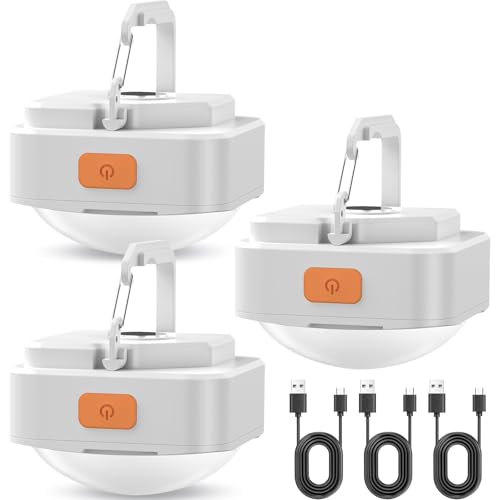
Best for: compact backup lighting for campers
The FLY2SKY set includes three rechargeable LED lanterns for tents, vehicles, power outages, and emergency kits. Each light measures 1.87 by 1.87 by 1.18 inches and weighs about 0.15 pound, so the trio takes little room in a backpack. Each unit includes a USB Type-C charging cable and an 800mAh battery. The listing rates the lights at up to 510 lumens, with high, low, and SOS modes.
What stands out is the useful mix of mounting options and low price, around $10. A foldable hook lets you hang a lamp from a tent loop, branch, or cord. Its magnetic base can attach to a metal surface, such as a vehicle panel. Battery claims reach 15 hours on high or 20 hours on low, though actual runtime can vary with battery condition. The IPX4 rating provides protection from splashes and rain, but these are not submersible lights. They work best as small area lights, not as focused flashlights for long-distance visibility.
Pros
- Three lights provide backup coverage for tents, cars, and home outages.
- USB Type-C charging and up to 20 hours on low reduce battery waste.
- Hooks and magnetic bases support hands-free placement in several locations.
Cons
- IPX4 protection handles splashes, not immersion or heavy water exposure.
- The tiny 800mAh batteries require recharging, and the 510-lumen claim may not describe each light separately.
6. LED Tactical Flashlight

Best for: Car kits and nighttime walks
This handheld LED flashlight is built for common outdoor and emergency tasks. Its aluminum body keeps the design light enough for a backpack, glove compartment, or survival kit, while the shape should feel familiar in hand. It uses four standard AA batteries, but they are not included, so you will need a fresh set before an outage or trip. The listed runtime reaches up to 10 hours on high power, though actual battery life can vary with battery quality and use.
The 1,200-lumen output is the main draw. The beam can reach as far as 1,000 feet in suitable conditions, giving you a useful view across a trail, yard, or driveway. An adjustable zoom changes the beam from a narrow long-distance spot to a broader area wash. Three modes, high, medium, and low, help conserve power when full brightness is unnecessary. IPX4 water resistance covers rain and splashes, but this is not a waterproof light for submersion. At around $30, it costs more than a basic battery flashlight.
Pros
- 1,200 lumens and a claimed 1,000-foot reach support long-distance viewing.
- Zoom control provides both focused and wide-area lighting.
- Aluminum construction and IPX4 protection suit rain, camping, and car storage.
Cons
- Four AA batteries are required and must be purchased separately.
- IPX4 protection does not cover immersion or heavy water exposure.
5. Victoper LED Flashlight 2-Pack

Best for: Budget camping and emergency kits
The Victoper LED Flashlight 2 Pack offers two handheld torches for camping, hiking, power outages, dorm rooms, and night walks. Each light has five settings: low, medium, high, SOS, and strobe. Its adjustable beam can shift from a narrow spot to a wider flood pattern, with a stated reach of up to 656 feet. Batteries are not included, so plan to buy those separately.
The housing uses aircraft-grade alloy with a type 3 hard-anodized coating. That should help resist scratches and regular outdoor wear. Victoper also describes the lights as waterproof and dustproof, with a textured grip for steadier handling. The stated LED lifespan exceeds 50,000 hours, although that figure is difficult to verify in normal use. At around $10 for two, this set makes sense for keeping one flashlight at home and another in a car, backpack, or emergency drawer.
Pros
- Two flashlights provide useful backup for homes, cars, or camping bags.
- Five modes include practical low, high, SOS, and strobe settings.
- Adjustable focus supports both long-distance spotting and wider area lighting.
Cons
- Batteries are not included, which adds an extra purchase before use.
- The listing does not give a lumen rating or specific waterproof depth, so performance claims lack useful testing detail.
4. HATORI LED Mini Flashlight
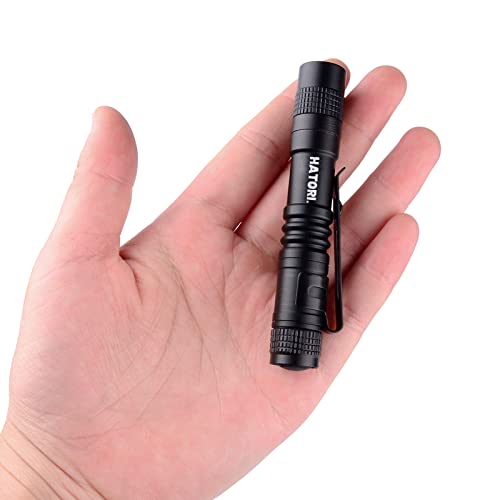
Best for: Everyday carry and emergency use
The HATORI LED Mini Flashlight is a compact pen light for pockets, purses, glove boxes, and small tool kits. It measures 3.55 inches long and weighs about 30 grams, so it adds little bulk. Its single LED produces up to 150 lumens, enough for walking paths, power outages, or checking dark corners. One alkaline battery powers it for about two hours with moderate continuous use, but the battery is not included.
A 6061 aluminum alloy body gives this small flashlight a sturdier feel than basic plastic keychain lights. The textured exterior helps with grip, and the attached clip can secure it to a belt, pocket, or cap. The manufacturer describes the body as water-resistant for outdoor use, though there is no stated IP rating or submersion guidance. At around $8, it is an inexpensive backup light, but buyers should keep their expectations practical. It has a single brightness level, and the tiny body cannot match the runtime or beam reach of larger flashlights.
Pros
- Up to 150 lumens provides useful light for close-range tasks and short walks.
- The 3.55-inch, 30-gram design fits easily in pockets, bags, or glove boxes.
- The clip supports hands-free placement on a pocket, belt, or cap.
Cons
- One alkaline battery is required, and none comes with the flashlight.
- No IP rating or multiple brightness modes are listed, limiting water-use confidence and lighting control.
3. EverBrite Mini LED Flashlight Set

Best for: Families building shared emergency kits
The EverBrite set includes 18 mini LED flashlights in six colors: three each in red, blue, green, silver, black, and gray. Each torch has six LEDs, a tail-cap push button, a non-slip grip, and a lanyard. Its aluminum body keeps the lights light to carry while adding some impact resistance. The compact design suits camping, hiking, fishing, night reading, car storage, and basic emergency use.
A useful extra is the battery supply. The package includes 54 AAA batteries, or three for each flashlight. Batteries may already sit inside the lights behind insulating strips, so check the torch if the package appears to arrive without loose cells. At around $27, this is a low-cost way to place lights in several rooms, vehicles, bags, or gift packages. However, the product listing does not provide a lumen rating, battery runtime, water-resistance rating, or exact dimensions. Those missing details make performance harder to compare with larger flashlights.
Pros
- 18 lights in six colors make it easy to share across a household or group.
- 54 included AAA batteries provide three cells per flashlight.
- Aluminum bodies, lanyards, and textured grips support simple everyday carrying.
Cons
- No published lumen output or runtime leaves brightness and battery life unclear.
- The mini size limits reach and beam coverage compared with a full-size flashlight.
2. Lepro LED Flashlight

Best for: Pocket carry and emergency use
The Lepro LED flashlight is a compact, battery-powered light for car storage, evening walks, power outages, and basic household tasks. It measures 4.2 inches long and 1.2 inches wide, with a 128-gram weight that should fit most pockets without taking much room. The included package contains one flashlight, three AAA batteries, and an instruction manual, so it can be used soon after opening.
Its rated output is about 140 lumens, with a claimed beam distance of up to 492 feet. That is enough for a dark room, driveway, or nearby trail, though larger lights can produce more light. The sliding head changes the beam from a wider flood pattern to a narrower spot. Its aluminum casing resists rust and corrosion, while the textured exterior helps provide a steadier grip. Around $10, it offers useful basics at a low upfront cost. The IPX4 rating means it can handle splashes and light rain, but it is not designed for submersion.
Pros
- Compact 4.2-inch body fits easily in a pocket or glove box.
- Adjustable focus switches between broad and narrow beam patterns.
- Includes three AAA batteries, so no separate battery purchase is needed.
Cons
- IPX4 protection does not make it safe for underwater use.
- Its 140-lumen output may feel limited for large outdoor areas or long-distance searching.
1. TrixHub Rechargeable Flashlights 2-Pack

Best for: Campers and dog walkers
The TrixHub package includes two rechargeable LED flashlights for around $16. Each one has an LCD battery display, so you can check the remaining charge before heading outside. USB charging keeps the setup simple, and built-in protection helps guard against overcharging, over-discharging, excess voltage, and short circuits. The manufacturer recommends using a UL-standard charger.
Each flashlight offers five settings: high, medium, low, strobe, and SOS. Its sliding head changes the beam from a wider area light to a narrower view for longer distances. The body uses aluminum alloy with an anti-slip finish, plus resistance to drops and water. That makes these lights suitable for camping, walking the dog, car repairs, and power outages. The compact shape should fit a pocket or small bag. The product listing does not provide a specific runtime, beam distance, flashlight size, or charging time, so buyers should keep those unknowns in mind.
Pros
- Two flashlights provide a useful spare for around $16.
- LCD displays show the remaining battery level.
- Five modes and adjustable focus suit close and distant lighting.
Cons
- Standalone lithium batteries are not included, so the lights must be charged before use.
- Runtime, charging time, and beam distance are not specified in the listing.
Buying Guide
Runtime at your usual brightness is the most important factor. A flashlight that lasts 8 hours at 200 to 300 lumens can cover a full night hike without frequent battery changes.
- Weight and size: Choose a model under 5 ounces, including batteries, and shorter than 5 inches so it fits a hip-belt pocket or side pouch.
- Useful brightness: Look for 200 to 400 lumens for trail walking and camp chores. Higher output helps with route finding, but often drains batteries faster.
- Battery system: USB-C rechargeable lights reduce spare-battery waste. For remote trips, choose a model that also accepts standard AA or AAA cells, or carry one spare battery set.
- Weather resistance: Select at least an IPX4 rating for rain and splashes. IPX7 protection, which covers brief submersion, gives more security near streams or during storms.
- Beam and controls: A 100 to 150-meter beam suits most trails. Pick a light with a low mode below 20 lumens, a lockout feature, and a switch that will not activate inside your pack.
If you cannot have everything, prioritize dependable runtime at a moderate brightness, since extra lumens mean little when the battery runs out.
Frequently Asked Questions
How many lumens do I need for backpacking?
A backpacking flashlight should provide 200 to 400 lumens for most trail use. A headlamp with a low mode near 10 to 30 lumens handles camp chores, while a brighter setting helps on rocky paths or after dark without draining the battery too quickly.
What battery type is best for a hiking flashlight?
Rechargeable lithium-ion batteries are usually the best choice for a hiking flashlight when weight and regular charging matter. Many models use one 18650 cell, while AA-powered options are easier to replace in remote towns and may suit travelers who cannot recharge every night.
Can a small flashlight be bright enough for backpacking?
Yes, a compact flashlight can be bright enough for backpacking if it produces at least 200 lumens and has a usable low mode. A model weighing about 2 to 4 ounces fits easily in a hip-belt pocket, but tiny bodies often have shorter runtimes and less heat control at maximum output.
Are headlamps better than handheld flashlights for backpacking?
Headlamps are usually better for backpacking because they keep both hands free while walking, cooking, or setting up shelter. A 300-lumen headlamp with a red mode covers most nighttime tasks, while a handheld light can provide better aim and stronger grip for checking distant trail sections.
Conclusion
TrixHub Rechargeable Flashlights 2-Pack is the top pick for backpackers who want two rechargeable lights for shared trips, backups, or camp chores. If your priority is the lightest possible setup, choose a smaller single flashlight instead, since carrying less can matter more than having a second unit. Before buying, double-check the flashlight’s size, compatibility with your charging setup, package quantity, and current price, since listings and promotions can change. Also consider how you will store and recharge it on the trail. A compact light should fit an accessible pocket, while a spare can stay packed until needed. The right choice balances backup value, carrying space, charging convenience, and your trip’s length.