
5 Best Axe for Felling Trees for Heavy-Duty Use
The Fiskars A-Series 28″ Chopping Axe is the best axe for felling trees for most buyers because its 28-inch length balances reach, control, and manageable weight. It is a general-purpose chopping axe, so it also handles limbing, splitting smaller rounds, and clearing fallen branches. Its composite handle resists weather better than traditional wood, though some users may prefer wood’s easier repair and classic feel.
This guide is for homeowners, campers, and landowners who need to cut small or medium trees without buying a specialized forestry tool. The key factors are head weight, handle length, blade sharpness, grip comfort, and the type of wood you plan to cut. A longer axe can add power, but it needs more swing space and control. The 5 picks below are ranked with clear reasons and honest drawbacks for each. Choose based on tree size, user strength, and storage needs.
Quick Comparison
| # | Product | Best For | Price | |
|---|---|---|---|---|
| 1 | Fiskars A-Series 28" Chopping Axe | Homeowners Chopping Medium Firewood | ~$53 | View → |
| 2 | Helko Werk Classic Forester Felling Axe | Traditionalists Felling Large Hardwood Trees | ~$185 | View → |
| 3 | Helko Werk Hessen Felling Axe | Fans of German-Made Axes | ~$180 | View → |
| 4 | Kings County Tools Forest Felling Axe | Budget-Minded Forest Clearing | ~$54 | View → |
| 5 | Fiskars X24 Universal Axe | Property Owners Cutting Medium Trees | ~$57 | View → |
5 Top Felling Axes Worth Considering
These picks are ranked by cutting performance, handling, durability, and value, counting down to the strongest overall choice.
5. Fiskars X24 Universal Axe

Best for: Homeowners felling small trees and chopping firewood
The Fiskars X24 is a 24-inch universal axe built for general wood cutting and tree felling. Its balance suits full swings, while the thin, wide blade is shaped for clean bites in fresh spruce and pine. That makes it a practical choice for clearing branches, processing smaller logs, and handling seasonal firewood. Around $57, it sits in the midrange for a full-size axe.
Its double-hardened forged steel head uses a low-friction coating that helps it pass through wood and resist rust. Fiskars pairs it with a FiberComp handle, a lightweight material designed to absorb shock and protect against overstrike damage. The insert-molded head is meant to reduce loosening and breakage over time. A textured SoftGrip area and hooked end help maintain control during a swing. The package includes a blade sheath for storage or transport, plus a limited product warranty. Warranty length and coverage vary by Fiskars’ terms, so check those details before buying.
Pros
- 24-inch length provides reach for chopping and light tree felling.
- Forged steel blade has a low-friction coating and rust resistance.
- FiberComp handle absorbs shock, with a textured grip for control.
Cons
- The full-size handle can feel tiring or awkward for smaller users.
- Its thin cutting edge favors fresh wood, not heavy splitting of large, seasoned rounds.
4. Kings County Tools Forest Felling Axe

Best for: Homeowners splitting medium firewood
This 31.2-inch Forest Felling Axe combines a tree-cutting axe with a splitting maul. Its 5.37-pound weight gives it useful force for firewood, yard cleanup, and smaller tree-felling jobs. The German-made head uses steel, while the handle is shock-resistant European ash. A red steel collar sits near the thick neck to help protect that high-stress area during repeated swings.
The 8.6-inch head includes a 5.5-inch blade and broad shoulders that taper toward the cutting edge. That shape helps the head move through logs without sticking as easily as a narrow chopping axe. The long handle provides extra reach, but the overall weight still requires controlled swings and good technique. At around $54, it offers a practical tool for homeowners who need one axe for splitting and general property work. It is not a lightweight camping hatchet, and its size may feel excessive for small branches or tight spaces.
Pros
- European ash handle provides a durable, shock-resistant grip material.
- 5.5-inch blade and 8.6-inch wedge head suit splitting and felling tasks.
- Red steel collar adds protection around the thick neck.
Cons
- At 5.37 pounds, it can cause fatigue during long chopping sessions.
- The 31.2-inch length is harder to control in cramped areas or around small limbs.
3. Helko Werk Hessen Felling Axe
Best for: Mid-size firewood and trail clearing
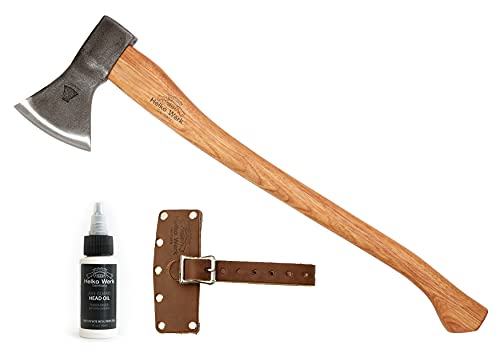
The 1844 Helko Werk Hessen is a 28-inch felling axe made in Germany. Its Rheinland-pattern head weighs 2¾ pounds, bringing the total axe weight to 4 pounds. The slim, wide-bit blade suits cutting work, while the midsize handle offers more reach than a hatchet without the length of a full-size felling axe. Around $180, it sits in the premium range for a working axe.
Its construction is the main draw. Helko individually open-face drop forges each head from C50 high-carbon steel, rated at 53-56 HRC. The Grade A American hickory handle receives a 150-grit sanding and boiled linseed oil finish. That gives the grip a smooth feel and leaves room for normal handle care over time. A full-grain vegetable-tanned leather sheath protects the edge, and the included 1-ounce bottle of Axe Guard oil helps protect the steel from rust. The package feels complete, but this remains a traditional tool that needs sharpening and storage care.
Pros
- The 2¾-pound Rheinland head provides a useful balance of cutting power and manageable size.
- Individually forged C50 carbon steel offers a durable, traditional axe-head material.
- The 28-inch hickory handle, leather sheath, and oil come as a practical setup.
Cons
- At 4 pounds overall, it may feel heavy for extended carry or smaller users.
- Carbon steel can rust without regular drying, oiling, and protected storage.
2. Helko Werk Classic Forester Felling Axe
Best for: Farm, cabin, and tree work
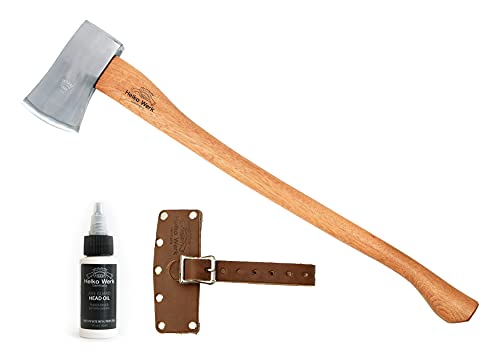
The Helko Werk Forester is a full-size felling axe for users who need more reach and power than a hatchet provides. Its 31-inch American hickory handle and 3 1/2-pound head bring total weight to 5 1/2 pounds. That size suits medium and large tree work, yet it is less demanding than Helko’s larger Expedition model. At around $185, it sits in the premium price range for a general-purpose axe.
The head uses hand-forged C50 high-carbon steel, rated at 53-56 HRC. Its polished finish helps limit rust and cutting friction, but the steel still needs drying and oil after wet use. The handle is selected for grain and density, sanded to 150 grit, and finished with boiled linseed oil. A vegetable-tanned, full-grain leather sheath covers the edge. The included 1-ounce bottle of Axe Guard oil helps with storage care.
Pros
- The 3 1/2-pound head provides useful power for felling and large branches.
- The 31-inch hickory handle gives solid reach without the size of a larger expedition axe.
- The leather sheath and 1-ounce oil bottle support safer storage and basic upkeep.
Cons
- At 5 1/2 pounds, this axe may tire smaller users during extended work.
- Its 31-inch length makes it less practical for backpacking or tight spaces.
1. Fiskars A-Series 28″ Chopping Axe

Best for: Backyard cleanup and campfire wood
The Fiskars A-Series Chopping Axe is a 28-inch tool built for jobs that need reach and leverage. It is designed for felling small trees, cutting branches, and splitting logs for campsite prep or backyard cleanup. That length provides more swing than a compact hatchet, but it also requires clear space around the user. At around $53, it sits in the midrange for a general-purpose outdoor axe.
Its sharp blade is designed to bite deeper with each swing, while the low-friction coating helps reduce drag and sticking in wood. That combination can make repeated cuts easier during limb clearing or log splitting. The axe also uses Fiskars’ sharpening technology and includes a lifetime warranty, though buyers should review the warranty terms and exclusions. It is a practical choice for routine outdoor work, not fine carving or close-quarter cutting.
Pros
- The 28-inch length provides reach for felling small trees and splitting logs.
- Low-friction coating helps reduce drag and wedging during cuts.
- Lifetime warranty provides long-term coverage for eligible defects.
Cons
- The long handle needs open working space and may feel awkward for smaller users.
- It is less suitable for precision trimming, light kindling, or cramped areas than a shorter hatchet.
Buying Guide
The most important factor is matching the axe’s size to the tree and your reach. A 28- to 36-inch felling axe with a 3- to 5-pound head can handle small and medium trees, while an oversized tool causes quicker fatigue and poorer control.
- Head weight: Choose 2.5 to 4 pounds for saplings and trees up to about 8 inches wide. Heavier 4- to 5-pound heads suit stronger users and larger trunks.
- Blade shape: Select a thin, curved felling blade for deep wood cuts. Avoid broad splitting heads, which push wood apart instead of cutting across grain.
- Handle length: Look for a 28- to 36-inch handle for two-handed swings. A 24- to 28-inch model offers better control but less reach and power.
- Handle material: Hickory provides traditional shock absorption and can be replaced. Fiberglass handles resist weather and usually cost $40 to $90 for a complete axe.
- Safety features: Buy a model with a fitted blade cover and a secure head-to-handle connection. Check for loose wedges, cracks, or exposed cutting edges before every use.
If you cannot have everything, prioritize correct size and weight, because control matters more than extra cutting power.
Frequently Asked Questions
How do I choose an axe for felling trees?
Choose a felling axe with a sharp 28- to 36-inch handle, a head matched to tree size, and a secure, durable eye. A 3.5- to 5-pound head suits many medium trees, while heavier heads demand more strength and control. Look for a straight-grain hickory handle and a bit designed for cutting across wood grain.
What size axe is best for cutting down trees?
A 3.5- to 5-pound felling axe is a practical choice for many medium-sized trees, provided you can control its swing safely. Handles from 28 to 36 inches offer a useful balance of reach, leverage, and accuracy. Choose a lighter 2.5- to 3.5-pound head for smaller trunks or longer work sessions.
Can a splitting axe fell a tree?
A splitting axe can fell a small tree in an emergency, but a dedicated felling axe is safer and more efficient for directional cuts. Splitting heads push wood apart, while thinner felling bits slice fibers more cleanly. For example, use a felling model on trunks under 12 inches only when you have a clear escape path.
Are double-bit axes good for cutting down trees?
Double-bit axes can work well for experienced users, but a single-bit felling axe is usually easier to control for routine tree cutting. The second edge adds balance options, yet it also creates another sharp surface to protect. A 3.5-pound double-bit model suits limbing and felling if you can maintain both edges.
Conclusion
The Fiskars A-Series 28″ Chopping Axe is the top pick for homeowners and occasional property owners who need a capable tool for medium-sized felling jobs. If lower weight matters more than maximum chopping force, choose a shorter, lighter splitting or limbing axe instead, since it will be easier to control during repeated cuts. Before buying, double-check the 28-inch size, your comfort with the handle length, compatibility with the trees and wood types on your property, the quantity included, and the current price. A longer handle can add reach and swing power, but it also needs more clearance and control. Choose a model that matches your strength, tree size, storage space, and expected workload.