
6 Best Dehumidifier for Gun Safe in Garage for Humid Shops
For most buyers, the PEET SafeKeeping Dehumidifier is the best dehumidifier for gun safe in garage because it is built specifically for enclosed storage and uses gentle heat to reduce moisture around firearms. Its compact, low-maintenance design fits the narrow interior of many safes, while a continuous power connection avoids the short runtimes common with battery devices. It is a practical starting point for protecting metal parts, optics, and other stored equipment.
This guide is for gun owners managing humidity in an attached or detached garage, especially where temperature swings can cause condensation. The key factors are the safe’s interior length, the warmer’s coverage, power access, and how easily the unit mounts without blocking shelves or racks. Materials and heat output also matter because the device must operate near valuable gear for long periods. The six picks below are ranked with clear reasons and honest drawbacks for each, so you can match the moisture control method to your safe and garage.
Quick Comparison
| # | Product | Best For | Price | |
|---|---|---|---|---|
| 1 | PEET SafeKeeping Dehumidifier | Large safes with electrical outlets | ~$40 | View → |
| 2 | SafeNDry XL Gun Safe Dehumidifier | Extra-large gun safes | ~$23 | View → |
| 3 | Gun Safe Electric Dehumidifier | Basic firearm moisture control | ~$50 | View → |
| 4 | Hornady 95900 Rechargeable Dehumidifier | Portable rechargeable storage protection | ~$29 | View → |
| 5 | MAXSafes Gun Safe Dehumidifier Rod | Rod-style safe installations | ~$17 | View → |
| 6 | TOAAOT Silica Gel Moisture Absorber | Compact silica gel storage protection | ~$20 | View → |
6 Dehumidifiers for Gun Safes in Garages
These six options are ranked by moisture control, safe-friendly size, and garage practicality, counting down to the top pick.
6. TOAAOT Silica Gel Moisture Absorber

Best for: Long-term firearm storage
This set includes three 200g silica gel canisters for gun safes, firearm cases, and tool boxes. Each canister is rated for about 15 cubic feet of enclosed space, so one may suit a compact safe while larger storage areas may need multiple units. The canisters require no batteries or electrical outlet, which makes placement simple.
The orange desiccant changes to dark green as it absorbs moisture, giving you a visible recharge cue. Place the canister in an oven at 300°F for about four hours to reactivate it. The process can be repeated for years, although it requires access to an oven and careful handling afterward. The black canister resists rust, and its heat-resistant viewing screen is designed to avoid deforming during heating. The silica gel also contains no Cobalt II Chloride. At around $20 for three, this is a relatively low-cost option for enclosed storage, but it will not actively lower humidity in an open room.
Pros
- Three 200g canisters cover separate safes, cases, or tool boxes.
- No batteries or power cord are required.
- Color-changing gel shows when reactivation may be needed.
Cons
- Each canister needs about four hours in a 300°F oven to recharge.
- Coverage is limited to enclosed spaces, with each unit rated for about 15 cubic feet.
5. MAXSafes Gun Safe Dehumidifier Rod
Best for: Small safes needing steady moisture control
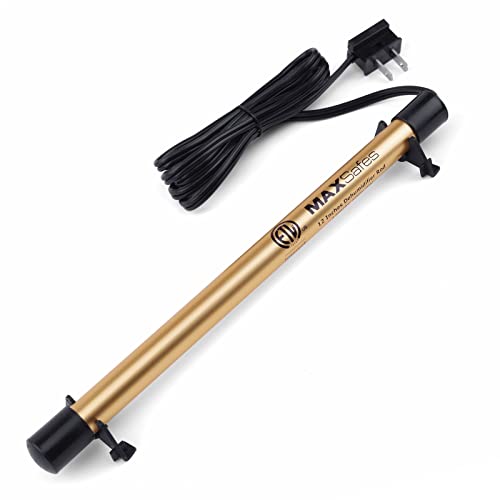
The MAXSafes Dehumidifier Rod is a 12-inch electric heating rod for gun safes, cabinets, and other small enclosed spaces. It raises the interior temperature slightly above the surrounding air, which helps reduce excess humidity and condensation. Unlike rechargeable moisture absorbers, this rod stays connected to power and does not need regular refills or charging. At around $17, it offers a low-cost way to add moisture control to a protected storage area.
Installation is flexible. The included snap-on brackets support vertical or horizontal mounting, and the removable plug can help the cord pass through a narrow opening. The lightweight aluminum body has a glossy finish, while ETL qualification provides a recognized safety certification. This rod is not a sealed dehumidifier, so it does not collect water or actively measure humidity. It simply provides gentle heat over time. Keep the unit clear of items, and do not touch it after plugging it in. MAXSafes includes an unconditional one-year warranty.
Pros
- Provides continuous moisture control without rechargeable batteries or refillable crystals.
- Supports vertical and horizontal mounting with snap-on brackets.
- Removable plug can simplify cord installation through small openings.
Cons
- Requires a nearby electrical outlet, which may limit placement in some safes.
- Produces heat rather than removing water, so it cannot replace a full dehumidifier in damp rooms.
4. Hornady 95900 Rechargeable Dehumidifier

Best for: Small gun safes without outlets
The Hornady 95900 is a reusable silica gel dehumidifier for enclosed spaces. Its desiccant crystals draw moisture from the surrounding air without batteries or continuous electricity. The 1.5-by-4-by-6-inch unit fits inside many gun safes, cabinets, closets, pantries, vehicles, and storage cases. Hornady rates it for spaces up to 333 cubic feet. Around $29, it costs more upfront than disposable moisture tubs, but it can be recharged and reused.
A color change provides a simple status check. The crystals shift from blue to pink when the unit needs drying. To recharge it, plug the absorber into a 110V outlet for about a day. It should then work for several weeks before needing another recharge, depending on humidity and space size. The included quick-connect bracket allows mounting inside a safe or cabinet. It contains no harmful chemicals and does not require an electrical connection while removing moisture, which helps protect firearms, ammunition, and accessories from rust and corrosion. It cannot replace proper firearm cleaning or a well-sealed storage area.
Pros
- Reusable silica gel crystals reduce the need for disposable moisture absorbers.
- Blue-to-pink crystals show when a recharge is needed.
- Compact 1.5-by-4-by-6-inch body and included bracket suit many safes and cabinets.
Cons
- The unit needs access to a 110V outlet for roughly one day after the crystals turn pink.
- A 333-cubic-foot rating may not cover large rooms, poorly sealed spaces, or very damp storage areas.
3. Gun Safe Electric Dehumidifier

Best for: Gun safe owners in damp rooms
This plug-in gun safe dryer combines gentle heat with a built-in fan. The fan moves air around the safe, while the heater raises the interior temperature enough to reduce moisture buildup. It fits safes from about 3.5 to 11 cubic feet and measures roughly 3.34 by 4.13 inches. Place it on the floor or a shelf, then route the cord through an existing opening or a hole you drill.
The main advantage is low upkeep. It needs no silica packs, liquid refills, or desiccant recharging, and it can run continuously after connection to a standard outlet. The compact body leaves room for firearms and shelves, while the manufacturer says it uses less power than a light bulb. At around $50, it costs more upfront than disposable moisture absorbers. Its fan-and-heat design may offer broader air movement than a passive rod, but it does not measure humidity or remove water from the air.
Pros
- Built-in fan circulates warm air instead of relying only on passive convection.
- Compact 3.34-by-4.13-inch body fits pistol safes and larger vaults.
- Runs continuously without refills, recharge cycles, or replacement crystals.
Cons
- Installation may require drilling a hole if the safe lacks a cable opening.
- Heat and airflow reduce moisture buildup, but the unit is not a true humidity monitor or compressor dehumidifier.
2. SafeNDry XL Gun Safe Dehumidifier

Best for: Gun safes and ammo storage
The SafeNDry XL is a non-electric moisture absorber for enclosed spaces. It contains 450 grams of color-indicating silica gel beads in one inner pouch, held inside a plastic display canister. The maker rates it for spaces up to 60 cubic feet, so it fits larger gun safes, document cabinets, and storage containers. It can also suit books, family photos, stamps, collectibles, and ammunition. At around $23, it costs less than many powered options, though prices can change.
The main advantage is reuse. When the beads change from blue to pink, remove the pouch from the canister and heat it in an oven at 240°F for about three hours, or until the color returns to blue. This process can be repeated multiple times. The pouch keeps loose beads contained, while the canister allows air to reach the drying material. There is no liquid tray, outlet, or battery to manage. Still, this is a passive absorber, not a unit that actively moves air. It needs regular oven recharging, which takes time.
Pros
- Covers enclosed spaces up to 60 cubic feet.
- Reusable after a 240°F oven recharge.
- Pouch and canister help prevent bead spills.
Cons
- Recharging takes about three hours and requires an oven.
- It works best in enclosed areas and cannot address an active leak.
1. PEET SafeKeeping Dehumidifier
Best for: Humid gun safes with outlets
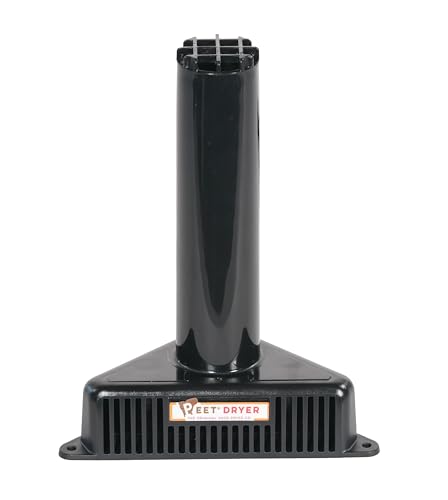
The PEET SafeKeeping Dehumidifier uses gentle heat and natural air movement to reduce moisture inside gun safes, cabinets, and other enclosed storage areas. It is rated for spaces up to 300 cubic feet, which covers many home safes and larger gun cabinets. At 13 watts, its power draw is lower than a standard light bulb. The unit plugs into a household outlet and runs continuously, so there are no drying packs to monitor.
What sets this warmer apart is its low-maintenance design. It has no fan, filter, refill, or rechargeable desiccant, so ongoing upkeep is minimal. The company says it is suitable for firearms, leather, documents, coins, and other stored items that can suffer from rust or corrosion. Around $40, it costs more upfront than a small container of silica gel, but it avoids repeated replacements. Its compact format should fit inside most standard safes. PEET has made moisture-control products since 1968, and this model includes a five-year warranty.
Pros
- Covers enclosed spaces up to 300 cubic feet.
- Uses only 13 watts for continuous operation.
- Requires no filters, refills, or recharging.
Cons
- It needs a nearby electrical outlet, which limits placement options.
- Warm-air convection may not handle severe dampness, leaks, or standing water.
Buying Guide
Humidity control is the key factor when choosing a moisture remover for a garage gun safe. Aim for stable 45% to 50% relative humidity, since condensation and rust can develop when damp air stays trapped inside the cabinet.
- Humidity target: Choose a unit or system rated for 45% to 50% relative humidity. A built-in hygrometer helps, but add a separate $10 to $20 digital meter inside the safe to verify readings.
- Safe size: Match output to the cabinet’s interior volume. A 12- to 18-inch heating rod suits many 10- to 20-cubic-foot safes, while desiccant packs work better in smaller lockboxes.
- Power and installation: Confirm that the cord reaches an outlet, often 6 to 10 feet away. Look for a 110- to 120-volt plug, mounting brackets, and a cable gap that will not damage the door seal.
- Garage conditions: For unheated spaces, choose a model rated for about 40°F to 100°F. A low-wattage rod using 8 to 12 watts costs less to run than a household compressor unit.
- Maintenance cost: Rechargeable desiccant should refresh in 2 to 12 hours. Disposable packs may need replacement every 30 to 90 days, costing about $15 to $40 yearly.
If you cannot satisfy every factor, prioritize stable humidity control over extra features or the lowest price.
Frequently Asked Questions
How should I choose a moisture remover for a gun safe in a garage?
Choose a low-wattage dehumidifier or rechargeable desiccant unit sized for the safe’s interior and garage conditions. A 12- to 36-inch heating rod suits many standard safes, while a desiccant can work without an outlet. Add a digital hygrometer, and aim to keep relative humidity near 40% to 50%. Check it weekly during wet weather and after opening the door.
What type of dehumidifier works best inside a gun safe?
An electric heating rod usually works best inside a gun safe because it gently warms the air and reduces condensation without collecting water. Many rods use about 8 to 12 watts and mount near the bottom. Desiccant packs make a useful backup, but they need replacement or oven recharging.
Can I use a small room dehumidifier in my garage?
You can use a small room dehumidifier in a garage, but it should not replace a safe-sized moisture-control device. Garage models remove moisture from the whole room, while a rod or desiccant pack works inside the sealed cabinet. A 30-pint unit may help the space, but it will not fit inside most safes.
Are rechargeable desiccant dehumidifiers safe for firearms?
Yes, rechargeable desiccant units are generally safe for firearms when kept dry, secured, and used according to the manufacturer’s instructions. They produce no heat during use and need no cord inside the cabinet. Many packs require recharging every 30 to 60 days, though damp garages may shorten that interval.
Conclusion
PEET SafeKeeping Dehumidifier is the top choice for gun owners who want steady moisture control in a garage safe with access to an outlet. If your priority is cordless operation, pick a rechargeable desiccant unit instead, because it works where no power connection is available. Before buying, double-check the safe’s interior size, cord and ventilation compatibility, needed quantity, and current price. A powered warmer fits best when the safe sits near an outlet and the garage stays damp for long periods. A compact rechargeable option may suit smaller cabinets or owners who want simpler placement. Whichever model you choose, inspect firearms regularly and replace or recharge the unit on schedule.