
6 Best Boning Knives for Deer for Field Dressing
The HOSHANHO Fillet Knife is the top pick for most buyers seeking the best boning knives for deer. Its 7-inch stainless steel blade offers a useful balance of control and flexibility when trimming meat around joints and removing silver skin. The fillet-knife design also suits hunters who want one tool for boning, close trimming, and preparing fish or other game.
This guide is for hunters processing deer at camp, in a garage, or at home. For this type of knife, blade length and steel quality matter most. A 6- to 7-inch blade gives you room for larger cuts without feeling awkward in tight areas, while stainless steel helps resist staining and simplifies cleanup. Handle grip and sheath design also affect safe, steady work, especially when hands are wet. The six picks below are ranked with clear reasons and honest drawbacks for each, so you can match a knife to your processing setup and budget.
Quick Comparison
| # | Product | Best For | Price | |
|---|---|---|---|---|
| 1 | HOSHANHO Fillet Knife | Home Fish Filleting | ~$66 | View → |
| 2 | Mercer Culinary Ultimate Curved Boning Knife | Precise Meat Trimming | ~$11 | View → |
| 3 | Golden Bird Butcher Knife Set | Budget Butchering Tasks | ~$36 | View → |
| 4 | Outdoor Edge WildLite 6-Piece Hunting Knife Set | Compact Hunting Field Kit | ~$34 | View → |
| 5 | Cutluxe Curved Boning Knife | Curved Boning Professionals | ~$25 | View → |
| 6 | OUTDOOR EDGE ErgoMax 6-Piece Game Processing Knife Set | Complete Game Processing Teams | ~$110 | View → |
6 Top Boning Knives for Deer
These ranked picks count down from practical options to the top deer processing knife for cleaner cuts.
6. OUTDOOR EDGE ErgoMax 6-Piece Game Processing Knife Set

Best for: Field dressing deer and elk
This six-piece processing kit gives hunters several knife shapes in one case. The lineup covers caping, boning, skinning, butchering, and larger big-game cuts, so it handles more tasks than a single field knife. At around $110, it includes storage and sharpening tools without reaching premium-kit pricing.
The handles use rubberized triple-shot TPR, a grippy material that should stay easier to control when hands or gloves get slick. Their contoured shape is designed to reduce strain during longer processing sessions, though comfort still depends on hand size and grip style. A clear polycarbonate lid makes the tools easy to identify, while the blow-molded base keeps everything organized. The sharpener uses coarse tungsten carbide to reshape dull edges, then fine ceramic rods to finish them at a 22-degree angle. Outdoor Edge also offers lifetime service support for knife problems and replacement requests.
Pros
- Six specialized knives cover common deer and elk processing tasks.
- TPR handles provide traction during wet or slippery work.
- The case and built-in sharpener simplify transport and maintenance.
Cons
- The listed lineup does not mention a bone saw, so hunters may need another tool for larger bones.
- The sharpener uses a fixed 22-degree angle, giving users little control over alternate edge angles.
5. Cutluxe Curved Boning Knife

Best for: Home cooks trimming roasts and fish
This 6-inch curved boning knife is designed for filleting, deboning, trimming, skinning, and butterflying meat or fish. Its flexible blade should follow bones and contours more easily than a broad chef’s knife, though the exact flex may feel subjective. The compact length offers control around joints and smaller cuts.
Cutluxe uses high-carbon German steel rated at 56+ Rockwell hardness. The edge is sharpened to 14–16 degrees per side, a narrow angle that supports precise slicing but still needs careful storage and hand washing. A full-tang build runs through the triple-riveted pakkawood handle, giving the knife a stable feel. The laminated, polished handle is intended for a cleaner kitchen surface, while the wood may need more care than synthetic scales. At around $25, it offers useful materials without entering premium butcher-knife pricing. A lifetime warranty covers material and workmanship defects, but it does not replace safe knife handling or normal edge wear.
Pros
- Six-inch curved blade suits controlled trimming around bones and joints.
- 14–16-degree-per-side edge supports thin, accurate cuts.
- Full tang, three rivets, and pakkawood provide a secure handle structure.
Cons
- Pakkawood requires hand washing and careful drying, not dishwasher treatment.
- A flexible boning blade is specialized, so it is less useful for chopping or general meal prep.
4. Outdoor Edge WildLite 6-Piece Hunting Knife Set
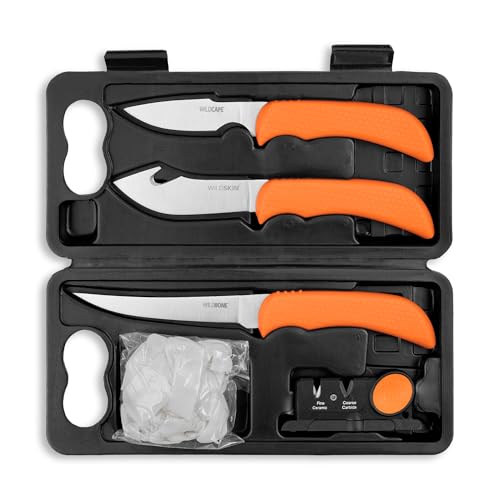
Best for: Budget-minded deer processing kits
This Outdoor Edge WildLite set is a compact field-processing kit for deer, elk, caribou, poultry, and other game. It includes six fixed-blade tools, with a gutting and skinning knife, caping knife, boning knife, game-cleaning gloves, and a two-stage carbide and ceramic sharpener among the listed pieces. The knives use full-tang 420J2 stainless steel blades with heat treatment and taper grinding. The handles use blaze-orange TPR rubber, which can make them easier to spot in grass or low light.
The hard-side case is one of the stronger features here. It keeps the tools together and adds protection inside a hunting pack, without the bulk of a larger butcher-kit box. At around $34, this set offers more equipment than a single field knife, though buyers should keep expectations realistic. The product description calls the blades shaving sharp, but actual edge life depends on use, cleaning, and sharpening. Outdoor Edge also says it handles replacement and service requests for the life of the tool.
Pros
- Six-piece setup covers gutting, skinning, caping, boning, cleaning, and sharpening tasks.
- Full-tang 420J2 stainless steel blades offer a solid construction for field use.
- Blaze-orange TPR handles provide a visible, nonslip grip in wet conditions.
Cons
- The listing does not provide blade lengths, overall tool sizes, or case dimensions.
- A compact multi-tool kit takes more pack space than one general-purpose hunting knife.
3. Golden Bird Butcher Knife Set
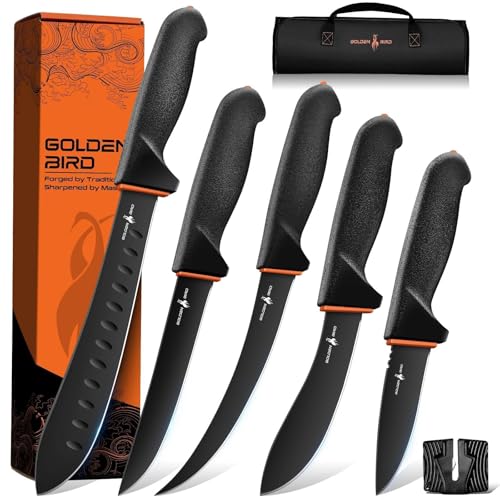
Best for: Hunters processing game at camp
The Golden Bird Butcher Knife Set combines an 8-inch butcher knife with dedicated boning and skinning blades for field or kitchen work. The set covers large cuts, meat removal around bones, and hide removal without forcing one blade to handle every task. A roll bag keeps the tools together for transport, and the included sharpener helps restore an edge between jobs. At around $36, it offers a practical setup for buyers who need more than one meat knife.
The strongest feature is task separation. The Granton edge on the butcher knife can help reduce sticking as it moves through larger cuts, while the boning knife suits tighter work around joints. Textured, non-slip handles matter when hands become wet or greasy. The non-reflective blade finish may also reduce glare outdoors. Still, the listing does not specify the steel type, blade count, or handle material, so buyers cannot judge corrosion resistance or long-term edge retention from the product details alone.
Pros
- Includes an 8-inch butcher knife, boning knives, and skinning knives for several processing steps.
- Non-slip handles provide more control around wet or greasy meat.
- Roll bag and included sharpener make the set easier to carry and maintain.
Cons
- The product details do not identify the steel grade or handle material.
- Multiple knives and the roll bag require more storage space than a single versatile blade.
2. Mercer Culinary Ultimate Curved Boning Knife
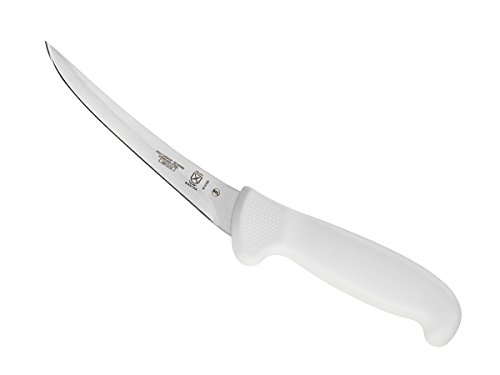
Best for: Home cooks deboning poultry and fish
The Mercer Culinary Ultimate White is a 6-inch curved boning knife made for separating meat from bone. Its blade uses high-carbon Japanese steel, a material chosen for easier edge maintenance and lasting sharpness. The curved profile should help follow the shape of poultry, ham, and fish while trimming fat and sinew. At around $11, it suits cooks who need a dedicated prep knife without a large spend.
The handle is built for repeated kitchen use, with textured finger points that add grip when hands are wet or greasy. That design also gives the knife better control during close trimming work. Mercer recommends washing it by hand with warm water and mild soap after every use, then rinsing and drying it fully with a soft towel. Do not put it in the dishwasher or leave it submerged for long periods. The white handle may show stains more readily than darker handles.
Pros
- Six-inch curved blade suits deboning chicken, ham, and fish.
- High-carbon Japanese steel supports easier edge maintenance.
- Textured handle points provide a more secure grip.
Cons
- Hand washing adds cleanup time and rules out dishwasher convenience.
- The curved boning shape is less useful for general chopping or slicing.
1. HOSHANHO Fillet Knife

Best for: Home anglers cleaning whole fish
The HOSHANHO Fillet Knife is a 7-inch fish and meat knife with a thin, flexible blade. It uses Japanese 10Cr15CoMoV stainless steel, a high-carbon alloy suited to detailed cutting. The edge is hand polished to 15 degrees per side, which should help with slicing, trimming, skinning, and removing bones. Its narrow profile can also reduce wasted flesh when working around a fish frame.
The handle uses pakkawood with a textured, frosted finish. That material offers a warmer feel than plain plastic, while the shaped grip should make longer prep sessions easier on the hand. The blade’s flexibility is useful for following curved fish contours, though it may feel less controlled for heavy-duty meat work. At around $66, this knife costs more than basic fillet tools, but its steel, finish, and specialized shape target cooks who clean fish often.
Pros
- The 7-inch flexible blade suits filleting, skinning, trimming, and butterflying.
- 10Cr15CoMoV stainless steel and a 15-degree-per-side edge support precise cuts.
- Pakkawood provides a shaped, corrosion-resistant handle with a secure textured feel.
Cons
- The flexible blade may bend too much for thick cuts, large joints, or heavier kitchen tasks.
- The listing does not mention a protective sheath, so storage may require a separate knife guard.
Buying Guide
The most important factor is controlled blade flexibility. A semi-flexible blade follows deer joints and bone, helping remove meat cleanly without cutting too deeply.
- Blade length: Choose a 4.5- to 6-inch blade. A 5-inch model gives good control around shoulders, hips, and smaller joints.
- Flex level: Select a semi-flexible blade for general processing. Very stiff blades suit large cuts, while highly flexible fillet-style blades can wander near bone.
- Steel and edge retention: Look for stainless steel rated around 56-60 HRC. Common choices include AUS-8, 440A, 420HC, and VG-10. Plan to sharpen after each deer.
- Handle and grip: Choose a 4.5- to 5-inch handle with a textured rubber or polymer surface. A finger guard and bright orange color improve control and visibility.
- Sheath and cleaning: Pick a fitted sheath with drainage holes and belt attachment. Hand-wash the knife with warm, soapy water, then dry it immediately to reduce rust risk.
- Price and extras: Expect to spend $25-$60 for a dependable knife. A $40-$80 kit may include a sharpener, gloves, and storage case, but inspect the blade before paying for extras.
If you can prioritize only one factor, choose blade control through the right length and moderate flexibility.
Frequently Asked Questions
How do I choose a boning knife for processing deer?
Choose a deer boning knife with a 5- to 6-inch flexible, narrow blade, a secure grip, and corrosion-resistant steel. A curved blade follows joints and lets you separate meat from bone with fewer wasted cuts. For field work, pick a sheath and handle that stay secure when wet or cold.
What blade length is best for cutting up a deer?
An ideal blade length is usually 5 to 6 inches for deer processing because it balances control and cutting reach. A 4-inch blade suits tight joint work, while a 6-inch model handles larger muscles more efficiently. Flexible steel helps around the pelvis, ribs, and shank, but excessive flex can reduce control.
Can I use a kitchen boning knife for deer?
You can use a kitchen boning knife for deer if it has a narrow, sharp blade and a handle that remains secure when wet. However, many kitchen models have thinner handles or lower corrosion resistance than hunting knives. A 5-inch stainless steel blade is a practical starting point, then clean and dry it immediately.
Are flexible boning knives better for deer?
Flexible boning knives are usually better for deer because they follow bones and help remove meat from curved areas. Choose medium flex for general breakdown, especially around the shoulder and hindquarter. Very flexible blades work well for trimming, while stiff blades offer more control when separating larger sections.
Conclusion
The HOSHANHO Fillet Knife is the top choice for hunters who want one flexible blade for breaking down venison, trimming silver skin, and separating meat from bone without carrying several tools. If your priority is tighter control around joints or a compact pack, pick a shorter, stiffer boning knife instead, since its rigid blade can feel steadier during detailed cuts and takes up less room in a field kit. Before buying, double-check the blade size, handle compatibility with your preferred grip, package quantity, and current price, since listings can change and some deals include one knife while others bundle sheaths, sharpeners, or extra blades.