
6 Best Archery Bag Target Options for Backyard Practice
The Morrell Supreme Range Field Point Archery Bag Target is the best archery bag target for most buyers because its dense bag construction handles repeated field-point practice while keeping arrow removal straightforward. It offers a practical middle ground for backyard sessions, bow tuning, and casual target work without the setup demands of a large 3D target.
This guide is for archers who want a reusable practice target for home ranges, club sessions, or regular bow tuning. The key factors are target size, stopping material, arrow removal, weather exposure, and the bow weights the bag can safely handle. A larger face gives you more room for grouping practice, while layered filling can affect durability and pullout effort. The 6 picks below are ranked with clear reasons and honest drawbacks for each, so you can match the target to your space, arrows, and shooting routine.
Quick Comparison
| # | Product | Best For | Price | |
|---|---|---|---|---|
| 1 | Morrell Supreme Range Field Point Archery Bag Target | High-volume backyard practice | ~$126 | View → |
| 2 | Hurricane H28 2-Sided Archery Bag Target | Shared target for families | ~$46 | View → |
| 3 | Morrell Yellow Jacket Stinger Archery Target | Compact bow tuning sessions | ~$50 | View → |
| 4 | Morrell Double Duty Cube Archery Bag Target | Multi-angle backyard shooting | ~$70 | View → |
| 5 | Delta McKenzie Speedbag 24" Archery Target | Long-distance compound practice | ~$80 | View → |
| 6 | Delta McKenzie Speedbag 20 Archery Field Point Bag Target | Smaller yard field-point practice | ~$50 | View → |
6 Top Archery Bag Targets to Consider
These picks are ranked by target durability, arrow removal, portability, and value, counting down to the top choice.
6. Delta McKenzie Speedbag 20 Archery Field Point Bag Target

Best for: Backyard field-point practice
The Delta McKenzie Speedbag is a round, high-density archery target made for field-point arrows. It measures 20 inches across and 10 inches deep, giving arrows a substantial stopping area without taking up as much room as a full-size block target. At 27 pounds, it should stay fairly stable during practice while remaining portable enough to move between storage and a shooting lane. The target is rated for arrow speeds up to 525 FPS, covering many compound, recurve, and crossbow setups.
Two-sided aiming points add useful flexibility. You can hang the bag vertically and switch sides when one face gets more wear. Built-in grommets make overhead mounting straightforward, although a secure hanging point is still required. Its weatherproof construction is suited to outdoor storage and practice in sun or rain, with protection against temperature changes. At around $50, it offers a practical option for hunters and recreational archers who want one target for regular field-point sessions. Arrow removal is intended to be easier than with some dense block targets, but results can still vary by arrow speed and point type.
Pros
- 20-inch diameter and 10-inch depth provide a broad aiming surface.
- Dual-sided aiming points help spread wear across both faces.
- Rated for speeds up to 525 FPS and compatible with compound, recurve, and crossbows.
Cons
- At 27 pounds, it is portable but not especially easy to carry long distances.
- It is designed for field points, so broadhead practice requires a different target.
5. Delta McKenzie Speedbag 24″ Archery Target

Best for: Backyard practice with powerful bows
The Delta McKenzie Speedbag is a 24-by-24-by-10-inch bag target for compound bows, recurve bows, and crossbows. It is rated for arrows traveling up to 475 FPS, giving it enough stopping power for many high-energy setups. The 45-pound body should stay stable during practice, while built-in hoisting loops make it easier to move or hang.
Both sides feature high-contrast aiming points and a 2-inch calibration grid. That layout gives archers more aiming options and helps with distance adjustments. The bag accepts field points and target points, but not broadheads. Its layered construction is designed for straightforward arrow removal without lubricant, which can reduce cleanup between rounds. Weather-resistant materials and UV protection may help the target last longer outdoors, although extended exposure will still add wear. At around $80, it costs more than basic bag targets, but its 475 FPS rating and two-sided layout add useful value for frequent practice.
Pros
- Handles arrows rated up to 475 FPS from bows and crossbows.
- Two usable sides provide aiming points and 2-inch grids.
- Arrow removal does not require lubricant, and lifting loops improve handling.
Cons
- The 45-pound weight makes regular solo transport less convenient.
- It works with field and target points only, not broadheads.
4. Morrell Double Duty Cube Archery Bag Target
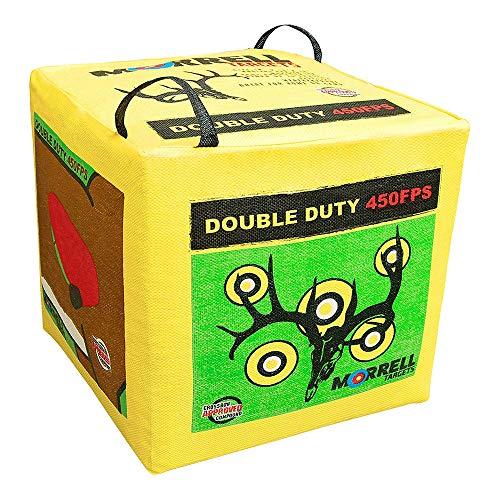
Best for: Mixed bow and crossbow practice
The Morrell Double Duty 450 FPS Cube is a bag-style archery target for field-point arrows. It supports shots from crossbows and compound bows up to 450 feet per second. Its two-sided design offers several practice layouts, including bullseyes, a nine-ball game, a dartboard, and deer-vital zones. Carrying handles make it easier to move between a backyard range, garage, or hunting setup. The yellow exterior also makes the target easy to spot at typical practice distances.
Its biggest advantage is variety. One target can support sighting in, group practice, game-style drills, and hunting-zone work. Morrell says the core can handle thousands of shots, while the replaceable cover can extend its useful life after the outside wears down. Arrows should also come out more easily than they do from dense foam targets. At around $70, it costs more than basic practice blocks, but the multiple aiming faces and replaceable cover may offer better long-term value. The manufacturer also includes warranty and support coverage, though the exact terms should be checked before buying.
Pros
- Handles bow and crossbow speeds up to 450 FPS.
- Provides four distinct practice layouts in one target.
- Replaceable cover and easy arrow removal can extend service life.
Cons
- Field-point use limits it for broadhead practice.
- Physical dimensions and target weight are not provided, so storage and transport needs are unclear.
3. Morrell Yellow Jacket Stinger Archery Target

Best for: Backyard field-point practice sessions
The Morrell Yellow Jacket Stinger is a freestanding bag target for backyard archery practice. It measures 20 inches long, 12 inches wide, and 20 inches tall, giving shooters a compact block that is easy to position outdoors. Its weather-resistant outer surface helps it handle changing conditions, while the E-Z tote handle makes moving it to a different spot less awkward.
What sets it apart is the practice layout and internal stopping design. Two shooting sides offer more usable target space, and 10 bullseyes let several shooters aim at separate marks or vary each round. The bag uses 38 layers of arrow-stopping power, along with IFS technology and an X-Tended Life design. Those details suit repeated field-point sessions, not just a single afternoon. Around $50, it costs more than basic foam targets, but the carry handle and two-sided layout add practical value.
Pros
- Two shooting sides and 10 bullseyes support varied practice sessions.
- The 38-layer construction helps stop field-point arrows.
- Carry handle and weather-resistant surface support outdoor use.
Cons
- It is made for field points, so broadhead users need another target.
- Weather resistance does not make it waterproof, so long-term outdoor exposure may shorten its life.
2. Hurricane H28 2-Sided Archery Bag Target
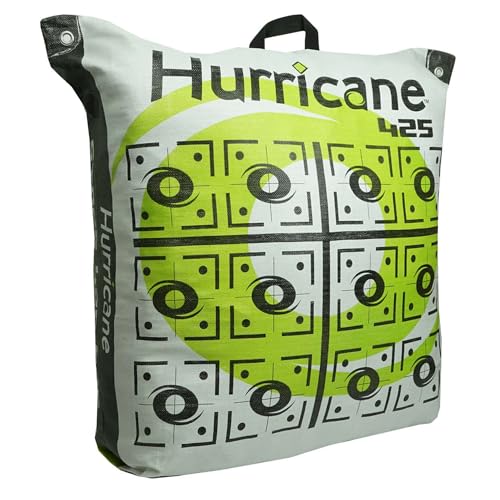
Best for: backyard bow and crossbow practice
The Hurricane H28 is a two-sided bag target for compound bows and crossbows. It measures 28 by 28 by 12 inches, giving you a broad aiming surface without taking up the space of a full-size range target. Its listed stopping rating reaches 425 FPS with standard-diameter arrows. A built-in strap handle also makes it easier to move around a yard or carry between shooting spots.
The front uses bright, contrasting aiming points that remain easier to pick out at longer distances. The back adds deer vital zones, but places them off-center from the front targets. That layout gives you more impact areas and may help spread wear across the bag. At around $46, it offers a practical setup for casual practice, sighting in, and basic deer-target drills. Still, the 12-inch depth limits how much target material sits behind each aiming area compared with larger blocks.
Pros
- Two-sided design supports both standard aiming practice and deer-vital drills.
- 28-by-28-inch face gives archers a generous target area.
- Rated for arrows traveling up to 425 FPS, including crossbow use.
Cons
- The 12-inch depth provides less target volume than larger block-style targets.
- No stand or ground anchor is listed, so windy outdoor setups may need extra support.
1. Morrell Supreme Range Field Point Archery Bag Target

Best for: Adult archers practicing field-point accuracy
The Morrell Supreme Range Adult Field Point Archery Bag Target is built for regular practice with field-point arrows. Its white face uses NASP official scoring rings, giving archers clear aiming zones for accuracy drills and score-based practice. The target suits newer shooters, experienced adults, and families sharing one practice setup.
Its multi-layer density construction is designed to handle numerous shots while limiting unnecessary wear. Arrows should pull out with less effort than from many dense foam targets, which can help reduce shaft and fletching damage during repeated sessions. The target supports both longer-range practice and closer, precision-focused shooting. At around $126, it is a serious practice purchase rather than a low-cost backyard option. The available details do not list its dimensions, weight, or exact layer count, so buyers should confirm those points before ordering.
Pros
- NASP scoring rings support structured accuracy and scoring drills.
- Multi-layer construction is designed for repeated field-point shots.
- Easier arrow removal can save time and reduce arrow stress.
Cons
- It is intended for field points, so broadhead practice may require a separate target.
- The listed features do not include a stand, cover, dimensions, or target weight.
Buying Guide
Choose stopping power first. A bag target must safely stop arrows from your bow without excessive pass-throughs or rapid wear. Match the target’s listed rating to your setup, including draw weight, arrow speed, and broadhead use.
- Stopping power: For a 40- to 60-pound compound bow, choose a model specifically rated for that range or higher. Confirm that it supports your arrow type, since many bags allow field points only.
- Target size: Pick at least 24 by 24 inches for close backyard practice. A 28- to 32-inch face gives beginners and younger archers more room for missed shots.
- Arrow removal: Look for compressed filler that releases arrows without tools. A target that requires twisting or excessive force can damage shafts and frustrate frequent practice.
- Weather resistance: Choose a UV-resistant outer cover with sealed stitching if the target may sit outdoors. Store it under cover, since rain can add weight and damage internal filler.
- Weight and cost: A 20- to 40-pound target works for many home ranges and remains movable with built-in handles. Expect to spend about $70 to $160 for a durable practice model.
If you must compromise, prioritize stopping power over size, portability, or price.
Frequently Asked Questions
How do I choose the right archery bag target?
Choose an archery bag target by matching its bow rating, arrow type, size, and shooting location. A properly rated model should stop your arrows without excessive penetration. For example, compare a target rated for 100-pound bows with your setup, then confirm that it accepts field points before buying.
What makes a good bag target for archery?
A good bag target has dense filling, a durable weather-resistant cover, clear aiming marks, and easy arrow removal. Its dimensions also affect safety and visibility. A 24-by-24-inch face provides more margin than a 20-by-20-inch model, but the manufacturer’s stopping rating matters more than face size alone.
Can I shoot broadheads at an archery bag target?
You can shoot broadheads only when the manufacturer specifically approves them; many bag targets are made mainly for field points. Broadheads can damage unsuitable covers or become difficult to remove. Check the product instructions first, since some targets list field points only while others support fixed or mechanical broadheads.
Are bag targets good for beginners?
Yes, bag targets are good for beginners because they offer a large aiming surface and usually allow straightforward arrow removal. They work well for basic form practice at short distances. Start around 10 yards, confirm every arrow hits safely, then move farther back as your accuracy improves.
Conclusion
Morrell Supreme Range Field Point Archery Bag Target is the top pick for backyard shooters who want a durable, reusable target for regular field-point practice. If your priority is easy transport or a lower upfront cost, choose a lighter bag target with built-in handles instead, since it will be simpler to move and store between sessions. Before buying, double-check the target’s dimensions, bow and arrow compatibility, package quantity, and current price, since listings can change. Also confirm that replacement covers or inserts are available if you expect frequent shooting. A safe backstop remains necessary, even with a dependable target. Set it on stable ground, inspect it often, and replace it when arrow damage becomes excessive.