
6 Best Heater for Deer Blind for Cold Hunts
For most buyers, Mr. Heater Portable Buddy Propane Heater is the top pick. Its portable propane design delivers useful radiant heat without needing a wall outlet, making it a practical best heater for deer blind use. The compact body fits on a floor or shelf, and its adjustable output suits small enclosed hunting spaces. As with any fuel-burning warmer, ventilation and following the manual matter.
This guide is for hunters who need dependable warmth in a box blind, ground blind, or compact shelter. The key factors are heater size and fuel runtime, since limited floor space and long sits quickly expose weak designs. Safety features, noise, and startup controls also deserve attention. The 6 picks below are ranked with clear reasons and honest drawbacks for each, so you can match the heater to your blind, hunting hours, and available fuel.
Quick Comparison
| # | Product | Best For | Price | |
|---|---|---|---|---|
| 1 | Mr. Heater Portable Buddy Propane Heater | Small Tent Campers | ~$90 | View → |
| 2 | Mr. Heater Big Buddy PRO Heater | Large Group Shelters | ~$146 | View → |
| 3 | Mr. Heater Hunting Buddy Portable Propane Heater | Cold Weather Hunters | ~$132 | View → |
| 4 | Portable Propane Camping Heater | Budget Camping Trips | ~$33 | View → |
| 5 | Mr. Heater Little Buddy Portable Propane Heater | Compact Personal Heating | ~$70 | View → |
| 6 | THE BOSS Propane Patio Heater | Outdoor Patio Gatherings | ~$110 | View → |
6 Top Deer Blind Heaters
These six blind heaters are ranked from sixth place down to the top pick, with warmth, size, and fuel needs guiding the order.
6. THE BOSS Propane Patio Heater

Best for: Camping and cool patio evenings
THE BOSS is a compact propane heater rated at up to 6,000 BTUs. It produces radiant heat without an electrical outlet, making it useful for patios, porches, campsites, and other outdoor areas. A carry handle helps with transport, while three heat levels let you adjust warmth as conditions change. At around $110, it costs more than basic camping heaters, but includes extra lighting and safety features.
The twist ignition is simple, and the built-in LED light provides a soft glow for nighttime meals or campsite setup. The light requires batteries, while the heater uses propane, so you need both supplies to use every function. CSA certification, automatic tip-over shutoff, and low-oxygen detection add useful safeguards. Propane heaters still need careful placement and ventilation. Follow the manual closely, especially around tents or partially enclosed spaces.
Pros
- Up to 6,000 BTUs and three heat levels suit changing outdoor temperatures.
- Carry handle and compact design make it easier to move between campsites and patios.
- Built-in LED lighting helps brighten nearby areas after dark.
Cons
- Requires propane for heat and batteries for the LED, adding supplies to your gear.
- Needs proper ventilation and stable placement, so it is not suitable for every tent or enclosed area.
5. Mr. Heater Little Buddy Portable Propane Heater

Best for: Small, chilly rooms and shelters
The Mr. Heater Little Buddy is a compact radiant propane heater rated at 3,800 BTU per hour. It connects directly to one 1-pound propane cylinder, so setup does not require a separate hose or tank. Its stated heating range reaches up to 95 square feet, making it better suited to a small room, workshop, tent, or similar space than an open living area. Follow the manufacturer’s ventilation and fuel-use instructions before operating it.
Its 8-inch round stand takes up little floor space, which helps when every inch matters. A one-button ignition keeps startup simple, while the heater runs quietly without the odor associated with some fuel-burning appliances. Safety features include an automatic low-oxygen shut-off and a tip-over shut-off. Around $70, it costs more than basic electric heaters, but it can work where wall power is unavailable. Buyers must use only approved accessories and attachments. Unapproved parts can cause serious injury and void the warranty.
Pros
- Heats areas up to 95 square feet with 3,800 BTU output.
- Runs from one portable 1-pound propane cylinder.
- Uses an 8-inch stand and includes tip-over and low-oxygen shut-offs.
Cons
- A 1-pound cylinder limits runtime and requires replacement fuel.
- Propane operation requires proper ventilation and safe placement, so it is not ideal for every indoor space.
4. Portable Propane Camping Heater

Best for: Campers needing cordless outdoor warmth
This compact propane heater uses a standard 1-pound cylinder to provide radiant heat without electricity, cords, or batteries. The tank is not included, so buyers need to purchase one separately. Its adjustable control knob lets you change the flame level, while the one-push ignition starts the heater without matches or tools. Around $33, it offers a low-cost option for cold-weather patios, tailgates, hunting blinds, and ice-fishing setups.
The foldable tank holder helps the unit pack down for transport, and the included carry case keeps the heater and small parts together between trips. A protective front grill helps limit accidental contact with the hot heating area. The brass connector is designed for a secure connection to a compatible 1-pound propane cylinder. Setup involves attaching the tank, securing the base, opening the gas valve slowly, pressing the ignition button, and adjusting the flame. Despite its camping-focused design, this heater is rated for outdoor use only. It should not be used inside a tent, vehicle, cabin, or other enclosed space because propane heaters can produce carbon monoxide.
Pros
- Runs without outlets, batteries, or extension cords.
- Foldable tank holder and carry case simplify transport.
- Adjustable flame control suits changing outdoor conditions.
Cons
- The 1-pound propane tank costs extra and may need frequent replacement during long outings.
- Outdoor-only use rules it out for enclosed tents, vehicles, and indoor spaces.
3. Mr. Heater Hunting Buddy Portable Propane Heater

Best for: Cold-weather hunting blinds and camps
This portable radiant propane heater is designed for hunting spaces, camps, and other areas where electric power may not be available. It offers two heat settings, 6,000 or 12,000 BTU per hour, and is rated to warm areas up to 300 square feet. The camo finish also fits outdoor hunting gear better than a typical workshop heater. At around $132, it sits in the midrange for portable propane warmers.
A single control knob handles startup and heat selection, while the match-light ignition keeps the controls simple. That design may suit users who prefer fewer electronics, but it requires a match to start. Propane is the only listed fuel source, so you will need a compatible supply nearby. The radiant format sends heat directly toward people and nearby objects instead of warming a whole building evenly. Use only approved accessories and attachments. Unauthorized parts can cause serious injury and void the warranty.
Pros
- Two output levels let you choose between 6,000 and 12,000 BTU per hour.
- The 300-square-foot rating fits many hunting blinds, tents, and small shelters.
- Propane operation works in locations without an electrical outlet.
Cons
- Match-light ignition requires manual startup and does not offer push-button convenience.
- Propane use requires fuel planning, and the heater’s 300-square-foot rating may not suit large or poorly insulated spaces.
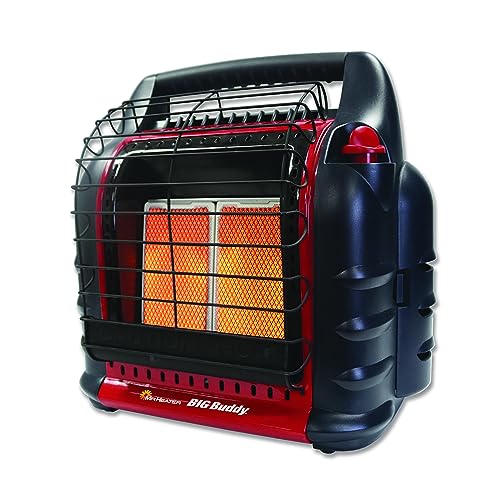
2. Mr. Heater Big Buddy PRO Heater
Best for: Large garages and drafty workspaces
Mr. Heater’s Big Buddy PRO is a propane-powered portable heater rated for spaces up to 450 square feet. It offers three output levels: 4,000, 9,000, and 18,000 BTU. That range lets you use a lower setting for longer operation or turn up the heat when a larger area needs warmth. The unit combines radiant heat, which warms nearby people and objects, with convection airflow. A built-in high-powered fan helps move warm air around the space.
Its standout feature is the long low-setting runtime when paired with two 20-pound propane tanks and the optional hose. Mr. Heater lists up to 216 hours of operation in that setup, though higher heat levels will use fuel faster. Around $146, it costs more than a small single-tank heater, but its three heat settings and dual-tank option add flexibility. Buyers should use only approved accessories. Unauthorized attachments can cause serious injury and void the warranty. This is a substantial propane heater, not a tiny emergency warmer, so storage and safe placement require planning.
Pros
- Three settings cover 4,000 to 18,000 BTU.
- Two 20-pound tanks can provide up to 216 hours on low.
- Radiant heat and a built-in fan spread warmth in different ways.
Cons
- The optional hose is required for the two-tank setup.
- High output will consume propane much faster than the listed low-setting runtime.
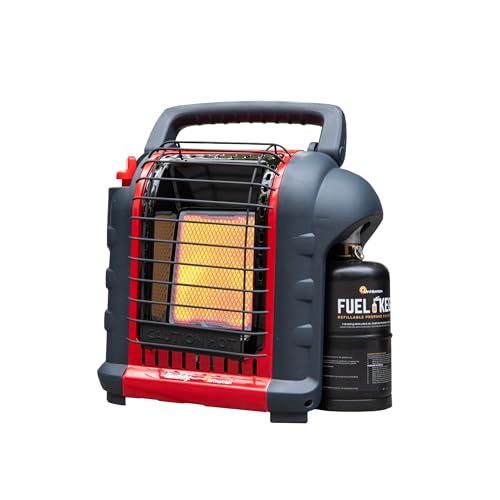
1. Mr. Heater Portable Buddy Propane Heater
Best for: Small rooms, workshops, and campsites
The Mr. Heater Portable Buddy is a compact propane heater for spaces up to about 225 square feet. It produces radiant heat at either 4,000 or 9,000 BTU per hour, so you can choose a lower setting for steady warmth or high output for faster heating. The unit works with a 1-pound propane cylinder and uses a simple two-setting control.
Fuel life depends heavily on the selected setting. One cylinder lasts about 5.4 hours on low, but only around 2.4 hours on high. That makes it useful for short outdoor stays, emergency room heating, garages, and other areas where electric power is unavailable. Its low-oxygen safety system adds protection, while self-extinguishing materials provide another safety feature. Still, propane heaters require careful placement and proper ventilation. The manufacturer also prohibits unauthorized accessories or attachments, which can cause serious injury and cancel the warranty. At around $90, it costs more than basic electric space heaters, but it does not need an outlet.
Pros
- Two heat levels, 4,000 and 9,000 BTU, suit small spaces and short warming periods.
- Runs without electricity, using a widely available 1-pound propane cylinder.
- Low-oxygen protection and self-extinguishing materials add safety features for approved indoor or outdoor use.
Cons
- A 1-pound cylinder lasts just 2.4 hours on high, so frequent use requires spare fuel.
- Radiant propane heat needs careful ventilation and safe placement, especially in enclosed rooms.
Buying Guide
The most important factor is safe operation in a confined space. Choose a heater with carbon monoxide protection, automatic shutoff, and clear ventilation requirements for your blind.
- Fuel type: Propane models work without electricity, while electric units need a battery, generator, or power bank. Avoid open-flame heaters inside enclosed fabric blinds.
- Heat output: Look for 3,000 to 12,000 BTU for a small to medium blind. A 20,000-BTU unit can overheat tight spaces and drain fuel faster.
- Runtime: A heater using a 1-pound propane cylinder may run 3 to 6 hours. Larger 20-pound tanks last longer but need an approved hose and stable placement.
- Safety features: Require tip-over and low-oxygen shutoff, plus a carbon monoxide alarm rated for indoor use. Keep the heater at least 3 feet from fabric, seats, and gear.
- Size and noise: Choose a unit under 15 inches tall if floor space is limited. A low-noise design helps avoid sudden fan sounds near game trails.
- Cold-weather use: Confirm the listed operating range, hose compatibility, and ignition performance below 20°F. Batteries can lose much of their capacity in freezing weather.
If you cannot have every feature, prioritize ventilation and carbon monoxide protection over heat output or runtime.
Frequently Asked Questions
How do I choose a heater for my deer blind?
A safe blind heater should match the space, run time, and fuel source while providing tip-over protection. For a small enclosed blind, a low-output propane model with an oxygen-depletion sensor may fit better than a large unit. Check the manual for minimum clearance and fresh-air requirements before use.
What type of heater works best in a blind, propane or electric?
Propane heaters usually work best for remote deer blinds because they do not require a power outlet or battery bank. A 1-pound cylinder can run a compact unit for several hours, though runtime varies by heat setting. Electric models make sense near reliable power and produce no combustion gases inside the blind.
Can I use a propane heater inside a deer blind?
You can use a propane heater inside a deer blind only when the model is approved for indoor use and the blind has the required ventilation. Keep the heater away from fabric and gear, and never leave it unattended. Many compact units require an open vent, even during cold morning hunts.
Are battery-powered heaters suitable for deer blinds?
Battery-powered heaters are suitable for short hunts, but they usually provide less heat and shorter runtimes than propane models. A 12-volt heater can drain a small power bank quickly, especially at high output. Choose one with a stated runtime, automatic shutoff, and a battery capacity that matches your planned hours.
Conclusion
Mr. Heater Portable Buddy Propane Heater is the top pick for hunters who want dependable, portable warmth in a small or medium deer blind. If your priority is longer runtime or electric operation, choose a model that matches your available power source and provides the controls and safety features you need. Before buying, double-check the heater’s size against your blind, compatibility with your propane cylinder or battery setup, the quantity of fuel or accessories included, and the current price. Also confirm the unit has tip-over and low-oxygen protection, then follow ventilation guidance closely because enclosed hunting spaces can become hazardous quickly. A careful match should provide warmth without crowding your setup.